
Finding a talented athlete is not always as simple as watching who performs best on a particular day. A young player may have exceptional potential but struggle under pressure, lack access to quality coaching, or simply never perform in front of the right selector. That is where data is changing the way sports talent is identified.
Across India, sports organizations are increasingly combining traditional coaching expertise with performance statistics, fitness assessments, video analysis, artificial intelligence, and athlete databases. The goal is not to replace selectors. It is to give them better evidence before making important decisions.
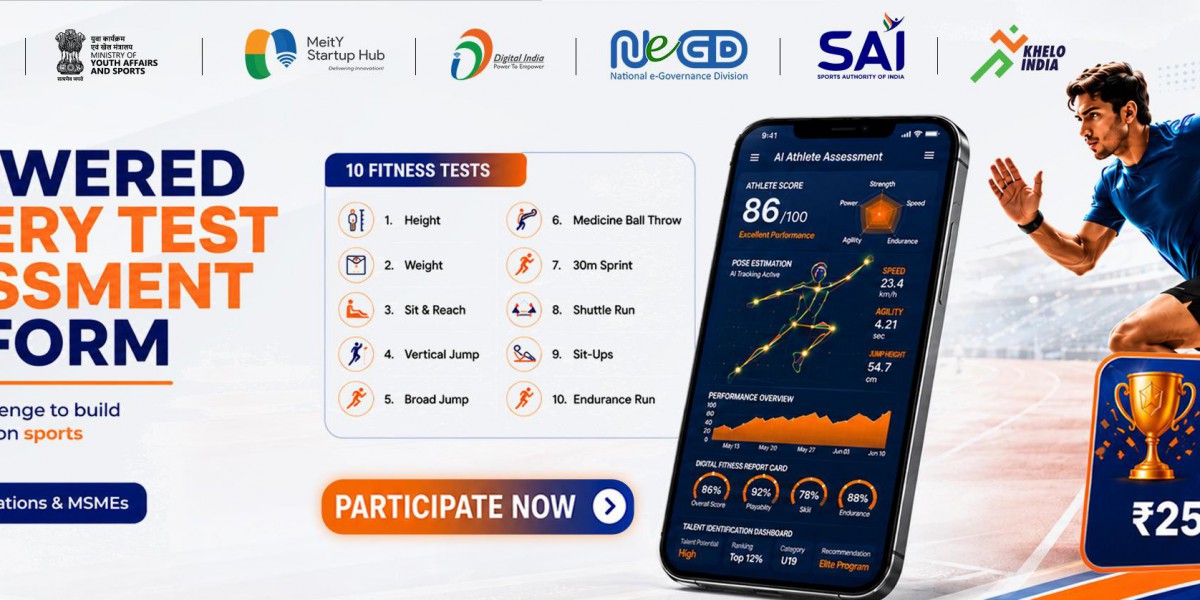
India's Khelo India Rising Talent Identification (KIRTI) programme is a strong example. The government has described KIRTI as an athlete-centric, technology-supported talent identification system using data analytics and AI. In its first phase, more than 362,000 registrations and nearly 51,000 assessments had been recorded across 28 states and Union Territories.
The bigger lesson is simple: modern talent selection is moving from “Who looks promising?” toward “What does the evidence tell us about this athlete's potential?”
How Data Is Changing Modern Sports Talent Selection
What Data Do Sports Federations Actually Collect?
Data-driven talent identification does not mean putting every athlete into a spreadsheet and selecting whoever has the highest score. Different sports require different measurements, and useful selection systems combine several types of information.
For example, a young sprinter may be evaluated through:
- 30-metre or 60-metre sprint times
- Reaction speed
- Acceleration
- Jumping ability
- Running mechanics
- Strength and power
- Competition results
- Improvement over time
A footballer may require a different profile, including passing accuracy, movement patterns, sprint frequency, decision-making, positioning and endurance.
Similarly, a badminton player could be assessed through movement speed, recovery between rallies, shot consistency, agility and match performance.
This is important because raw numbers only become useful when they are connected to the demands of a particular sport.
Federations can also combine competition statistics with video footage. Instead of relying entirely on a selector's memory, analysts can review repeated actions and identify patterns that may be difficult to notice during a live trial.
Wearable technology adds another layer. GPS devices, motion sensors and other tracking equipment can provide information about movement, workload, force and recovery. India's sports technology ecosystem is increasingly using such tools for performance analysis, talent identification and injury-risk assessment.
The real advantage comes from combining these sources rather than treating one number as the final answer.
Imagine two 17-year-old footballers who score similarly in a trial. One is physically stronger today, while the other has better acceleration and has improved dramatically over the previous year. A simple trial score might favor the first athlete. A broader database could reveal that the second athlete has a steeper development curve.
That difference matters when the objective is to identify future potential rather than simply reward current performance.

Data is also helping federations look beyond major sporting centers. Historically, an athlete's chances of being noticed could depend heavily on access to competitions, academies and scouts.
Digital athlete profiles, recorded performances and centralized databases can make it easier to compare athletes from different regions. India's KIRTI programme, for instance, uses decentralized assessment centres and standardized evaluation methods as part of its national talent identification approach.
This can be especially valuable in a country as geographically diverse as India.
A promising athlete from a smaller city should not automatically be disadvantaged simply because fewer scouts happen to visit that area.
The same principle applies to consistency. A selector may watch an athlete once and see an outstanding performance. A database can show whether that performance was an exception or part of a sustained upward trend.
That is one reason platforms and digital sports communities such as gold365 club can sit alongside the wider sports-information ecosystem, although selection itself should remain based on verified sporting performance and federation criteria.
How Federations Turn Raw Numbers Into Better Decisions
Collecting data is the easy part. Knowing what to do with it is much harder.
A good talent-selection system normally follows several stages.
1. Establish sport-specific benchmarks
The federation first decides what qualities matter for a particular discipline. These may include physical attributes, technical skills, tactical awareness and competition performance.
Benchmarks should also account for age and development stage. Comparing a 13-year-old directly with a 20-year-old is rarely meaningful.
2. Standardize testing
Athletes need to be assessed under reasonably consistent conditions.
If one athlete completes a sprint test on a proper track while another is tested on a different surface with different timing equipment, the numbers may not be directly comparable.
Standardized testing reduces this problem and creates more reliable datasets.
3. Build athlete profiles
Instead of looking at isolated scores, federations can create a broader profile containing performance history, test results, competition records and video evidence.
This creates a much more complete picture of an athlete.
4. Compare athletes against relevant benchmarks
An athlete's raw score is only part of the story.
Selectors may compare performance against age-group standards, national benchmarks or sport-specific reference groups.
For example, a 15-year-old who ranks highly within their age group and is improving rapidly may deserve additional attention even if their absolute performance is not yet at senior level.
5. Track development over time
This is one of the most valuable uses of sports data.
Talent identification should not be treated as a one-day examination. An athlete's progress over six months, one year or several seasons can reveal much more about long-term potential.
An athlete who consistently improves may be a better investment than someone who starts ahead but stops progressing.
6. Combine analytics with expert judgment
Data should support selectors rather than replace them.
A statistical model may flag an athlete because of excellent physical characteristics, but an experienced coach can evaluate technical habits, attitude, adaptability and other qualities that may be difficult to measure.
Research into sports talent acquisition similarly highlights the growing role of data-driven methods while recognizing the importance of expert decision-making.
This human-and-data combination is particularly important in youth sport.
Young athletes are still developing physically and mentally. A temporary weakness should not automatically become a permanent label.
Modern selection systems should therefore ask not only, “How good is this athlete today?” but also, “What could this athlete become with the right development?”
This is where predictive analytics and machine learning are attracting attention. Newer research is examining how AI can automate aspects of scouting and analyze physical and event data at a scale that would be difficult for human scouts alone.
However, prediction should always be treated as an aid rather than a guarantee.
A model can identify patterns associated with successful athletes, but sport remains unpredictable. Injuries, coaching quality, motivation, opportunities and personal circumstances can all influence development.
For organizations using tools such as gold365 online as part of the broader digital sports environment, the same principle applies: information is useful when it provides context and supports informed decisions, not when a single metric is treated as absolute truth.
Common mistakes federations should avoid
A data-driven approach can still fail if the underlying process is poorly designed.
Some common mistakes include:
- Collecting huge amounts of irrelevant data
- Using inconsistent testing methods
- Comparing athletes from different age groups unfairly
- Ignoring biological maturation in youth athletes
- Treating algorithms as unquestionable
- Using outdated benchmarks
- Failing to protect athlete data
- Ignoring athletes who lack access to advanced technology
- Focusing only on current performance instead of development potential
There is also a danger of creating a “one-number athlete.”
A single rating can make selection convenient, but it may hide important details. Two athletes can have the same overall score while having completely different strengths and weaknesses.
A better dashboard might show physical ability, technical skill, tactical performance, consistency and development trend separately.
A practical model for better talent identification
For sports federations building or improving a data-based selection system, a useful framework is:
- Define what success looks like in the sport.
- Select measurable indicators linked to those requirements.
- Standardize testing procedures.
- Collect results across multiple events and time periods.
- Store video and performance information alongside numerical data.
- Compare athletes with appropriate age and sport-specific benchmarks.
- Use analytics to identify promising profiles.
- Have qualified coaches review shortlisted athletes.
- Monitor selected athletes after selection.
- Regularly test whether the selection model is actually producing better outcomes.
That final step is often overlooked.
A federation should evaluate whether athletes identified through its system are progressing, reaching higher levels and staying in the development pathway. If the model repeatedly misses certain types of athletes, it needs to be adjusted.
Data should therefore create a feedback loop rather than a one-time selection process.
Key takeaways
- Data makes athlete selection more consistent and evidence-based.
- Video, fitness testing, wearables and competition statistics can complement each other.
- Long-term development trends can be more informative than one impressive trial.
- AI can help identify patterns, but it should not make decisions without human oversight.
- Standardized testing is essential for fair comparisons.
- Data can help federations reach talent outside traditional sporting centers.
- Athlete privacy, fairness and accessibility must remain central to technology-led scouting.
Frequently Asked Questions About Data-Driven Talent Selection
How is data used in sports talent identification?
Sports federations use data such as fitness scores, competition results, technical statistics, video analysis and movement information to compare athletes and identify promising performers. The data is most effective when combined with expert coaching assessment.
Can AI replace sports selectors?
No. AI can process large datasets and identify patterns quickly, but selectors still need to evaluate factors such as technique, tactical understanding, character, adaptability and development environment.
Why is data important for youth athlete selection?
Youth athletes develop at different rates. Long-term data can show improvement, consistency and potential rather than judging a young athlete from one performance. This can help reduce the risk of overlooking late developers.
How can technology improve sports scouting in India?
Technology can create centralized athlete profiles, standardize assessments and allow coaches to review performance remotely. Government initiatives such as KIRTI are already using IT, standardized assessments and data analytics to broaden grassroots talent identification in India.
Does more data always lead to better selection?
No. More data is not automatically better. The information needs to be accurate, relevant and interpreted in the right sporting context. Poor-quality data or badly designed algorithms can produce misleading conclusions.
For instance, a service or platform described as gold365 vip may be relevant to a user's wider digital sports interests, but it should never be confused with an official federation's athlete-selection criteria or performance database.
What is the future of data-driven sports selection?
The next stage will likely involve greater use of computer vision, automated video analysis, predictive modelling and integrated athlete databases. The strongest systems will combine these technologies with experienced coaches and transparent selection standards.
Conclusion
Sports talent selection is becoming less dependent on isolated observations and more focused on evidence collected over time. That does not make the human element less important. In fact, it gives coaches and selectors better information with which to apply their experience.
For India, this shift could be particularly significant. With millions of young people participating in sport, technology can help federations assess more athletes, identify overlooked potential and create clearer development pathways.
The best approach is not “data versus instinct.” It is data plus expertise, applied fairly and consistently. When numbers are used to ask better questions rather than provide simplistic answers, talent selection becomes more transparent, scalable and capable of finding athletes who might otherwise remain unnoticed.