
Forklifts are essential machines in warehouses, construction sites, manufacturing facilities, and distribution centers. They handle heavy materials efficiently and help businesses move products safely from one location to another. However, like any mechanical equipment, forklifts require regular maintenance and replacement components to keep working properly. Choosing the right forklift parts is important for performance, safety, and long-term operating costs.
Understanding Forklift Parts
A forklift consists of many mechanical, electrical, and hydraulic components that work together. Some parts experience constant wear because they support heavy loads and operate frequently. Others may last for years when properly maintained.
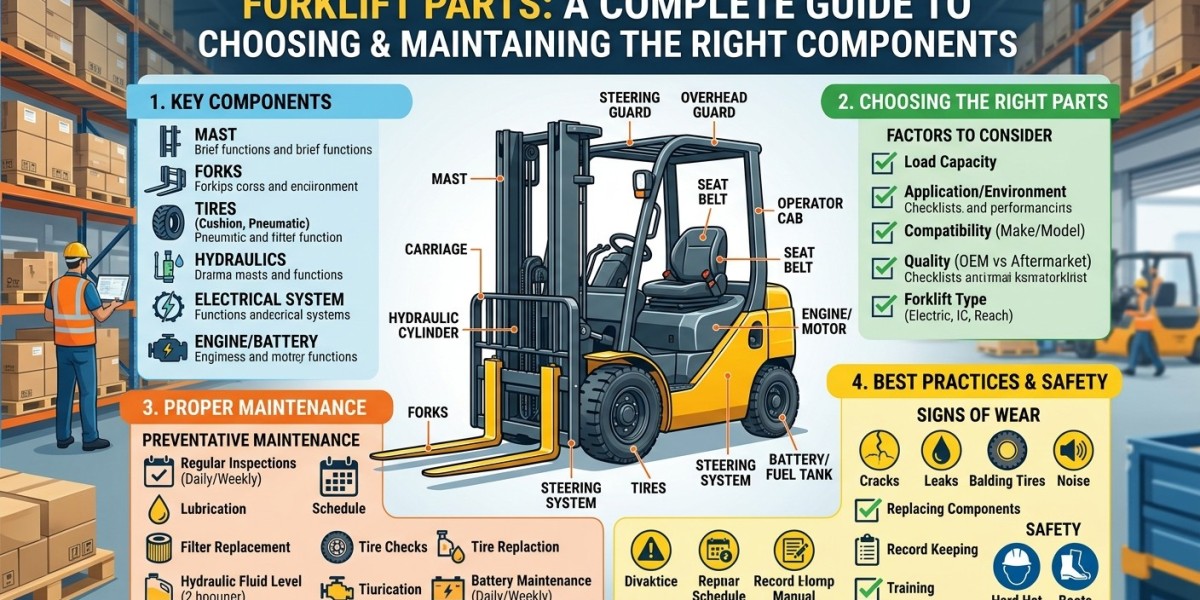
Common components include forks, tires, brakes, chains, mast components, hydraulic cylinders, filters, batteries, seats, lights, steering parts, and electrical components. Each plays a specific role in keeping the machine functional.
When replacing a component, it is important to consider the forklift's make, model, capacity, and operating environment. Installing an incompatible part can affect performance and may create unnecessary safety risks.
Commonly Replaced Forklift Components
Some components need replacement more frequently than others. Forks, for example, are exposed to heavy loads and repeated contact with pallets. Over time, they can develop wear, cracks, bends, or other damage. Regular inspection helps identify problems before they become serious.
Tires are another important component. Solid tires are commonly used in warehouses because they resist punctures, while pneumatic tires may be preferred for outdoor applications where additional cushioning and traction are needed.
Hydraulic components also require attention. Forklifts depend on hydraulic systems to lift, lower, and tilt loads. Hoses, seals, pumps, and cylinders can eventually wear out or develop leaks. A damaged hydraulic component can reduce lifting performance and should be addressed promptly.
Braking and steering components are equally important. Brake pads, drums, shoes, steering wheels, and related components should be inspected regularly to help maintain safe operation.
How to Select the Right Parts
Selecting a replacement component should begin with identifying the exact forklift model. Manufacturer information can usually be found on the machine's identification plate. The model number, serial number, and specifications can help suppliers identify a compatible component.
It is also useful to check the existing part number whenever possible. Part numbers reduce confusion between similar-looking components that may have different specifications.
The operating environment should also be considered. A forklift used inside a clean warehouse may have different requirements from one working outdoors on rough surfaces. Temperature, dust, moisture, working hours, and load requirements can all affect component selection.
Quality is another important consideration. Low-quality components may have a lower purchase price but can wear out faster or affect other parts of the machine. Reliable replacement components can help reduce downtime and unexpected maintenance expenses.
New vs. Used Forklift Parts
Businesses often have the option of purchasing either new or used components. New parts can provide predictable performance and may be preferred for critical systems where reliability is especially important.
Used components can be a practical option when a business needs to control maintenance costs. However, their condition should be carefully evaluated before purchase. Buyers should check for excessive wear, cracks, corrosion, deformation, and other signs of damage.
The choice depends on the component, forklift condition, budget, and intended use. For some non-critical components, a quality used part may provide good value. For safety-critical components, businesses may prefer new parts or components from a reputable supplier.
Importance of Regular Maintenance
Proper maintenance can significantly extend the working life of a forklift and its components. Operators should conduct routine inspections before using the machine. These checks can include examining tires, forks, chains, hydraulic lines, brakes, lights, warning devices, and fluid levels.
Scheduled maintenance should follow the forklift manufacturer's recommendations. Filters and fluids may need regular replacement, while chains and hydraulic components should be inspected for wear.
Keeping maintenance records is also useful. A service history helps identify recurring problems and allows maintenance teams to plan replacement work before a failure causes extended downtime.
Signs That a Forklift Part Needs Replacement
Knowing the warning signs of component failure can help businesses respond quickly. Unusual noises, vibrations, hydraulic leaks, reduced lifting performance, difficulty steering, poor braking, and uneven tire wear may indicate that one or more components need inspection.
Visible damage should never be ignored. Cracked forks, damaged chains, leaking hydraulic hoses, or severely worn tires can affect safe operation.
Operators should report unusual behavior immediately rather than continuing to use a machine that may have a mechanical problem. Early repairs can often prevent a small issue from becoming a much more expensive repair.
Why Reliable Parts Matter
The quality of replacement components affects more than the immediate repair. A poorly fitting part can place additional stress on surrounding components and potentially lead to repeated failures.
Reliable forklift parts should meet the required specifications for the particular machine. Working with an experienced supplier can make it easier to identify compatible components and obtain useful information about installation and maintenance.
Businesses should also consider availability. Having commonly needed components readily available can reduce equipment downtime and keep warehouse operations moving.
Keeping Forklifts Efficient and Safe
Forklifts perform demanding work every day, so component maintenance should be treated as an important part of overall equipment management. Regular inspections, timely repairs, and suitable replacement components can help maintain productivity and reduce unexpected breakdowns.
Whether a business needs forks, tires, hydraulic components, electrical items, filters, or other replacement components, the right selection depends on the machine's specifications and working conditions. Taking time to identify the correct component and verify its quality can support better equipment performance over the long term.
Ultimately, proper care of forklift parts helps businesses protect their equipment investment while supporting reliable material-handling operations.