
Laser hair removal has become a popular option for people who want to reduce unwanted facial and body hair without relying on frequent shaving, waxing, or plucking. However, one common question is whether the treatment is suitable for every skin type. Laser Hair Removal in Islamabad can be appropriate for many different skin tones, but treatment needs to be carefully selected according to the skin, hair, and individual characteristics.
Modern laser technology has improved considerably, allowing treatment providers to work with a wider range of skin tones than older systems could safely accommodate. Even so, the same laser settings are not suitable for everyone. Proper assessment, appropriate technology, and controlled energy levels are important for achieving effective results while protecting the skin.
How Does Laser Hair Removal Work on Different Skin Types?
Laser hair removal works by directing concentrated light energy toward the pigment in the hair. The pigment absorbs the light, which is converted into heat and transferred toward the hair follicle. This heat can damage the follicle and reduce its ability to produce hair.
The challenge is that skin also contains pigment. Darker skin contains more melanin, meaning the laser can potentially interact with the skin as well as the hair. This makes careful treatment planning particularly important for deeper skin tones.
Different laser wavelengths and technologies can be selected according to skin and hair characteristics. Appropriate settings help direct sufficient energy toward the hair follicle while minimizing unnecessary heating of the surrounding skin.
Can Darker Skin Tones Have Laser Hair Removal?
Yes, many people with darker skin tones can undergo laser hair removal when an appropriate laser system and carefully selected settings are used.
For darker skin, treatment needs to account for the higher concentration of melanin in the skin. Using unsuitable equipment or excessive energy can increase the risk of irritation, burns, or temporary or longer-lasting pigmentation changes.
A professional assessment is therefore particularly important before treatment. The treatment provider may consider skin tone, recent sun exposure, hair thickness, hair color, and the specific area being treated.
A patch or test area may sometimes be recommended to observe how the skin responds before treating a larger area.
What About Fair or Sensitive Skin?
People with fair skin can also be suitable candidates for laser hair removal. In many cases, the contrast between darker hair and lighter skin allows the laser to target the hair pigment effectively.
However, fair skin does not automatically mean that treatment will be completely irritation-free. Temporary redness, warmth, mild swelling, or sensitivity can occur after a session.
People with sensitive or reactive skin may require additional care. Recent sunburn, active irritation, certain skincare products, or other factors that increase sensitivity should be discussed before treatment.
The treatment settings should be adjusted according to the individual's skin response rather than assuming that a stronger setting will produce better results.
Does Hair Color Matter as Much as Skin Type?
Skin type is only one part of the treatment equation. Hair color and thickness also have a major influence on how effectively laser hair removal works.
The laser relies on pigment within the hair to absorb light energy. Dark, coarse hair generally absorbs more energy than very light or minimally pigmented hair. As a result, people with dark hair may experience a stronger response than those with blonde, white, gray, or very fine hair.
Hair growth patterns also matter. Facial hair, for example, can be influenced by hormonal changes and may respond differently from hair on the legs or underarms.
A complete assessment should therefore consider both the skin and the hair rather than focusing on skin tone alone.
Why Is Personalized Laser Treatment Important?
There is no universal laser setting that works equally well for every person. Skin tone, hair characteristics, treatment area, recent tanning, and individual sensitivity can all influence the appropriate treatment approach.
Personalized treatment helps balance two important goals: delivering enough energy to affect the hair follicle while minimizing unnecessary exposure to the surrounding skin.
Treatment may also need to be adjusted between sessions. Skin can become more or less sensitive depending on sun exposure, skincare routines, hormonal changes, and other factors.
For this reason, a proper consultation before Laser Hair Removal in Islamabad can help identify potential risks and determine whether the treatment is appropriate for a particular skin and hair combination.
What Can Patients Expect During Laser Hair Removal in Islamabad?
People considering Laser Hair Removal in Islamabad can generally expect an assessment before treatment begins. The skin and hair are evaluated, and the treatment area is prepared.
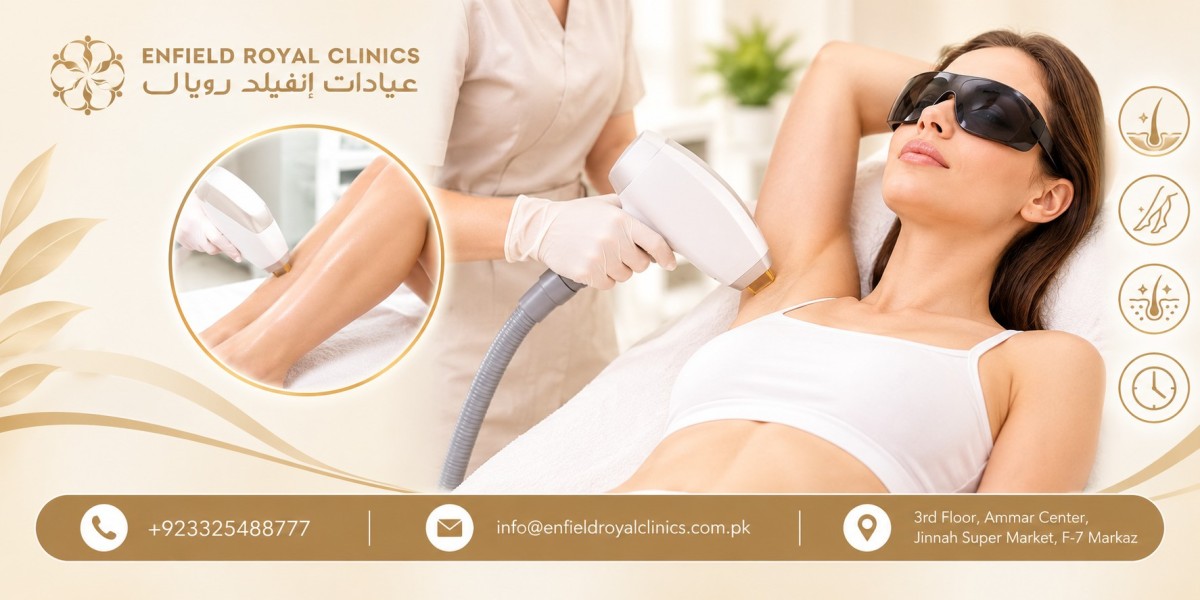
During the procedure, the laser delivers controlled pulses of light to the selected area. Depending on the body part, hair density, and individual sensitivity, the sensation may feel like brief warmth, tingling, or small snapping sensations. Cooling technology may be used to improve comfort and protect the skin.
After treatment, mild redness, warmth, or swelling around the follicles can occur. These effects are generally temporary, although individual recovery varies.
Patients should follow recommended aftercare, particularly regarding sun protection. Avoiding excessive sun exposure around treatment periods can help reduce the risk of unwanted pigmentation and irritation.
Results develop gradually. Multiple sessions are usually needed because hair follicles grow through different stages. Over time, responsive follicles may produce less hair, while remaining hair can become finer and less noticeable.
Is Laser Hair Removal Safe for Every Skin Type?
Laser hair removal is not automatically suitable for every individual or every skin condition. Most skin tones can potentially be treated with an appropriate approach, but active infections, open wounds, severe irritation, recent tanning, or certain medications may require treatment to be delayed or modified.
People with a history of pigmentation problems or unusual reactions to cosmetic treatments should mention these concerns during the consultation.
Safety depends on more than simply having a particular skin tone. Appropriate technology, accurate settings, professional assessment, proper preparation, and aftercare all contribute to a safer treatment experience.
The best candidates are those whose skin and hair characteristics can be evaluated properly and whose expectations are realistic. A careful approach can help reduce unwanted hair while minimizing unnecessary stress on the skin.
For more information visit Enfield royal clinic in islamabad
Frequently Asked Questions
1. Can laser hair removal be performed on dark skin?
Yes, many people with darker skin can receive laser hair removal. However, the laser type and settings need to be selected carefully because darker skin contains more melanin and may be more sensitive to excessive laser energy.
2. Is laser hair removal suitable for sensitive skin?
Sensitive skin does not automatically prevent laser treatment. However, it may require careful settings and additional preparation and aftercare. Active irritation or inflammation may need to settle before treatment.
3. Does laser hair removal work on all hair colors?
Laser hair removal generally works best on darker, pigmented hair. Very light, gray, white, or minimally pigmented hair may respond less effectively because there is less pigment available to absorb the laser energy.
4. How can skin be protected during laser hair removal?
Appropriate laser selection, controlled settings, cooling, sun protection, and proper aftercare can help protect the skin. A professional assessment before treatment is especially important for darker or sensitive skin.