
How 24/7 managed SOC services change IT security operations
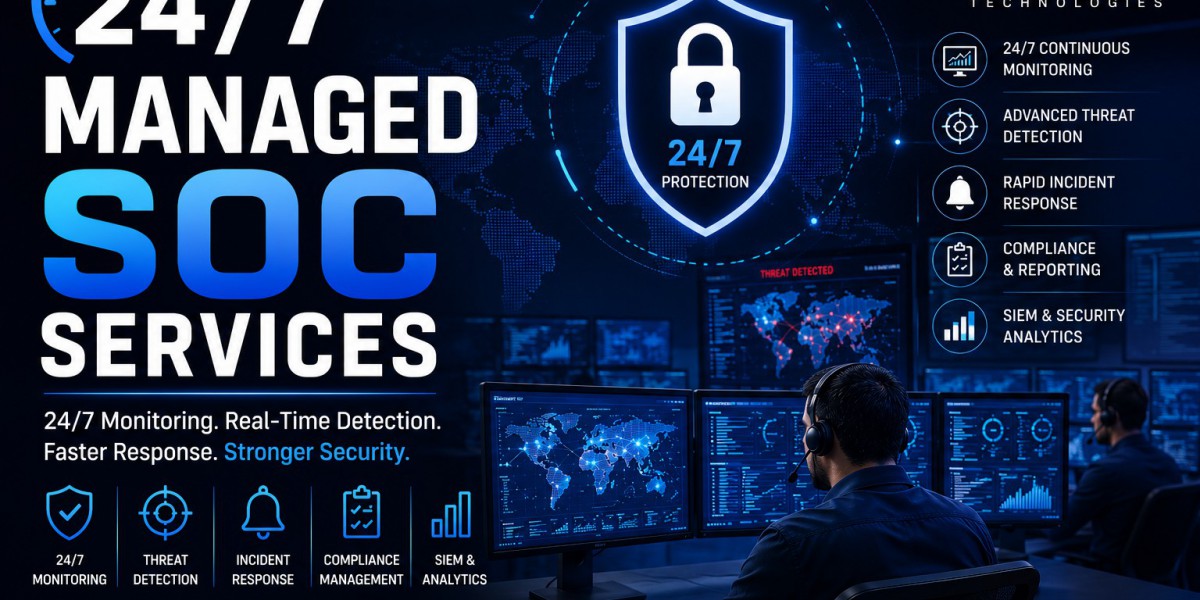
For Indian IT businesses, security cannot depend on whether the internal security team is available when an alert appears. 24/7 managed SOC services provide continuous monitoring, threat detection, investigation, and response through an external security operations capability.
The model gives organizations access to security expertise and operational coverage without requiring them to build every SOC function internally.
As IT environments become increasingly hybrid, distributed, and cloud-dependent, security teams face a practical challenge: more signals, more systems, and more responsibility without necessarily having more people. A managed SOC can provide the operational layer needed to turn security telemetry into prioritized action.
Why Indian IT businesses are reassessing the SOC model
Indian IT companies often operate across cloud platforms, SaaS applications, endpoints, corporate networks, remote work environments, and customer-facing systems. A security incident in any one of these areas can create operational disruption, expose sensitive information, or affect client confidence.
The business driver is therefore not simply detecting malware. Security leaders need visibility across the environment, consistent alert handling, documented response processes, and reporting that connects technical activity with business risk.
IBN Technologies provides managed SOC and SIEM services designed around continuous threat monitoring, detection, incident response, proactive risk management, and compliance-focused security operations.
Where DIY security operations fall short
Many organizations already have firewalls, endpoint protection, cloud security controls, vulnerability scanners, and SIEM technology. The gap is often operational rather than technological.
An alert has to be investigated. Its context needs to be understood. False positives must be separated from credible threats. Critical events require escalation and containment. Security leaders also need reporting that connects technical activity with business risk.
An internal team can perform these functions, but maintaining genuine round-the-clock coverage requires appropriate staffing, processes, skills, tooling, shift management, and ongoing security expertise.
This is the key consideration when evaluating managed SOC vs in-house SOC. The question is not whether internal security expertise remains valuable. It is whether every organization needs to operate the entire monitoring function itself.
What to evaluate in a managed SOC
A credible managed SOC should be assessed on operational depth rather than a simple promise of “24/7 monitoring.”
Evaluation area | What IT leaders should look for |
Monitoring | Continuous visibility across relevant cloud, network, endpoint, and infrastructure environments |
Detection | SIEM-based correlation, threat intelligence, behavioral analysis, and alert prioritization |
Response | Defined escalation, investigation, containment, and incident-response workflows |
Integration | Ability to work with existing security infrastructure |
Reporting | Clear technical and management-level reporting for security and compliance stakeholders |
Scalability | Capacity to support changing workloads, users, applications, and infrastructure |
Expertise | Security professionals capable of investigating events rather than simply forwarding alerts |
Governance | Clear responsibilities, escalation paths, service expectations, and reporting cadence |
IBN Technologies' managed SOC and SIEM services include SIEM as a Service, SOC as a Service, Managed Detection and Response, threat hunting and intelligence, security-device monitoring, incident response and forensics, vulnerability management, compliance monitoring, and security reporting.
How the managed model works in practice
A managed SOC typically begins by connecting relevant security telemetry to the monitoring environment. Events are then analyzed and correlated so that the security team can distinguish routine activity from potential incidents.
When an alert warrants investigation, analysts assess the context and severity before escalating or responding according to the agreed operating model. The organization remains involved in decisions that require business context, while the SOC provides continuous security expertise and operational handling.
For organizations using Microsoft technologies, managed security can also extend across Microsoft Sentinel, Defender, Entra, Purview, and other Microsoft security capabilities. This can provide centralized visibility while allowing organizations to continue using their existing technology environment.
The business value goes beyond monitoring
The strongest business case for managed SOC services is operational resilience.
IT leaders gain a structured way to handle security events outside normal working hours. Security managers can improve visibility without continuously expanding internal shifts. CIOs can create a more predictable security operating model, while compliance teams can use documented monitoring and reporting as part of broader control evidence.
The model can also support organizations that are growing faster than their internal security function. Instead of waiting until a larger SOC can be recruited, equipped, and operationalized, a managed service can provide an established operational capability while the internal team concentrates on architecture, governance, risk, and transformation.
An IT use case: the distributed technology company
Consider an Indian software company supporting enterprise customers from multiple offices while operating applications across cloud and on-premises infrastructure.
Its internal security team may be strong during business hours, but overnight alerts compete with a limited on-call rotation. A managed SOC can provide continuous monitoring across the company's security environment, investigate suspicious activity, and escalate incidents according to agreed priorities.
The internal team can then focus on remediation, architecture, customer communication, and longer-term security improvements rather than manually watching every alert.
Compliance should influence the decision
Compliance requirements should not be treated as an afterthought when selecting a SOC provider. In India, organizations must consider applicable cybersecurity and data-protection obligations alongside contractual requirements imposed by customers.
For IT businesses, security monitoring can support broader requirements around log management, incident handling, access controls, security governance, and audit readiness.
Organizations serving international customers may also need to account for additional contractual and regulatory expectations. IBN Technologies provides compliance-oriented security services and supports frameworks and requirements including ISO 27001, GDPR, HIPAA, PCI DSS, and applicable Indian regulatory requirements.
Before choosing a managed SOC
IT and security leaders should confirm:
- Which environments will be monitored?
- Which events require immediate escalation?
- Who has authority to contain or isolate systems?
- How are false positives handled?
- What incident reports and executive summaries are provided?
- How will existing security tools integrate with the service?
- What log retention and evidence requirements apply?
- How are service responsibilities divided between the provider and internal IT team?
- How will the SOC support security improvement after an incident?
The right model is ultimately the one that matches the organization's risk profile, technology estate, compliance obligations, and internal capabilities.
For Indian IT businesses, 24/7 managed SOC services can provide the continuous operational coverage needed to turn security investments into a more responsive and measurable defense capability. IBN Technologies combines managed SOC and SIEM capabilities with MDR, threat detection, incident response, and compliance-focused security operations. When internal teams need to focus on business transformation while maintaining security vigilance around the clock, a well-governed managed SOC can become an extension of the security function rather than a replacement for it.
Contact Us:
IND- 02067680404
IBN Technologies Ltd.
E-mail: - sales@ibntech.com