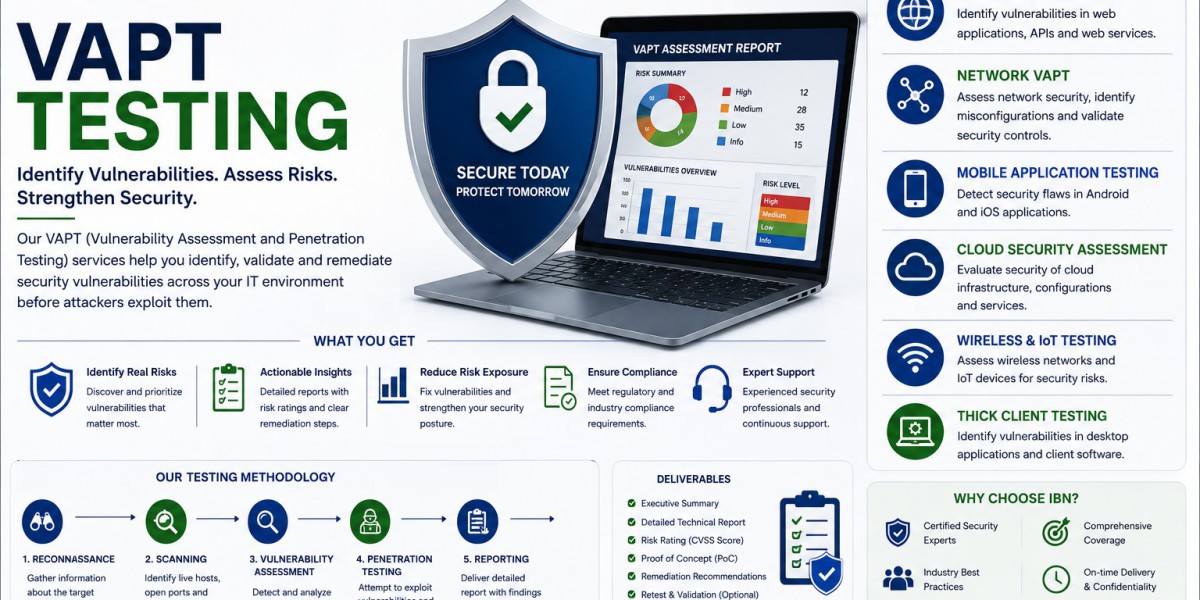

E-commerce businesses depend on customer-facing websites, mobile applications, APIs, payment integrations and cloud infrastructure. When comparing vapt testing companies, retailers should evaluate whether a provider can test the complete customer journey rather than simply scan the website for common vulnerabilities.
Begin With the Shopping Journey
The assessment should consider the path a customer takes.
For example:
Account → Product → Cart → Checkout → Payment → Order
Each stage can involve different backend systems.
The provider should understand how those systems communicate and where trust boundaries exist.
Website Testing
The public website should be reviewed for issues affecting:
- Authentication
- Sessions
- Input handling
- Authorization
- File handling
- Administrative functionality
However, website testing alone may not be enough.
API Testing
E-commerce platforms often depend heavily on APIs.
These can control:
- Products
- Inventory
- Orders
- Customer profiles
- Payments
- Mobile applications
A provider should have a clear API testing methodology.
Customer Account Authorization
Authorization problems can be particularly important for online retailers.
Testing should determine whether a customer can access information or functions belonging to another customer.
This type of weakness may not be identified through basic automated scanning alone.
Payment Workflows
Payment security requires careful testing.
A provider should understand how the retailer's systems interact with payment services.
Testing should not introduce unnecessary transaction disruption.
The scope should clearly identify whether payment environments are included.
Cloud Infrastructure
Online stores can depend on cloud services for applications, databases and storage.
Cloud exposure, access permissions and configuration should be considered when included in the engagement.
What About Mobile Applications?
If the retailer has a mobile app, it should not automatically be assumed that website testing covers it.
The proposal should explicitly identify:
- Android
- iOS
- APIs
- Backend systems
This prevents misunderstandings about coverage.
Manual Testing Matters
Automated tools are useful for identifying common issues.
Manual testing can provide additional value when investigating business logic, authorization and complex workflows.
A provider should explain the balance between automated scanning and manual validation.
Reporting
Retailers need actionable findings.
The report should identify:
- Affected functionality
- Security impact
- Evidence
- Severity
- Recommended fix
- Retest status
A management summary can help business leaders understand the overall risk.
Provider Questions
Before selecting a testing company, ask:
- Do you test APIs?
- Do you test authenticated functionality?
- Can you test mobile applications?
- How do you handle payment workflows?
- How much manual testing is included?
- Is retesting included?
- How quickly are critical findings communicated?
Selecting for Coverage
The right provider should match the retailer's actual technology environment.
A company with a simple website may need a different engagement from a marketplace operating multiple applications, APIs and mobile platforms.
The proposal should therefore be evaluated based on coverage and testing depth not just the quoted price.