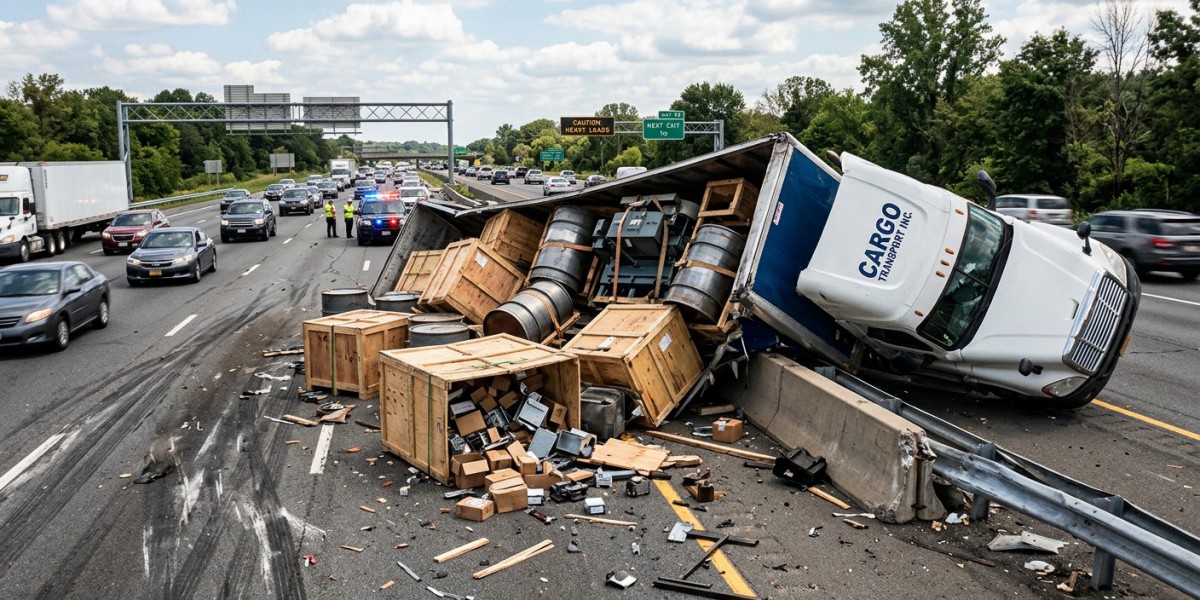

Yes, improperly loaded cargo can cause a truck accident by changing an 18-wheeler's weight distribution, stability, braking, and handling. Cargo that is overloaded, unevenly distributed, or inadequately secured can shift while the truck is moving and potentially contribute to a rollover, jackknife, loss-of-control, or other serious collision. If you were injured in a crash involving cargo problems, an 18 wheeler accident lawyer in Texas can investigate the loading process, shipping records, driver actions, and trucking company practices to determine who may be responsible.
How Can Improperly Loaded Cargo Cause an Accident?
Commercial trucks transport heavy and sometimes oversized loads over long distances. Proper loading is essential because the cargo can significantly affect how a tractor-trailer responds to steering, braking, and changes in road conditions.
Improper loading may create several dangers.
Uneven Weight Distribution
If cargo is concentrated on one side or improperly positioned inside a trailer, the truck's center of gravity can change.
This may make the vehicle harder to control, particularly when:
Turning
Changing lanes
Braking suddenly
Traveling at higher speeds
Driving on curves
Uneven weight distribution can increase the risk of a rollover or loss of control.
Cargo That Shifts During Transit
Cargo must be properly secured so it does not move while the truck is traveling.
If cargo shifts, the truck's balance can change unexpectedly. A sudden shift may make it difficult for the driver to maintain control.
Overloaded Trucks
A truck carrying more weight than allowed can create additional risks.
Excessive weight can affect:
Braking distance
Tire performance
Steering
Suspension
Vehicle stability
Overall handling
An overloaded truck may be more difficult to stop or control in an emergency.
What Types of Truck Accidents Can Improper Cargo Cause?
Improper cargo loading can potentially contribute to several types of commercial truck accidents.
Rollover Accidents
A truck with a high or improperly distributed center of gravity may be more susceptible to rolling over during a sharp turn or sudden maneuver.
Jackknife Accidents
If shifting or excessive cargo affects the truck's handling or braking, the trailer may move out of alignment with the tractor, potentially contributing to a jackknife.
Cargo Spills
Cargo that is not properly secured may fall from the trailer and create hazards for other motorists.
A falling load can cause approaching drivers to brake suddenly, swerve, or collide with the truck or other vehicles.
Loss-of-Control Crashes
Improper cargo distribution can make steering and braking more difficult, potentially causing the truck to leave its lane or roadway.
Rear-End Collisions
Excessive weight may increase the distance required for a fully loaded tractor-trailer to stop. If a driver cannot stop before reaching slower traffic, a serious rear-end collision may occur.
Who Is Responsible for Improperly Loaded Cargo?
Determining responsibility can be complicated because several parties may be involved in preparing and transporting a commercial load.
Potentially responsible parties may include:
Truck driver
Trucking company
Shipper
Loading company
Freight broker
Warehouse operator
Other companies involved in transportation
The responsible party depends on who loaded the cargo, who secured it, who inspected it, and who had responsibility for transporting it.
Harrison Davis investigates serious truck accidents involving multiple potentially responsible parties, including trucking companies, loading companies, brokers, maintenance providers, manufacturers, and others.
Can the Truck Driver Be Responsible?
Potentially.
A driver may have responsibilities related to inspecting the vehicle and cargo before and during a trip. If a driver knowingly operates a truck with an unsafe load or fails to take appropriate action after discovering a dangerous condition, the driver's conduct may become relevant.
However, drivers may not always be responsible for the original loading problem.
A truck driver may receive a sealed trailer or may have limited knowledge about how the cargo was positioned inside it. That's why a complete investigation is important before assigning blame.
Can a Trucking Company Be Responsible?
A trucking company may potentially be responsible if its policies, supervision, training, or conduct contributed to an improperly loaded truck.
Investigators may examine whether the company:
Properly trained drivers
Followed cargo safety procedures
Inspected loads
Used appropriate loading practices
Ignored previous cargo-related problems
Failed to address known safety concerns
Company policies and communications may provide important evidence about how cargo was handled.
Can the Loading Company or Shipper Be Responsible?
Yes, potentially.
If another company loaded or secured the cargo, investigators may need to determine whether that company performed the work properly.
For example, a loading company may potentially be responsible if it:
Exceeded weight limitations
Improperly distributed cargo
Failed to secure the load
Used inadequate restraints
Loaded cargo in a dangerous position
Shipping and loading records can help establish which parties were responsible for preparing the truck for transportation.
What Evidence Can Prove Improperly Loaded Cargo Caused a Crash?
A truck cargo accident can require extensive investigation.
Important evidence may include:
Cargo and Loading Records
These records may show what was loaded, how much it weighed, and who handled the loading process.
Bills of Lading
Shipping documents can help establish the type and quantity of cargo being transported.
Weight and Inspection Records
Weight tickets, inspection documents, and other records may help determine whether the truck was overloaded or improperly balanced.
Photographs and Video
Photos from the accident scene can show how cargo was positioned, whether it spilled, and how the trailer was damaged.
Electronic Vehicle Data
Electronic vehicle data may provide information about the truck's operation before the collision.
Witness Statements
Witnesses may have observed cargo falling from the truck, the trailer leaning, or the truck behaving unusually before the crash.
Accident Reconstruction
An accident reconstructionist can analyze physical evidence and vehicle movements to help determine whether cargo distribution contributed to the collision.
Harrison Davis works with investigators, accident reconstructionists, and subject-matter experts when investigating serious truck crashes.
What If Cargo Falls From an 18-Wheeler?
Falling cargo can create a dangerous situation for everyone nearby.
A motorist may have only seconds to react to an object falling into the roadway. The driver might brake suddenly or swerve into another lane, potentially causing a multi-vehicle collision.
Investigators may need to determine:
What caused the cargo to fall
Who loaded it
Whether it was properly secured
Whether the truck was overloaded
Whether the driver knew about the problem
Whether another company was responsible
The answer can affect which parties may be included in a potential claim.
How Do Lawyers Investigate Cargo-Related Truck Accidents?
A detailed investigation may involve examining the truck, trailer, cargo, loading records, company records, driver information, electronic data, and accident scene.
Lawyers may also work with accident reconstructionists and other experts to determine how the cargo affected the truck's movement.
The investigation can help answer a critical question: Was the accident caused by the driver's actions, the condition of the truck, the way the cargo was loaded, or a combination of factors?
What Compensation May Be Available?
If improper cargo loading contributed to an accident and another party is legally responsible, an injured person may potentially seek compensation for legally recoverable losses.
Depending on the circumstances, damages may include:
Medical expenses
Hospitalization
Surgery
Rehabilitation
Future medical care
Lost wages
Reduced earning capacity
Physical pain
Mental anguish
Physical impairment
Disfigurement
If a cargo-related truck accident results in a death, eligible surviving family members may potentially pursue a wrongful death claim under applicable law.
Why Is Early Investigation Important?
Evidence in commercial truck accidents can become harder to obtain over time. Loading documents, electronic data, company communications, inspection records, photographs, vehicle evidence, and witness recollections may all be important.
Early investigation can help identify potentially responsible parties and preserve relevant evidence.
If you were seriously injured in a truck accident involving improperly loaded cargo, don't assume the truck driver is automatically responsible. The loading company, shipper, trucking company, or another party may also need to be investigated.
Frequently Asked Questions
1. Can improperly loaded cargo cause an 18-wheeler accident?
Yes. Improperly distributed, overloaded, or unsecured cargo can affect a truck's stability, braking, steering, and handling and may contribute to rollovers, jackknife crashes, cargo spills, and other collisions.
2. Who is responsible for improperly loaded truck cargo?
Potential responsibility may involve the driver, trucking company, shipper, loading company, freight broker, or another party. Liability depends on who was responsible for loading, securing, inspecting, and transporting the cargo.
3. How can I prove cargo caused a truck accident?
Evidence may include loading records, bills of lading, weight records, inspection reports, photographs, video, electronic vehicle data, witness statements, vehicle damage, and accident reconstruction.
4. Can a trucking company be responsible for a cargo accident?
Potentially. A trucking company may face liability if its own negligence, safety practices, supervision, training, or failure to address a known problem contributed to the accident.
5. What compensation can I seek after a cargo-related truck accident?
Depending on the facts and applicable law, an injured person may potentially seek compensation for medical expenses, lost income, reduced earning capacity, physical pain, mental anguish, impairment, disfigurement, and other legally recoverable losses.