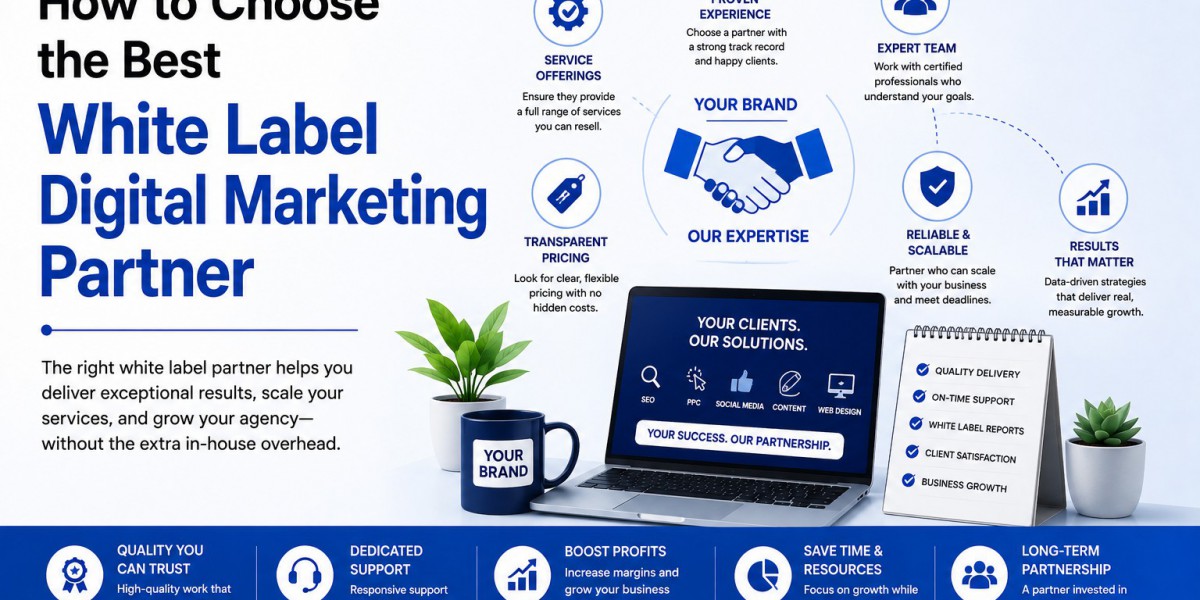

If you run an agency, a freelance consultancy, or an in-house marketing team that is stretched thin, chances are you have already considered white label digital marketing as a way to scale services without scaling headcount. The idea is simple: you sell the service under your own brand, and a specialized partner does the delivery work behind the scenes. The execution, however, is where most agencies get it wrong. Picking the wrong partner can mean missed deadlines, inconsistent quality, and clients who quietly walk away. Picking the right one can transform your agency's growth trajectory almost overnight.
This guide breaks down exactly what to look for, what to avoid, and how to evaluate a white label digital marketing partner the same way a discerning client would evaluate you.
What White Label Digital Marketing Actually Means
White label digital marketing is a business arrangement where one company performs services such as SEO, PPC, content writing, web design, or social media management, and another company (you) resells that work under its own brand name. Your client never knows a third party is involved. You handle the client relationship, invoicing, and strategy conversations, while your white label partner handles execution: keyword research, technical audits, link building, ad campaign management, and reporting.
This model matters because agency growth is rarely limited by demand. It is limited by capacity. A five-person agency can only manage so many active SEO campaigns before quality starts slipping. A white label partnership removes that ceiling, letting you take on more clients, more service lines, and more revenue without hiring, training, and managing an entire in-house production team.
Search Engine Basics Every Agency Owner Should Understand First
Before evaluating any partner, it helps to understand the fundamentals they should be applying on your clients' behalf. Search engine basics come down to three pillars: crawlability, relevance, and trust. Search engines need to find and index a page (crawlability), understand what it is about and how well it matches a searcher's intent (relevance), and judge whether the source is credible enough to rank (trust, often discussed under the umbrella of experience, expertise, authoritativeness, and trust).
A strong partner will not just chase keyword rankings. They should be able to explain how they assess Page Quality (is the content thorough, accurate, and genuinely useful) alongside Needs Met (does the page actually satisfy what the searcher was looking for). If a prospective partner cannot articulate these Search Engine Basics in plain language, that is an immediate red flag. Increasingly, the same content also needs to be structured for AI answer engines like ChatGPT, Gemini, and AI Overviews, which favor direct, well-organized, and verifiably accurate content over vague filler. A partner who only thinks in terms of classic rankings, without accounting for how AI systems retrieve and cite content, is optimizing for half the search landscape.
Key Factors When Choosing the Best SEO Agency as a White Label Partner
Not every provider labeled a white label vendor is actually equipped to protect your brand's reputation. Here is what separates the best SEO agency partners from the rest.
1. Proven process, not just promises. Ask for a sample audit, a sample content brief, or a walkthrough of their reporting dashboard. A credible partner will happily show you their methodology because they are confident in it.
2. Transparent communication and turnaround times. Clarify service level agreements upfront. How fast do they respond to revision requests? Do they assign a dedicated account manager, or will you be routed through a general support queue every time?
3. Real experience across industries. A partner who has only worked with local service businesses may struggle with an ecommerce client that needs technical SEO, schema markup, and international targeting. Ask for relevant case studies or anonymized results.
4. Ethical, white-hat practices only. Keyword stuffing, link schemes, and AI-generated content published at scale without human review can get your client's site penalized. This does lasting damage to your agency's reputation, not just theirs. Confirm the partner follows current, sustainable optimization practices rather than shortcuts.
5. Scalable service range. The best partners offer more than one service line, including SEO packages for small business, PPC management, content writing, and web design, so you are not juggling five different vendors as your client roster grows.
6. Confidentiality and brand protection. Everything from reports to email communication should carry your branding, not theirs. Ask directly whether their platform supports white-labeled dashboards and client-facing documents.
Why SEO Packages for Small Business Clients Need a Different Approach
If a meaningful portion of your client base consists of small businesses, your white label partner needs to understand that these clients have different constraints than enterprise accounts. SEO packages for small business should be built around realistic budgets, local search visibility, and measurable outcomes within a reasonable timeframe, rather than a one-size-fits-all enterprise strategy scaled down.
A partner experienced in this segment will typically offer tiered packages covering local SEO, Google Business Profile optimization, on-page fixes, and a manageable volume of content and link building each month. What matters most is whether they can explain results in terms a small business owner actually cares about, such as phone calls, form submissions, and foot traffic, rather than burying clients in jargon about crawl budgets and domain authority.
Red Flags to Watch For
A few warning signs consistently predict a bad white label partnership: guaranteed rankings within a fixed timeframe (no legitimate agency can guarantee this), pricing that seems too low to sustain quality delivery, vague or generic sample reports, and reluctance to sign a clear non-disclosure or non-solicitation agreement. If a partner is unwilling to put reasonable protections in place for your client relationships, that hesitation tells you something important.
Questions to Ask Before You Sign
Before committing to any partner, ask these directly: How do you handle quality control across different writers or strategists? What happens if a client is dissatisfied with a deliverable? Can we speak with an existing agency partner as a reference? How do you stay current with algorithm updates and evolving AI search behavior? The answers, and how confidently they are delivered, will tell you as much as any portfolio.
Making the Final Decision
Choosing the right white label digital marketing partner is ultimately a trust exercise. You are extending your brand's reputation to a team your clients will never see. The right partner treats your clients' results as their own, communicates proactively instead of waiting to be chased, and can speak fluently about both classic ranking factors and the newer realities of AI-driven search.
If you are evaluating options and want a partner that has spent over two decades refining exactly this kind of process across SEO, content, PPC, and web design, SEO Discovery works behind the scenes with agencies worldwide to deliver white-labeled results without ever putting your brand at risk. Reach out to discuss your service needs, client volume, and how a partnership could be structured around your agency's specific goals.
Choosing well the first time saves months of client churn and wasted budget later. Take the time to vet thoroughly, ask uncomfortable questions, and pick a partner whose standards match the brand you have worked hard to build.