
Choosing the right shop shelving can make a big difference to how a retail store looks, operates, and serves customers. Shelving needs to do more than hold products. It should use available floor space efficiently, keep stock organised, make products easy to see, and support the everyday demands of a busy shop.
From supermarkets and convenience stores to independent retailers and specialist outlets, different businesses have different shelving requirements. The right system depends on the products being displayed, available space, store layout, stock levels, and the type of shopping experience you want to create.
What Type of Shop Shelving Does Your Store Need?
The best shelving system starts with understanding what your store needs to display. A small convenience shop may need compact wall shelving and gondola units, while a larger supermarket could require long runs of adjustable shelving across multiple aisles.
Common options include wall-mounted shelving, freestanding retail shelving, gondola shelving, display shelving, and heavy-duty storage units. Each option serves a slightly different purpose.
Wall shelving works well around the perimeter of a shop and helps make use of vertical space. Freestanding units can divide the store into clear product sections, while gondola shelving is particularly useful for creating organised aisles with products displayed on both sides.
How Can Gondola Shelving Improve a Shop Layout?
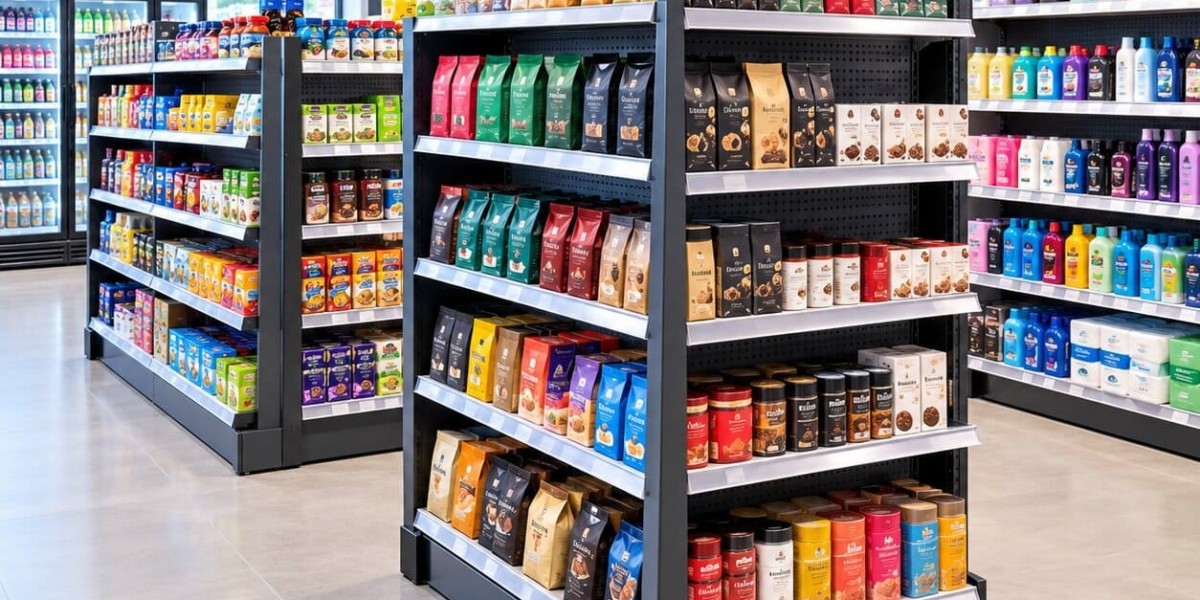
Gondola shelving is a popular choice for supermarkets, convenience stores, and general retail environments because it creates practical product displays while making good use of floor space.
A typical gondola unit can be positioned in the centre of a store, allowing products to be displayed on both sides. Shelves can usually be adjusted to suit different product heights, which makes the system flexible as stock ranges change.
Double-sided gondola shelving can also help create defined shopping aisles. This makes it easier for customers to move around the store and find different product categories without wasting valuable floor area.
Why Is Wall Shelving Useful for Retail Stores?
Wall shelving is ideal when a store needs additional display capacity without taking too much floor space. It can be installed along walls and used for everything from packaged goods and household products to accessories and specialist retail items.
Using vertical space can help retailers increase product capacity while keeping the centre of the shop open. This can be especially useful in smaller stores where every metre of floor space matters.
Adjustable wall shelving also gives retailers flexibility. Shelves can be moved to accommodate tall bottles, boxes, smaller packages, or changing product ranges.
What Makes Adjustable Shop Shelving a Practical Choice?
Retail stock doesn't always stay the same. Product sizes change, new lines are introduced, and seasonal displays may require a different arrangement.
Adjustable shop shelving makes these changes easier. Shelves can be positioned at different heights to suit the products being displayed. Instead of replacing an entire shelving system, retailers can modify the layout as their requirements change.
This flexibility makes adjustable shelving suitable for convenience stores, supermarkets, independent retailers, pharmacies, hardware stores, and other commercial environments.
How Can Retail Display Shelving Improve Product Visibility?
Good product presentation starts with visibility. Customers should be able to see products clearly without having to search through crowded shelves.
Retail display shelving provides a structured way to arrange products by category, size, brand, or price range. A well-organised display can also make it easier to maintain stock levels throughout the day.
Shelving height, spacing, shelf depth, and product placement all play a role. Frequently purchased products can be positioned where customers can reach them easily, while larger or heavier items may require lower shelves.
Does Your Store Need Heavy-Duty Shelving?
Not every product requires heavy-duty shelving, but businesses carrying bulky or heavy stock may benefit from stronger commercial shelving systems.
Heavy-duty shelving is commonly used for stockrooms, warehouses, hardware shops, trade counters, and retailers that need to store heavier products. The system should be selected according to the expected load and the way stock will be handled.
For safety and long-term performance, retailers should always follow the manufacturer's recommended load limits and installation guidance.
How Can Shelving Accessories Make a Difference?
Shelving accessories can make a basic shelving system much more useful. Depending on the retail environment, accessories can include shelf hooks, dividers, price strips, brackets, baskets, and product supports.
Shelf hooks are useful for hanging smaller packaged products, while dividers can help keep products separated and organised. Price strips provide a clear location for pricing information and can help maintain a consistent appearance across an aisle.
The right accessories can also make restocking quicker and help prevent products from becoming disorganised.
What Shop Shelving Works Best for Convenience Stores?
Convenience stores usually need shelving that makes the most of limited space while keeping everyday products easy to access.
Gondola shelving is often useful for central aisles, while wall shelving can provide additional capacity around the store. Adjustable shelves allow retailers to accommodate different product sizes, from small packaged goods to larger household items.
For convenience stores, the layout should also leave enough space for customers to move comfortably through the shop.
How Should You Choose Shelving for a Supermarket?
A supermarket normally needs a combination of shelving solutions rather than one single type. Gondola shelving can create organised aisles, while wall shelving can be used around the perimeter.
The shelving layout should reflect product categories and customer movement. Grocery products, household goods, personal care items, and other categories can each have dedicated areas.
Retailers should also consider shelf height, product weight, aisle width, available floor space, and future changes to the store layout before choosing a system.
Where Can You Get Shop Shelving for a Retail Store?
The right supplier should offer shelving options that suit different store sizes, product categories, and layouts. It can also be useful to choose systems that can be expanded or adjusted when the business grows.
Shop Solutions Midlands provides retail shelving solutions for businesses looking to organise products, improve floor-space usage, and create practical shop layouts. Options can include shelving systems and related retail display equipment for different commercial environments.
Before ordering, measure the available area and consider how many shelves, bays, accessories, and display sections are required. Planning the layout first can help avoid unnecessary changes later.
What Should You Consider Before Buying Shop Shelving?
Before choosing a shelving system, consider:
The size and shape of your retail space
Product dimensions and weight
Required shelf capacity
Wall or freestanding placement
Single-sided or double-sided shelving
Adjustable shelf requirements
Stockroom and display needs
Customer movement and aisle space
Shelving accessories
Future expansion or layout changes
A well-planned shelving system can help create a cleaner store layout, improve product organisation, and make better use of available space.
Why Is the Right Shop Shelving Important?
Shop shelving is a practical part of any retail environment. It affects product storage, presentation, customer movement, stock organisation, and the overall use of floor space.
Whether a business needs wall shelving for a compact store, gondola units for supermarket aisles, display shelving for product presentation, or heavy-duty units for stock storage, the system should match the store's specific requirements.
The goal isn't simply to add more shelves. It's to create a shelving layout that works with the products, the available space, and the way customers use the shop.