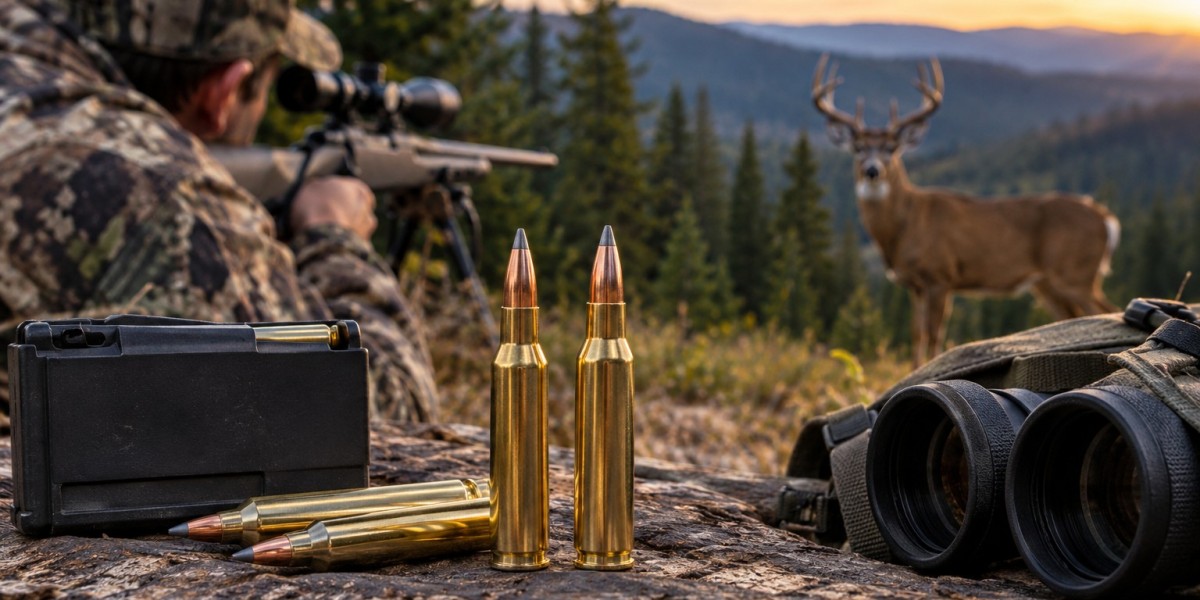

Choosing a suitable hunting cartridge requires careful consideration of the animal being hunted, local regulations, equipment compatibility, and the hunter’s experience. The 8.6 blackout for deer hunting is a topic of interest among hunters who want to understand newer cartridge designs and how they compare with more established options. Before considering any cartridge, it is important to understand its intended use, ballistic characteristics, limitations, and legal requirements.
Deer hunting involves ethical responsibilities, including identifying the target correctly, understanding the surroundings, and ensuring that any shot is taken only when conditions are safe and appropriate. Cartridge selection is one part of that broader responsibility, but it should never replace proper training and sound judgment.
Understanding the 8.6 Blackout Cartridge
The 8.6 Blackout is a relatively modern rifle cartridge developed around the idea of combining a larger projectile with a compact cartridge design. It is associated with both conventional and subsonic ammunition concepts, depending on the specific load and firearm configuration.
The cartridge has attracted attention because of its larger bullet diameter and its association with compact firearm platforms. However, the performance of any ammunition depends on several variables, including bullet design, barrel length, velocity, shot distance, and the specific firearm being used.
A cartridge name alone does not provide enough information to determine whether a particular load is appropriate for a specific hunting situation.
Why Cartridge Selection Matters in Deer Hunting
Deer are medium-sized game animals, and ethical hunting requires equipment that is appropriate for the species and the conditions. Hunters must consider whether their chosen cartridge can provide suitable performance while also allowing accurate and responsible shot placement.
A cartridge should be evaluated according to its complete performance profile rather than only its bullet diameter or advertised energy.
Important considerations include:
Accuracy with the chosen firearm
Suitable ammunition for the intended use
Compliance with local hunting regulations
These factors should be considered together before making any equipment decision.
Bullet Diameter and Projectile Design
One of the defining characteristics of the 8.6 Blackout is its relatively large projectile diameter. A larger bullet can offer certain design possibilities, but diameter alone does not determine effectiveness.
Projectile construction plays a major role in how a bullet behaves after impact. Different bullets are designed for different purposes, and not every projectile is intended for hunting.
Hunters should carefully review the manufacturer's ammunition information and confirm that the selected load is specifically intended for the relevant application.
Bullet Construction
Bullets may be designed to expand, maintain structural integrity, or perform differently depending on their construction.
For hunting purposes, ammunition should be selected according to applicable regulations and ethical requirements. The use of unsuitable ammunition can create safety, performance, and legal problems.
Subsonic and Supersonic Ammunition
The 8.6 Blackout is often discussed in relation to subsonic and supersonic ammunition.
Subsonic ammunition travels below the speed of sound, while supersonic ammunition travels faster than the speed of sound. These two categories can have different performance characteristics.
Subsonic loads generally produce lower velocities, which can affect trajectory and impact energy. Supersonic loads may provide a different trajectory and energy profile.
The distinction is important because ammunition behavior should be understood before any field use. Hunters should not assume that all loads in the same cartridge have identical performance.
Understanding Ballistic Performance
Ballistic performance refers to how a projectile behaves from the firearm through its flight and, where applicable, after impact.
Several factors influence this performance. Muzzle velocity, bullet weight, ballistic coefficient, barrel length, environmental conditions, and distance can all affect the trajectory.
A cartridge that performs well under one set of conditions may behave differently under another.
Trajectory
Trajectory describes the path a projectile follows after leaving the barrel. Gravity causes the projectile to drop over distance, while air resistance affects its speed and flight behavior.
Hunters must understand the trajectory of their chosen ammunition rather than relying only on general cartridge descriptions.
Energy and Momentum
Muzzle energy is often used as one way to describe projectile performance. However, energy figures alone do not explain every aspect of terminal behavior.
Bullet construction, impact velocity, shot placement, and other factors also matter. A responsible evaluation should therefore consider multiple characteristics instead of focusing on a single number.
Firearm Compatibility
Not every firearm can safely use every cartridge. Compatibility must be confirmed through the firearm manufacturer’s specifications and the markings on the firearm.
The chambering, action, barrel, and ammunition must be appropriate for one another. Using incorrect ammunition can result in serious injury or damage.
Before using any firearm, hunters should consult the owner's manual and seek guidance from a qualified professional when there is uncertainty.
Barrel Length
Barrel length can influence velocity, balance, handling, and overall firearm characteristics. Compact configurations may have different performance compared with longer barrels using the same ammunition.
For this reason, published ballistic information should be interpreted in relation to the barrel length and firearm configuration used during testing.
Accuracy and Familiarity
A cartridge may have useful characteristics on paper, but practical accuracy depends on the complete firearm and ammunition combination.
Hunters should become familiar with their equipment through lawful, controlled practice. This includes understanding the firearm's operation, sighting system, recoil, and ammunition behavior.
Confidence should come from consistent practice and knowledge rather than assumptions based on online discussions or advertising claims.
Recoil and Handling
Recoil can influence comfort, control, and follow-up handling. The experience of recoil depends on firearm weight, stock design, ammunition, projectile weight, and the shooter's position.
A firearm that is difficult to control may make it harder for a hunter to maintain accuracy and make responsible decisions.
Hunters should choose equipment they can handle safely and comfortably. Proper instruction and a suitable shooting position can also help improve control.
Ethical Considerations in Deer Hunting
Ethical hunting requires more than selecting a cartridge. Hunters should understand deer behavior, identify the animal correctly, and avoid taking shots when visibility or conditions are uncertain.
A responsible hunter should also consider the background, nearby people, property boundaries, and the possibility of wounded-animal recovery.
Shot Placement
Accurate shot placement is central to ethical hunting. Hunters should receive appropriate training and follow recognized hunting practices.
No cartridge can compensate for poor judgment, inadequate practice, or an unsafe shooting position.
Weather and Environmental Conditions
Outdoor conditions can affect hunting equipment and projectile behavior. Wind, temperature, rain, vegetation, and terrain may influence visibility and the ability to make a safe decision.
Hunters should understand the conditions in their area and avoid taking shots when the environment creates uncertainty.
Environmental awareness is particularly important in wooded areas, where visibility and background conditions may change quickly.
Legal Requirements
Hunting regulations vary by country, state, province, and wildlife management area. Some jurisdictions specify permitted cartridges, minimum projectile sizes, energy requirements, firearm types, or seasonal restrictions.
Because regulations can change, hunters should consult the relevant wildlife authority before planning a hunt.
It is also important to check rules related to magazine capacity, hunting zones, firearm transport, ammunition, and permitted hunting methods.
Comparing Newer and Established Cartridges
Hunters often compare newer cartridges with established options. Such comparisons should focus on clearly defined factors rather than general claims.
Useful comparison categories may include cartridge availability, ammunition cost, firearm availability, trajectory, recoil, intended hunting conditions, and local legal requirements.
A newer cartridge may offer particular design characteristics, but established cartridges may have broader availability and a longer history of field use.
The most suitable choice depends on the hunter's circumstances, equipment, training, and legal environment.
Ammunition Availability and Cost
Ammunition availability can be an important practical consideration. A cartridge may be interesting from a technical perspective, but limited local availability can create difficulties for regular practice and responsible preparation.
Hunters should consider whether suitable ammunition can be obtained legally and reliably in their region.
Cost is another factor. Regular practice is important, so ammunition expenses may affect how often a person can train with the chosen firearm.
Maintenance and Safe Storage
Firearms and ammunition should be maintained and stored according to applicable safety guidance.
The firearm should be inspected, cleaned, and stored securely. Ammunition should be kept dry and stored separately or according to local safety recommendations.
Children and unauthorized individuals must not have access to firearms or ammunition.
Regular maintenance can help identify damage, wear, or other issues before equipment is used.
Making an Informed Decision
The 8.6 blackout for deer hunting should be evaluated through a combination of technical information, practical handling, legal requirements, and ethical considerations.
Hunters should review reliable manufacturer data, consult local regulations, seek qualified instruction, and practice with the exact firearm and ammunition combination they intend to use.
Online discussions can provide useful starting points, but they may not account for differences in firearm configuration, ammunition, hunting conditions, or regional laws.
Conclusion
The 8.6 blackout for deer hunting is a modern cartridge topic that deserves careful evaluation rather than assumptions based only on bullet size or general popularity. Its performance depends on ammunition type, projectile design, barrel length, firearm compatibility, distance, and environmental conditions. Ethical deer hunting also requires proper training, accurate identification, responsible shot selection, and compliance with local regulations. Before choosing any cartridge, hunters should confirm firearm compatibility, study reliable ballistic information, and consult the relevant wildlife authority. A well-informed decision should always prioritize safety, legality, accuracy, and responsible hunting practices.
FAQs
What is the 8.6 Blackout?
The 8.6 Blackout is a modern rifle cartridge developed around a larger projectile and compact cartridge design. It is discussed in both subsonic and supersonic ammunition contexts.
Does bullet diameter determine hunting performance?
No. Bullet diameter is only one factor. Projectile construction, velocity, shot placement, distance, and the specific ammunition load also influence performance.
Can all 8.6 Blackout ammunition be used in the same way?
No. Different loads can have different velocities, bullet weights, and intended applications. Ammunition information should always be checked carefully.
Is firearm compatibility important?
Yes. The firearm chambering and ammunition must match the manufacturer's specifications. Incorrect ammunition can cause serious injury or firearm damage.
Where can hunters check deer hunting regulations?
Hunters should consult the official wildlife or game-management authority responsible for the area where they plan to hunt.