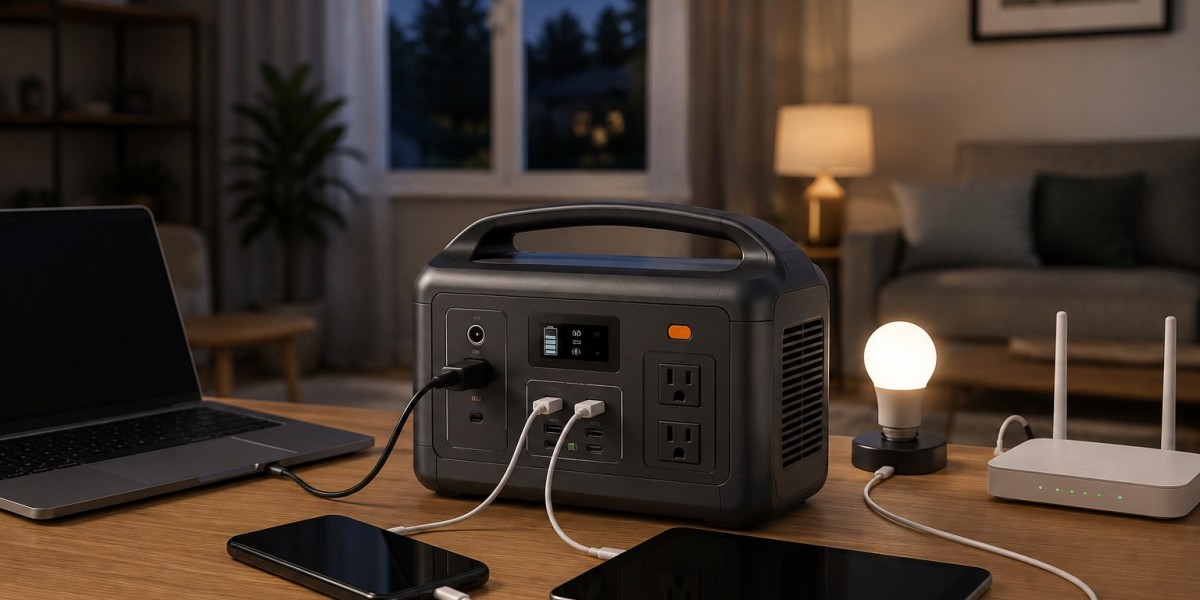

Power outages can interrupt work, communication, entertainment, and many other daily activities. A portable power station can provide backup electricity for important devices such as phones, laptops, lights, fans, and Wi-Fi routers. Because these units store electricity in rechargeable batteries, they can be used when regular power is unavailable.
However, choosing the right model requires more than simply looking at the battery size. Different power stations offer different capacities, output levels, charging options, and connection ports. Understanding these features can help you select a unit that matches your actual household requirements.
If you are searching for the best portable power station for home, start by considering which devices you need during an outage and how long you want to keep them running. This approach makes it easier to choose a practical power station without paying for capacity or features that you may not use.
Determine What You Need to Power
The first step is to make a simple list of the devices you want to keep running during a power outage. Your needs may be limited to communication and lighting, or you may want backup power for several household electronics.
Common examples include:
Smartphones
Laptops
Wi-Fi routers
LED lights
Fans
Televisions
Check the wattage of each device before choosing a power station. Adding the power requirements together gives you a better idea of how much output you need.
Understand Battery Capacity
Battery capacity is one of the most important specifications to check. It is normally measured in watt-hours (Wh) and indicates how much energy the battery can store.
For example, a 50-watt device running for four hours would require about 200 watt-hours of energy. Actual runtime can be somewhat lower because power stations lose some energy during power conversion.
A larger battery can provide longer runtime, but it can also increase the size, weight, and price of the unit. Choose a capacity according to your expected usage rather than automatically selecting the largest option.
Check the Power Output
Battery capacity tells you how much energy a power station stores, while output tells you how much power it can provide at a given time.
A device that requires more power than the station's maximum output may not work, even if plenty of battery capacity remains. This is particularly important for appliances with motors or higher startup requirements.
Before connecting an appliance, compare its wattage with the station's continuous and surge output ratings. This simple check can help prevent compatibility problems.
Look at the Available Ports
The ports on a power station determine what devices you can connect and charge. Most models offer a combination of AC outlets, USB ports, USB-C connections, and DC outputs.
Think about the devices you use most often. Phones and tablets may work through USB ports, while laptops and household electronics may require AC outlets.
It is also worth checking how many devices you can connect at the same time. A power station with suitable ports can make it easier to manage several essential devices during an outage.
Consider Charging Options
A power station needs to be recharged after use, so charging options are another important consideration. Many models can be charged from a standard wall outlet, while some also support solar panels and vehicle charging.
Wall charging is useful when electricity is available. Solar charging can be helpful during longer outages, while vehicle charging provides another option when you are away from home.
If you are interested in solar charging, check the power station's maximum solar input and compatible panel requirements before buying additional equipment.
Think About Size and Portability
Portable power stations come in different sizes and weights. Smaller models are easier to carry and store, while larger models generally offer more battery capacity.
For home use, think about where you will keep the unit and whether you may need to move it between rooms. A large and heavy station may provide more power but may not be convenient if you need to move it frequently.
Choose a size that provides the required capacity while remaining practical for your home.
Check Safety Features
Safety should also be considered when comparing different power stations. Many modern models include protective features designed to help manage common electrical and temperature-related issues.
Depending on the model, these may include:
Overload protection
Short-circuit protection
Over-temperature protection
Overcharge protection
Always follow the manufacturer's instructions and avoid connecting devices that exceed the station's rated limits.
Match the Station to Your Home
Every household has different backup power requirements. Someone who works from home may need power for a laptop, router, monitor, and lights, while another person may only need to charge phones and operate a few lights.
For short outages, a smaller unit may be enough for essential electronics. Longer outages may require a larger battery and a reliable way to recharge it.
For households that need backup electricity regularly, the best portable power station for home will depend on the devices being powered, expected runtime, available charging methods, and how much portability matters.
Prepare the Power Station in Advance
A portable power station is most useful when it is ready before an outage happens. Keep the unit charged and store its charging cables in an easy-to-find place.
It is also helpful to test the power station with your essential devices from time to time. This lets you confirm that the connections work and that the station can handle your expected load.
Regular preparation can make the power station much more useful during an unexpected interruption.
Final Thoughts
Choosing a portable power station for home use does not have to be complicated. Start by identifying your essential devices, checking their power requirements, and estimating how long you want them to operate.
Then compare battery capacity, output, available ports, charging methods, size, and safety features. Instead of focusing only on the largest battery, choose a model that fits your actual household needs.
A properly selected portable power station can provide useful backup electricity for essential electronics and help make short or unexpected power interruptions easier to manage.
FAQs
Can a portable power station run household appliances?
Yes, provided the appliance's power requirements are within the power station's rated output.
How long can a power station run my devices?
Runtime depends on battery capacity and the amount of electricity consumed by the connected devices.
Can a power station be charged with solar panels?
Many models support solar charging, but compatibility and charging limits vary, so check the manufacturer's specifications.
What is the most important feature to check?
Battery capacity and output are both important. You should also consider ports, charging options, size, and the devices you plan to operate.
Is a larger power station always better?
Not necessarily. A larger unit may provide more capacity but can also be heavier and more expensive. The suitable size depends on your actual power requirements.