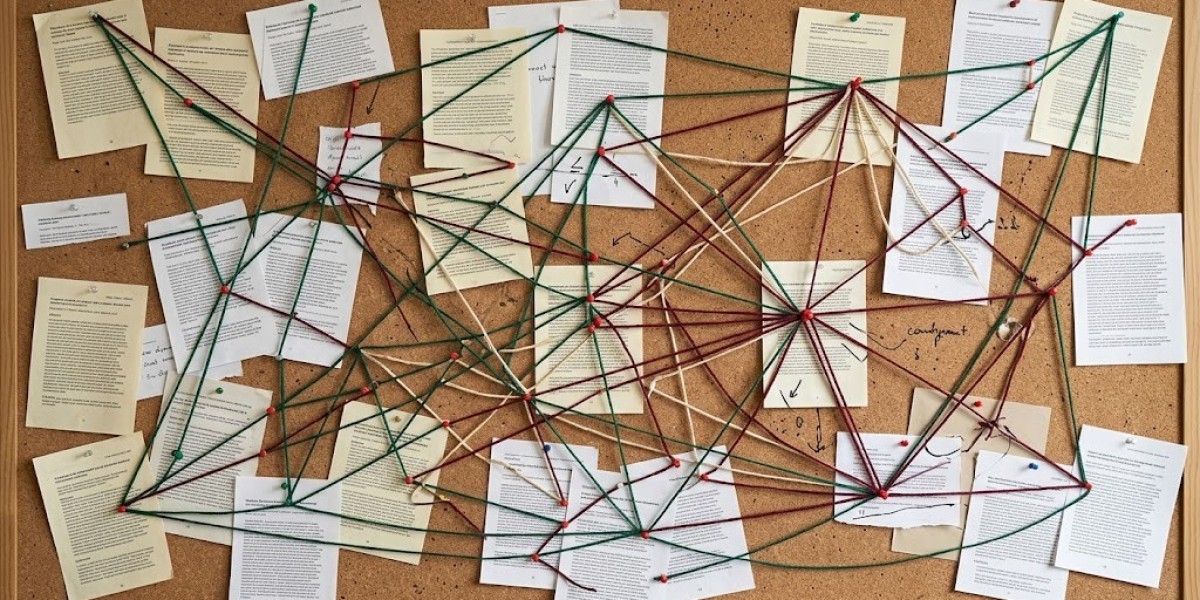

You know the feeling. Hours spent digging through journals, folders full of saved PDFs, half the page highlighted yellow, notes scribbled in the margins. Then you open a blank document to start writing and realise, with a small sinking feeling, that you still can't actually explain what all this reading adds up to.
That moment has less to do with weak research and more to do with how the research is sitting in your head. A dissertation literature review was never really about proving you can find sources. It's about making sense of them. At final-year undergrad or postgrad level, markers want to see you move past "this researcher found X" and into "why do these two findings disagree, and what does that disagreement actually tell us?"
Once you start reading that way, the review stops feeling like a pile of summaries stacked on top of each other. It starts looking more like a map some roads well-trodden, others that stop dead for no obvious reason, a few pointing off in completely different directions. Those gaps are usually where the more interesting dissertation questions live.
Summary Isn't the Enemy, But It Can't Be the Whole Story
Synthesis isn't just summarising with extra steps. A summary keeps a source standing on its own two feet. Synthesis is what happens when you put several sources in a room together and make them talk to each other.
Say your dissertation looks at remote working and employee wellbeing. One study links flexible hours to more autonomy. Another finds it breeds isolation. A third says it all comes down to how supportive the line manager is. Written as three separate paragraphs, those findings just sit there, unconnected, doing nothing for each other.
Put them side by side, though, and something more useful appears. Maybe flexible working doesn't produce one fixed outcome at all maybe it depends entirely on the conditions around it. Suddenly the disagreement between studies isn't a nuisance. It's your evidence.
Where Most Students Get Stuck
The most common trap is having far too much information and far too little argument. Your notes are packed with quotes, findings, theories genuinely good material but when the writing starts, every paper gets its own tidy little paragraph. It reads as well-researched, sure, but the reader is left to do all the connecting themselves.
There's also a habit of treating contradictory studies as a problem to be smoothed over. They're not. Two studies landing on different conclusions might simply mean they looked at different age groups, used different measures, or worked from different theoretical starting points and that's worth noticing, not hiding.
A related trap is declaring a "gap" too early. You find three papers on something and immediately write "there is limited research in this area." Fine, but that sentence alone doesn't tell your reader why the gap matters. Ask instead: is a particular group missing from the evidence? Has one method dominated while others go untested? That's what turns an absence into something worth investigating.
Three Words Worth Actually Understanding
Summary, analysis, synthesis three terms that sound interchangeable but aren't.
Summary tells the reader what a study set out to do, what it found, and what conclusion it reached. Nothing wrong with that as a starting point; the trouble starts when a review never gets past it.
Analysis digs into how the knowledge was actually produced. If a study links heavy workload to poorer wellbeing, you'd want to know: who took part, how was wellbeing measured, was this interviews or a survey, and what did the researchers themselves admit the study couldn't show?
Synthesis is where it all comes together several studies pointing one way, one study complicating the picture, and you working out whether that complication changes the whole story.
A thematic matrix genuinely helps here. Rather than filing papers by the order you found them, group them by the themes your question actually raises purpose, method, population, findings, limitations, relevance. It's not meant to appear in your dissertation as some giant table. It's scaffolding for your own thinking, and it tends to reveal patterns you'd never spot with every paper sitting alone in its own folder.
It's worth saying, too plenty of students come across guidance material or examples online while working through this stage, including from a Literature Review Writing Service UK, and that's a perfectly reasonable way to see how others have structured similar arguments. But borrowing structure isn't the same as borrowing judgement the academic weight of your own dissertation still rests on your evaluation of why a source belongs, what it can support, and where it falls short.
Questions Worth Asking of Every Source
Change your note-taking before you change your writing. For each paper that matters, jot down what it contributes to your actual research problem, not a miniature essay retelling it.
- What was the study trying to find out?
- How did they go about investigating it?
- What did the evidence actually show?
- What could it not establish?
- Does it support, complicate, or challenge another source you've read?
Take a marketing dissertation asking whether influencer credibility affects consumer trust. A few studies suggest expertise and authenticity carry weight. Another finds that once audiences know a post is a paid partnership, they read the whole thing differently. Rather than a paragraph each, bring them into one conversation does credibility work differently once commercial ties are visible? That's the literature doing real work for you.
A handy trick at the editing stage: cover up the citations and reread the paragraph. Can you still tell what it's arguing? If yes, your sources are backing up a point. If it just reads as a list of disconnected claims, it needs more stitching together.
Mistakes That Quietly Undermine Good Work
Treating criticism as the same thing as critical writing is a common one. Pointing out a flaw in every study doesn't automatically make your review more analytical ask what that flaw actually changes. A small sample size might limit how far findings can be generalised; it doesn't make the study worthless.
Avoid smoothing over disagreement too. If two studies clash, resist picking a side straight away look at the conditions each one worked under first. Watch the phrasing, too: "there is no research on this" is a bold claim that's rarely fully justified. "Existing studies have mostly focused on one population" is usually closer to the truth, and reads as more credible.
And don't let your source list sprawl. Once you understand a topic, it's tempting to keep collecting anything loosely related. A source earns its place because it connects clearly to your argument, not because it has one quotable sentence.
Bringing It Together
A strong literature review leaves your reader understanding the problem better than they did at the start. That happens when sources aren't treated as separate little authorities but as evidence that talks to, tests, and sometimes contradicts each other.
The real shift is asking not what each paper says on its own, but what they collectively let you say. That's where you start noticing why findings diverge, which evidence actually carries weight for your question, and where a real gap not just an empty shelf is sitting, waiting for your research to fill it.