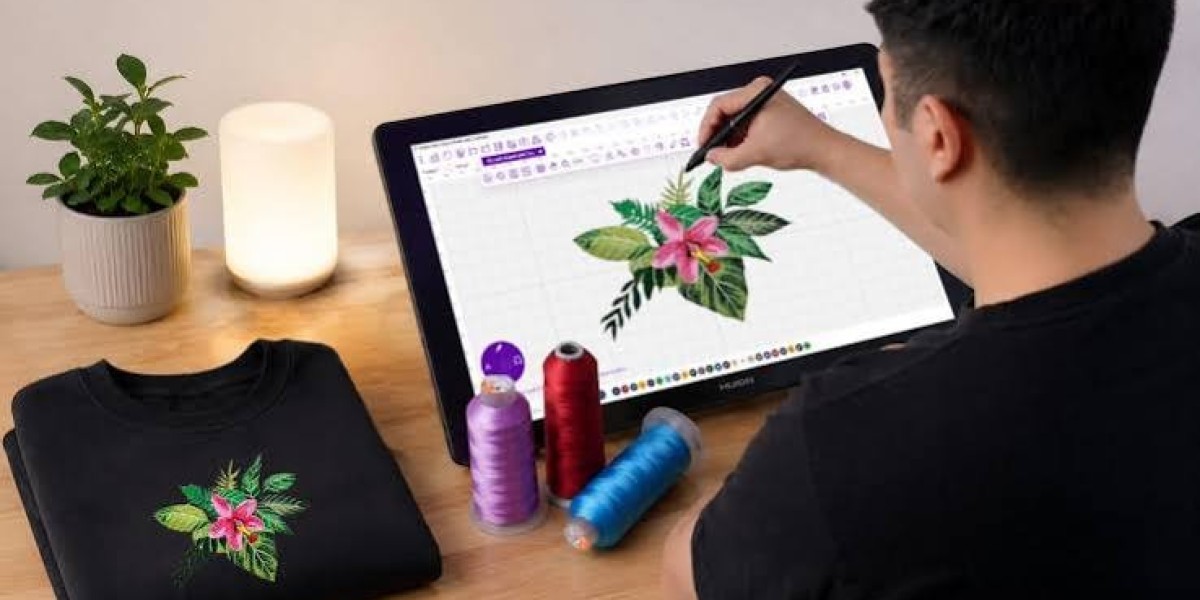

Custom embroidery is a popular way for businesses, clothing brands, sports teams, and organisations to add professional branding to garments and promotional products. However, achieving clean and attractive embroidery starts long before the thread reaches the fabric. The artwork first needs to be converted into a format that an embroidery machine can understand.
This is where embroidery digitizing becomes essential.
Professional digitizing transforms artwork, logos, and illustrations into detailed stitch files. At Risedigitizing, designs are prepared with factors such as stitch direction, density, fabric type, size, and design complexity in mind. The result is an embroidery file designed for practical production rather than simply a digital image conversion.
What Is Embroidery Digitizing?
Embroidery digitizing is the process of converting digital artwork into a machine-readable embroidery file. The digitized design contains instructions that tell an embroidery machine where to place stitches, which stitch types to use, and when to change thread colours.
A typical digitized design may include:
Running stitches
Satin stitches
Fill stitches
Underlay stitches
Stitch direction
Stitch density
Thread colour information
Stitch sequence
Every element contributes to how the final design appears on fabric.
Why Is Embroidery Digitizing Important for Businesses?
Businesses often use embroidery to display their logos on uniforms, workwear, caps, jackets, bags, and promotional merchandise.
A poorly prepared embroidery file can result in uneven stitching, distorted shapes, excessive thread buildup, or unclear text. Professional digitizing helps prepare the artwork specifically for embroidery production.
For businesses, this can be particularly important when the same logo needs to be reproduced across different garments and products.
Turning a Logo Into an Embroidery Design
A digital logo may look perfect on a computer screen but still require significant adjustments before it can be embroidered.
For example, very small text may become difficult to read when stitched. Thin lines may need to be adjusted, while complex shapes may require careful stitch planning.
If you need to convert your artwork into an embroidery-ready file, you can explore Risedigitizing's logo digitizing services.
The objective is to preserve the recognisable elements of the original logo while adapting them to the practical limitations of embroidery.
How Professional Digitizing Handles Different Fabrics
Fabric plays an important role in embroidery production. A design that works well on one material may require adjustments for another.
Cotton
Cotton garments can require appropriate stabilisation and stitch planning to help maintain clean shapes.
Polo Shirts
Polo shirts are commonly used for business uniforms. Logos need to be prepared carefully so that stitching remains neat without overwhelming the fabric.
Jackets
Jackets can involve thicker materials and different construction, requiring suitable stitch settings and design placement.
Caps
Caps have curved surfaces, which can make embroidery more challenging. Designs may need specialised planning to accommodate the shape.
Bags
Promotional bags and backpacks can also feature embroidered logos. The material and thickness need to be considered during digitizing.
The Main Steps in Embroidery Digitizing
Professional embroidery digitizing involves several stages.
Artwork Analysis
The original design is reviewed to identify colours, shapes, text, fine details, and areas that may require adjustment.
Stitch Type Selection
Different parts of the artwork may require different stitch types. Satin stitches can work well for certain lettering and narrow shapes, while fill stitches can cover larger areas.
Stitch Direction
Stitch direction can influence the texture and visual appearance of the finished design. Proper planning can also help create smoother transitions between sections.
Density Adjustment
Stitch density needs to be appropriate for the design and fabric. Excessive density can create unnecessary bulk, while insufficient coverage can affect the appearance of the design.
Stitch Sequence
The sequence determines the order in which different parts of the design are embroidered. Efficient sequencing can help reduce unnecessary movement and improve production.
Final Review
The completed file should be reviewed to identify potential problems before it is used for production.
Why Automatic Conversion Is Not Always Enough
There are many tools that can automatically convert images into embroidery files. While these tools may be useful for basic experimentation, automated conversion does not always understand the practical requirements of embroidery.
An image consists of pixels, colours, and visual elements. An embroidery machine works with stitches.
Professional digitizing bridges this difference by considering how artwork will behave when translated into thread.
This is particularly important for detailed logos, small lettering, complex artwork, and designs intended for different fabrics.
Custom Embroidery Digitizing for Unique Designs
Every embroidery project can have different requirements. A small logo for a shirt may need different treatment from a large back design on a jacket.
Custom embroidery digitizing services can be useful when artwork requires specific adjustments based on size, fabric, product type, or production requirements.
At Risedigitizing, the artwork can be prepared according to the intended embroidery application rather than relying on a one-size-fits-all approach.
Embroidery Digitizing for Clothing Brands
Clothing brands use embroidery to create distinctive designs on products such as:
T-shirts
Sweatshirts
Hoodies
Jackets
Caps
Polo shirts
Bags
Workwear
A well-prepared embroidery file helps brands reproduce their artwork consistently across different products.
For businesses building a recognisable visual identity, consistent logo placement, colours, and embroidery quality can be an important part of product presentation.
Common Embroidery Digitizing Mistakes
Several issues can affect the quality of an embroidered design.
Too Much Stitch Density
Overly dense designs can result in excessive thread buildup and may affect the fabric.
Very Small Details
Tiny elements may not translate effectively into stitches and may need to be simplified.
Incorrect Stitch Direction
Poor stitch direction can affect the texture and appearance of different design sections.
Ignoring Fabric Type
Using the same settings for every fabric can lead to inconsistent results.
Poor Stitch Sequencing
An inefficient sequence can create unnecessary thread changes and machine movement.
Professional digitizing considers these factors before the file reaches production.
How Risedigitizing Supports Embroidery Projects
Risedigitizing focuses on converting artwork into embroidery-ready files for a variety of applications. Whether you have a business logo, clothing design, promotional artwork, or custom illustration, the digitizing process can be adapted to the requirements of the project.
You can visit the Risedigitizing homepage to explore available digitizing and artwork services.
Final Thoughts
Professional embroidery digitizing plays an important role in turning digital artwork into attractive, production-ready embroidery. From stitch direction and density to fabric compatibility and design size, many technical details influence the final result.
Whether you are creating branded uniforms, launching an embroidered clothing collection, or preparing custom promotional products, properly digitized artwork can provide a strong foundation for the embroidery process.
With professional preparation from Risedigitizing, your artwork can be converted into a stitch-ready design that is better suited to real-world embroidery production.