
Introduction
Managing medicines every day can become difficult, especially when a person takes several medicines at different times. Remembering which medicine to take, how much to take, and when to take it can require a consistent system.
A pill box can provide a simple way to organize medicines before they are needed. Instead of keeping every dose mixed together in different containers, people can arrange medicines according to their daily schedule.
For people taking long-term daily medication, organization can be especially helpful. A pill box can also support family members who are caring for a parent or another loved one.
However, organization is only one part of medication management. Combining a pill organizer with appropriate reminders, written instructions, and regular communication with healthcare professionals can create a more dependable routine.
What Is a Pill Box?
A pill box, also called a pill organizer or medication organizer, is a container with separate compartments for storing doses of medicine.
Basic designs may have compartments for each day of the week. Other designs may divide each day into sections such as:
- Morning
- Afternoon
- Evening
- Bedtime
The right type depends on the person's medication schedule.
For someone taking one medicine once a day, a simple organizer may be enough. Someone taking several medicines throughout the day may prefer an organizer with multiple compartments.
It is important to follow medication storage instructions. Not every medicine should automatically be removed from its original packaging or stored in a pill organizer. When unsure, ask a pharmacist before transferring medicine.
Why Is Medication Organization Important?
Medication schedules can become complicated when several medicines have different instructions.
For example, one medicine might be taken in the morning, another at night, and another with food. Some medicines may also have special storage or timing requirements.
Without a clear system, it can be easy to become uncertain about whether a dose was already taken.
A medication organization system can help answer a simple question:
"Have I already prepared or taken this dose?"
A pill organizer may make the physical organization easier, while a medication reminder can help with timing.
Together, these tools can support a more structured routine.
9 Powerful Benefits of Using a Pill Box
1. Keeps Daily Medicines Organized
One of the simplest benefits of a pill box is organization.
Instead of keeping several bottles together and checking each one whenever a dose is needed, a person can prepare appropriate doses in designated compartments.
This can make a daily medication routine easier to understand.
For example, a weekly organizer may contain separate sections for each day. A person can see which day's compartment they are using and prepare for the next scheduled dose.
However, medicine should only be organized this way when it is appropriate for that specific medication.
2. Supports a Consistent Medication Routine
Consistency is important when medicines need to be taken at specific times.
A pill box can act as a physical part of a medication routine. Once the compartments are prepared, the person can use them as a visual reminder of the planned schedule.
A simple routine might look like this:
- Review the medication instructions.
- Prepare the organizer when appropriate.
- Keep it in a suitable and safe location.
- Take each dose according to the prescribed instructions.
- Check the organizer after each scheduled dose.
- Refill it according to the planned schedule.
The exact routine should always follow the medication instructions provided by a healthcare professional.
3. Helps With Long-Term Daily Medication
People using long-term daily medication may need to manage their medicines for months or years.
Over time, repeatedly checking several containers can become inconvenient.
A pill organizer can provide a simple physical structure for routine medications.
It can also make preparation more predictable. Instead of organizing every dose from scratch each day, some people can prepare an appropriate number of doses in advance.
However, medicines with special packaging, stability requirements, or specific storage instructions may not be suitable for a pill organizer.
When in doubt, consult a pharmacist.
4. Can Help When Caring for a Parent
Caring for a parent can involve many responsibilities, especially when a parent takes multiple medications.
A caregiver may need to help organize medicines, remember schedules, and check whether doses have been taken.
A pill box can make the physical organization of medication easier to understand.
For example, a caregiver may prepare an organizer according to the prescribed schedule and then use it as one part of the overall medication-management system.
A caregiver should avoid changing doses or medication schedules without professional guidance.
Helpful caregiver practices include:
- Keeping an updated medication list
- Knowing the prescribed schedule
- Asking a pharmacist about pill-box suitability
- Using reminders when appropriate
- Watching for potential medication problems
- Keeping medicines safely stored
- Attending medical appointments when needed
5. Makes Remaining Doses Easier to Notice
A pill organizer can provide a quick visual indication of whether a compartment is still filled.
For example, if a morning compartment remains full, it may indicate that the dose has not yet been taken. If it is empty, the dose may have been removed.
However, an empty compartment does not always prove that a medicine was actually taken. A person could remove a dose and forget to take it.
That is why a pill box should be considered an organizational aid rather than a complete medication-adherence tracking system.
For more detailed tracking, people may use medication logs, reminders, or other appropriate tools.
6. Can Work With Medication Alarms
A pill box and a medication reminder solve different problems.
The organizer helps with what medicine has been prepared, while an alarm can help remind someone when it is time to take it.
This combination can be useful for people with busy schedules.
For example:
7:00 AM → Medication alarm
7:00 AM → Check morning compartment
7:00 PM → Medication alarm
7:00 PM → Check evening compartment
Depending on the reminder system, users may also be able to customize alerts for different medicines.
The goal is to create a routine that is easy to follow without becoming unnecessarily complicated.
7. Supports People With Busy Schedules
Work, school, family responsibilities, appointments, and travel can make it difficult to maintain a consistent routine.
A prepared medication organizer can reduce some of the daily organizational effort.
For people who travel frequently, a suitable medication-management system may make it easier to keep track of scheduled doses.
However, travelers should consider medication storage requirements and local regulations. Some medicines may need to remain in their original labeled containers.
For important travel plans, asking a pharmacist or healthcare professional for guidance is recommended.
8. Can Make Medication Management Easier for Caregivers
Medication management can become a shared responsibility when a person needs assistance.
A caregiver may use an organizer together with a medication schedule to understand what should be available for each part of the day.
This can be particularly helpful when several people are involved in care.
For example:
- A family member may prepare the organizer.
- Another caregiver may check the schedule.
- A reminder app may provide alerts.
- The patient may take the medicine independently when able.
Clear communication is important because everyone involved should understand the prescribed medication plan.
9. Encourages Better Medication Awareness
A pill box can encourage people to pay more attention to their medication routine.
Preparing the organizer requires reviewing which medicines are used and when they are supposed to be taken.
This may help people become more familiar with their treatment schedule.
However, people should never change their medicine, dose, timing, or frequency simply because they are organizing their pills.
Any changes should be discussed with a doctor or pharmacist.
What Is a Good Medication Routine?
A medication routine is a repeatable system for taking medicines according to their prescribed instructions.
A practical routine can include:
1. Know the schedule
Understand which medicines are taken, when they should be taken, and whether they have special instructions.
2. Organize appropriately
Use a pill box only when it is suitable for the medicines involved.
3. Set reminders
Use alarms, calendars, or a medication reminder application when useful.
4. Keep a medication list
Maintain an updated list of medicines, doses, and relevant instructions.
5. Review regularly
Medication lists should be reviewed with healthcare professionals, especially when medicines are added, removed, or changed.
Understanding Full-Screen Medication Alarms
Some digital medication reminder tools may offer Full-screen medication alarms or other prominent alert options.
A full-screen alert can make a medication reminder more noticeable than a small notification.
This can be useful for people who frequently miss ordinary notifications.
However, an alarm should support—not replace—a reliable medication-management system.
A useful combination might include:
Medication schedule + pill organizer + reminder alarm + medication record
Each part serves a different purpose.
If a medication has strict timing requirements, follow the instructions provided by the healthcare professional rather than relying solely on an app notification.
Pill Box vs. Medication Reminder App
A physical pill box and a digital reminder app can complement each other.
| Feature | Pill Box | Medication Reminder App |
|---|---|---|
| Physical organization | Yes | No |
| Time-based alerts | Usually limited | Often available |
| Digital reminders | No | Yes |
| Medication schedule | Basic | Can be detailed |
| Visual dose organization | Yes | Depends on app |
| Useful for caregivers | Yes | Often useful |
| Medication history | Limited | May provide tracking features |
Neither option is automatically better.
Some people prefer physical organization, while others benefit from digital alerts. Using both may provide a more complete system.
What Is an Adherence History?
An adherence history generally refers to a record showing whether scheduled medication doses were taken as expected over time.
This type of record can be useful when discussing medication routines with healthcare professionals.
For example, a record may help identify patterns such as:
- Frequently missed morning doses
- Missed weekend doses
- Difficulty following evening schedules
- Changes after starting a new medicine
However, a pill box alone usually cannot provide a complete or verified adherence history.
Removing a pill from a compartment does not necessarily prove that the medicine was swallowed.
Digital tracking tools may provide additional information, depending on their features and how they are used.
How Pill Reminder Can Support Medication Management
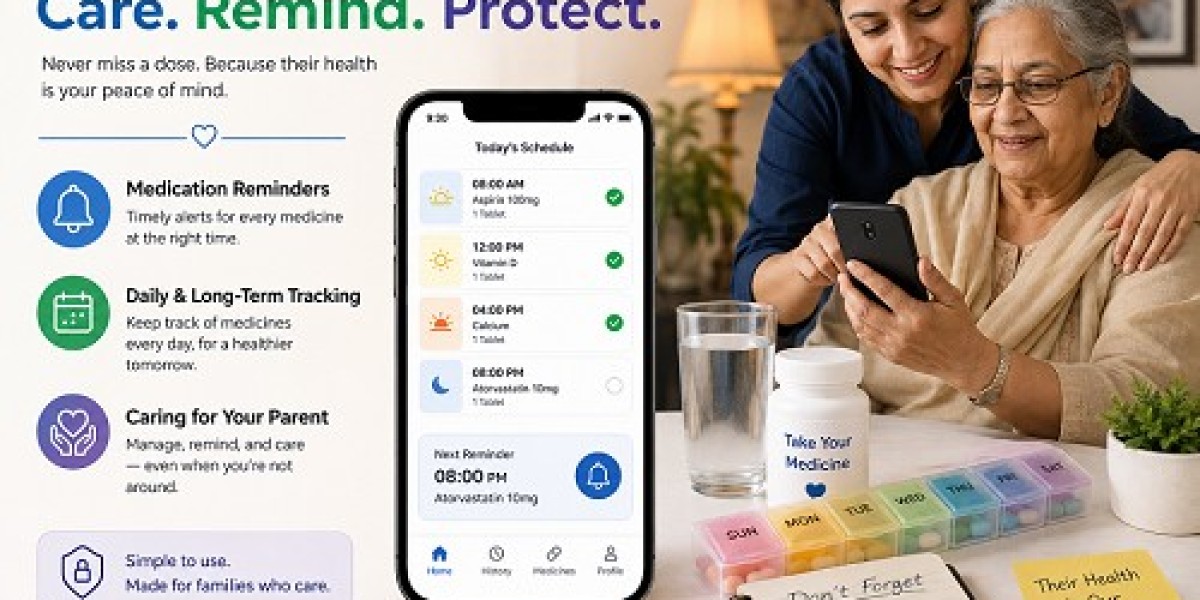
Pill Reminder can be considered as part of a broader medication-management approach.
A medication reminder tool can help users organize reminders around their medication routine, while a physical pill box can help organize doses when appropriate.
The two approaches can work together:
Physical organization
Use a suitable pill box to organize medicines.
Digital reminders
Use Pill Reminder to receive medication alerts according to the planned schedule.
Regular review
Check the medication list and discuss changes with a doctor or pharmacist.
This approach combines physical organization with digital support without treating either tool as a replacement for professional medical advice.
How to Choose the Right Pill Box
There is no single pill organizer that works for everyone.
Consider the following factors.
Number of Medications
Someone taking several medicines may need more compartments than someone taking one medicine.
Dosing Frequency
If medicines are taken multiple times per day, a multi-section organizer may be more convenient.
Ease of Opening
A person with limited hand strength may need an organizer that is easy to open.
Labels
Clear day and time labels can make organization easier.
Size
Choose a size that can safely accommodate the medicines being organized.
Safety
Keep medicines away from children and follow storage instructions.
Most importantly, check whether each medicine can safely be removed from its original packaging before placing it in an organizer.
Common Mistakes When Using a Pill Box
Assuming Every Medicine Belongs in a Pill Box
Some medicines may require special packaging or storage.
Always check first.
Changing the Medication Schedule
A pill organizer should never be used as a reason to change prescribed timing or doses.
Forgetting to Update the Organizer
When a medicine changes, the organizer must be reviewed and updated appropriately.
Relying Only on Visual Inspection
An empty compartment does not necessarily prove that a dose was taken.
Keeping Medicines in an Unsafe Location
Medication should be stored according to its instructions and kept away from children and anyone who should not access it.
Tips for Better Medication Management
A few simple habits can make medication management more organized.
- Keep an updated medication list.
- Use reminders for scheduled doses.
- Review medicines regularly.
- Ask a pharmacist before using a pill organizer.
- Keep medicines stored according to instructions.
- Avoid mixing medicines unless appropriate.
- Do not change doses without professional advice.
- Record questions for your next healthcare appointment.
- Replace outdated medication lists after treatment changes.
- Use a system that fits your daily routine.
The best system is one that is simple enough to use consistently.
FAQs
1. What is a pill box used for?
A pill box is used to organize medication doses by day or time. It can make a regular medication routine easier to manage when the medicines are suitable for organizer storage.
2. Can a pill box help with medication adherence?
It can support organization and make doses easier to identify, but it does not guarantee that a person took a dose. Additional reminders or tracking methods may be useful.
3. Is a pill box suitable for all medicines?
No. Some medicines have specific packaging, storage, moisture, light, or stability requirements. Ask a pharmacist before transferring a medicine into a pill organizer.
4. Can a pill box help with long-term daily medication?
Yes, when appropriate for the medicines involved. It can provide a structured way to organize recurring doses.
5. Can a pill box help when caring for a parent?
Yes. A suitable organizer can help caregivers understand and organize scheduled doses, but medication changes should always be handled with professional guidance.
6. What are Full-screen medication alarms?
Full-screen medication alarms are prominent digital alerts designed to make medication reminders more noticeable. Availability and behavior depend on the reminder application being used.
7. Does a pill box provide an adherence history?
Usually, no. A pill box can show whether a compartment has been emptied, but this does not confirm that the medication was actually taken.
8. Should I use a pill box with a medication reminder app?
They can complement each other. A pill box can organize physical doses, while a reminder app can provide time-based alerts.
9. How often should I organize my pill box?
The schedule depends on the person's medications and the organizer being used. Follow medication instructions and ask a pharmacist for advice about safe organization.
Conclusion
A pill box can be a simple and practical tool for organizing medication, especially for people managing regular or long-term daily medication. By separating appropriate doses into clearly labeled compartments, it can make a medication routine easier to understand and follow.
For caregivers, including people caring for a parent, an organizer can provide an additional layer of physical organization. Digital reminders, including tools such as Pill Reminder, can complement that system by helping users remember scheduled doses.