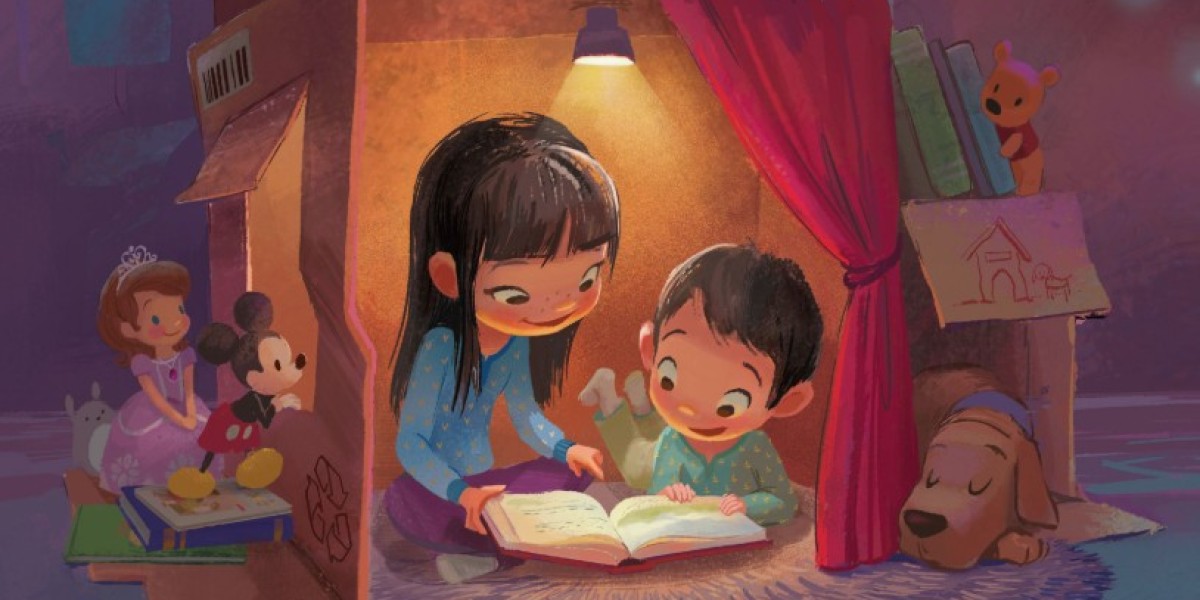

I still remember the feeling of opening a storybook as a child and knowing that something unexpected was waiting on the next page. It might have been a talking animal, a brave child, a mysterious forest, or a character who made a mistake and somehow found the courage to try again.
That is the special thing about children stories. They do more than fill a few quiet minutes. A good story gives children somewhere to go with their imagination, someone to care about, and sometimes a new way to understand themselves.
For parents, teachers, grandparents, and anyone who loves books, children's stories offer a simple but powerful way to encourage reading and learning. They can introduce new ideas without feeling like a lesson and teach valuable life skills without sounding like a lecture.
What Makes Children Stories So Special?
Children stories are written with young readers in mind, but that does not mean they have to be simple in meaning.
A short story about a lost puppy can introduce ideas about responsibility. A tale about two friends who disagree can help a child think about friendship and forgiveness. A fantasy adventure can encourage curiosity and creative thinking.
The best stories give children both entertainment and something to think about.
When children become emotionally involved with a character, they naturally begin asking questions:
- Why did the character make that choice?
- What would I have done?
- Was the character right or wrong?
- What might happen next?
- How would I feel in the same situation?
Those questions are part of learning.
Stories Help Children Build Imagination
A child does not need an expensive toy to have an adventure. Sometimes all it takes is a book.
Give a child a story about a small boat sailing across a mysterious sea, and suddenly the living room can become an ocean. A cardboard box can become a ship. A blanket can become a sail. A stuffed animal can become the captain.
This is one of the great gifts of reading.
Children stories leave room for children to create pictures in their own minds. Unlike a television program that shows them exactly what a character or place looks like, a book invites them to imagine it.
That imaginative freedom can encourage creativity in writing, drawing, playing, and problem-solving.
The Emotional Lessons Hidden Inside Stories
Some of the most meaningful lessons children learn from books are emotional ones.
Children experience many feelings while growing up: excitement, jealousy, disappointment, fear, loneliness, pride, and happiness. They do not always have the words to explain these feelings.
Stories can help.
Imagine a story about a child who is nervous about starting a new school. A young reader who feels the same way may recognize those emotions immediately. Seeing the character make friends or discover that the new school is not as frightening as expected can provide comfort.
The story quietly tells the child, You are not the only one who feels this way.
That can be more powerful than a long explanation from an adult.
Children Stories Can Teach Without Feeling Like Lessons
Nobody wants every bedtime story to sound like a classroom lecture.
Fortunately, good storytelling does not work that way.
Instead of telling a child, "You should be kind to others," a story can show a character sharing lunch with someone who forgot theirs. Instead of explaining why honesty matters, a story can show what happens when a character tells the truth after making a mistake.
Children see the consequences through the story.
This approach makes lessons easier to remember because they are connected to characters, emotions, and events.
Some common values explored through children's stories include:
- Kindness
- Honesty
- Courage
- Patience
- Friendship
- Responsibility
- Empathy
- Respect
- Cooperation
- Perseverance
The story does not need to announce the lesson. Sometimes children understand it simply by watching what happens.
Why Reading Together Matters
One of my favorite ways to experience children's books is reading aloud with a child.
It creates a small space where there is no need to rush.
A parent may read one page while the child interrupts with a question. A grandparent may change their voice for each character. A teacher may pause before turning the page and ask the class to guess what happens next.
Those moments are valuable.
Reading together makes books feel like a shared experience rather than a task.
It also gives adults opportunities to talk with children about ideas that might otherwise be difficult to discuss.
For example, after reading a story about a character who loses a friend, you might ask, "How do you think she felt?" The conversation may lead somewhere completely unexpected.
That is part of the magic of books.
How to Choose Good Children Stories
There are thousands of children's books available, so choosing one can sometimes feel overwhelming.
The best choice depends on the child's age, reading ability, interests, and personality.
A child who loves animals might enjoy stories about forests, farms, pets, or wild creatures. Another child might prefer space adventures, mysteries, fairy tales, or stories about ordinary school life.
Look for books that:
- Match the child's reading level.
- Have an engaging beginning.
- Include characters children can understand or relate to.
- Introduce interesting vocabulary without becoming frustrating.
- Encourage curiosity and questions.
- Offer meaningful ideas without becoming overly preachy.
- Have illustrations when visual support would help the reader.
Most importantly, pay attention to what the child actually enjoys.
If a child keeps asking for the same story, that is not necessarily a bad thing. Repetition can help children become familiar with words, story structure, characters, and patterns.
Let Children Choose Their Own Books
Adults naturally want children to read "good" books. That is understandable.
But sometimes we forget that enjoyment is one of the strongest reasons to keep reading.
A child who chooses a funny comic, a book about dinosaurs, a collection of fairy tales, or a silly adventure story is still practicing the habit of reading.
You can introduce new books without taking away the child's freedom to choose.
Try keeping several different types of books within easy reach. Let the child pick one, even if it is not the book you would have chosen.
A child who learns that books can be fun is more likely to become a lifelong reader.
Storytelling Does Not Always Require a Book
Books are wonderful, but storytelling can happen anywhere.
You can make up a story while walking home, waiting for an appointment, or sitting around the dinner table.
Start with a simple question:
"What would happen if a tiny dragon moved into your backyard?"
Let the child decide what happens next.
Maybe the dragon is afraid of birds. Maybe it loves pancakes. Maybe it has lost its way home.
There is no wrong answer.
This kind of storytelling encourages children to build characters, create settings, connect events, and use language creatively. It can also become a wonderful activity for families who want to spend more time talking together.
Turn Reading Into a Conversation
After reading a story, avoid making every question feel like a test.
Instead of asking only, "What was the main idea?" try questions that invite imagination and personal opinions.
You might ask:
- Which character did you like most?
- What would you have done differently?
- Which part surprised you?
- Would you want to visit the place in the story?
- What do you think happens after the ending?
- Was there a character you did not like at first?
- What would you change about the story?
There may not be one correct answer.
That is perfectly fine.
The goal is to help children think, express themselves, and discover that reading can lead to interesting conversations.
Children Stories and the Joy of Learning
Reading is often connected with school, but the value of stories goes far beyond homework.
Through books, children encounter unfamiliar places, cultures, historical periods, animals, occupations, problems, and ideas.
A story about a child visiting another country can inspire questions about geography. A tale about a young inventor might lead to an interest in science. A story about a historical event can encourage further research.
One book can become the beginning of many new interests.
That is why I believe reading should not always be measured by how many pages a child completes. Sometimes the better question is:
What did the child discover because of those pages?
A Simple Storytelling Routine for Families
You do not need an elaborate reading schedule.
Even 15 or 20 minutes can become a meaningful daily habit.
Try this simple routine:
1. Let the child choose
Offer two or three books and allow the child to pick one.
2. Read slowly
There is no prize for finishing quickly. Pause when something interesting happens.
3. Talk naturally
Ask questions, but allow the child to interrupt and share thoughts.
4. Make predictions
Before turning a page, ask what might happen next.
5. Connect the story to real life
If a character shows kindness, talk about a time when someone was kind to your child.
6. End with imagination
Ask, "If you could add one more chapter, what would happen?"
This routine can make reading feel less like an assignment and more like a small daily adventure.
When a Child Says, "I Don't Like Reading"
This is a challenge many families face.
The answer is not always to insist on longer reading sessions.
Sometimes the child simply has not found the right kind of book.
Try changing the format. Introduce humorous stories, illustrated books, short mysteries, poetry, adventure tales, nonfiction books, or books connected to a favorite hobby.
You can also read aloud even when the child is capable of reading independently.
Enjoying a story does not have to depend on who holds the book.
And remember that reading ability and reading enthusiasm are different things. A child may need encouragement, time, and the freedom to discover what kind of stories speak to them.
The Stories Children Remember
Years from now, children may forget many worksheets and classroom exercises.
But they may remember the story their parent read every night.
They may remember the teacher who made a character come alive through storytelling. They may remember a book borrowed from a library or the story their grandparent told them without opening a book at all.
Those memories matter.
Children stories become part of childhood because they are connected with imagination, emotion, family, and discovery.
A story can become a place a child mentally returns to when they need courage. A character can become a quiet example of how to handle a difficult situation. A familiar book can provide comfort during an uncertain time.
That is a remarkable amount of influence for a few printed pages.
Giving Children a Lifelong Love of Stories
The real goal is not to make children read because an adult tells them to.
The goal is to help them discover that books have something to offer.
There are stories that make us laugh when we need cheering up. Stories that make us wonder. Stories that introduce new friends. Stories that help us understand people who are different from us. And stories that simply give us a peaceful place to sit for a while.
Children deserve the chance to experience all of that.
So the next time you see a child reach for a book, give them time to explore it. Read a page together. Ask what they think. Let them laugh at the silly parts. Let them invent a different ending.
You never know where one story might lead.
A single children's story can begin with a child turning one page—and end with that child becoming someone who never stops wondering what is on the next one.
https://dupnitsa.net/place/litslib/
https://www.lgcjobs.com/company/litslib
https://therealblackfriday.com/listing/litslib/
https://bsocialone.com/blogs/2893/Holiday-Stories-and-Poems-for-Kids-Making-Special-Days-More
https://jobs4all-project.eu/company/litslib/
https://adoodau.com/toddler-bedtime-stories-139881.html
https://naijastudentsconnect.com/posts/11231
https://a2zwrite.com/blog/6abc23fed888d2cc6e09c165
https://mingolive.com/blogs/12370/Fantasy-Science-Fiction-and-Friendship-Stories-for-Kids-Aged-6
https://naya.social/read-blog/24778
https://bibleflock.com/blogs/402/Funny-Adventure-and-Ghost-Stories-for-Kids-Aged-6-8
https://www.geniwit.com/blog/bedtime-stories-and-litslib-making-reading-part-of-a-child-s-night
https://wherewechat.com/blogs/view/27385
https://sublov.com/blogs/11172/5-Minute-Bedtime-Stories-and-Bedtime-Stories-for-Teenagers-Finding
https://virtuala.site/blogs/7459/Bedtime-Stories-for-Kids-How-Holiday-Stories-Bring-Families-Closer
https://facetegram.com/index.php?link1=read-blog&id=16840
https://taabli.com/blogs/3304/Funny-Adventure-and-Ghost-Stories-for-Kids-Aged-6-8
https://connectlittle.com/blogs/63578/Scary-Mystery-and-Historical-Fiction-Stories-for-Kids-Aged-6
https://buttlerjhone095.wixsite.com/my-site-1
https://buttlerjhone.webflow.io/
https://www.tripoto.com/trip/358c5dba-c104-11f1-9b04-4201ac1d0034
https://bulletinafrica.com/blogs/85893/LitsLib-A-Little-Library-of-Bedtime-Stories-for-Toddlers
https://litslib.livejournal.com/493.html?newpost=1
https://penzu.com/public/4eba9ef1761781a2
https://www.komoot.com/user/6244595958997
https://mastodon.social/@litslib/117390811904075680