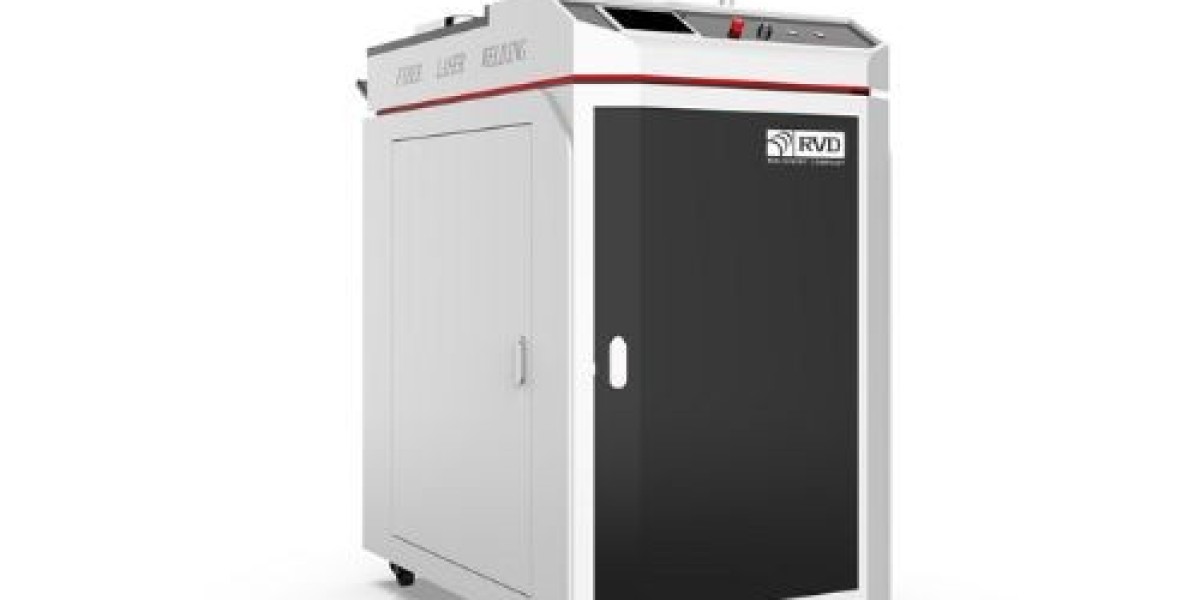

A fiber welder is an advanced laser welding system that uses a concentrated fiber laser beam to join metal components with exceptional precision and efficiency. Unlike conventional welding approaches that distribute heat across a larger area, fiber laser technology focuses energy precisely on the welding point, creating strong and clean joints while keeping the surrounding heat-affected area relatively small. This makes fiber welding an excellent solution for manufacturers that prioritize speed, accuracy, consistency, and professional finishing.
Modern fiber welding systems are designed for a wide range of manufacturing environments, from metal fabrication workshops to automotive, electronics, aerospace, machinery, and precision-component production. laserchina provides fiber laser welding solutions designed to support different production requirements, including handheld, automated, and robotic applications.
How Does a Fiber Welder Work?
A fiber welder generates a high-energy laser beam through a fiber laser source and delivers that beam through an optical fiber to a specialized welding head. The welding head focuses the beam onto a precisely controlled area of the workpiece. The concentrated energy melts the metal at the joint, allowing the materials to fuse together as the weld progresses.
This highly focused energy delivery is one of the most important advantages of fiber laser welding. It enables manufacturers to achieve narrow weld seams, controlled penetration, fast processing, and excellent repeatability. Depending on the application, welding parameters can be adjusted according to material type, thickness, joint design, and desired welding speed.
High-Speed Welding for Better Productivity
One of the major reasons manufacturers choose a fiber welder is its ability to significantly improve production speed. LaserChina's handheld laser welding solutions are designed to provide welding speeds that can be several times faster than conventional welding methods in suitable applications.
Faster welding means more completed components within the same production period. For businesses handling large quantities of stainless steel panels, carbon steel structures, aluminum components, machinery parts, and other metal products, improved welding speed can help increase overall production capacity while maintaining consistent results.
Exceptional Welding Precision
Precision is another defining feature of fiber laser welding technology. The laser beam can be focused into a small working area, allowing operators to control where the welding energy is applied. This is particularly valuable when working with detailed components, thin materials, narrow joints, and products where appearance matters.
A precisely controlled weld can create a clean, narrow, and attractive seam while helping minimize unnecessary thermal impact on surrounding material. This makes fiber welding suitable for applications where dimensional accuracy and surface quality are important.
Excellent Results Across Different Metals
A modern fiber welder can be used with many commonly processed metals. Depending on machine power and configuration, applications can include stainless steel, carbon steel, aluminum, galvanized steel, copper, and various metal alloys. LaserChina's fiber welding systems are offered in multiple power configurations to accommodate different material thicknesses and production requirements.
This material versatility gives manufacturers greater flexibility when handling different projects. Instead of relying on separate equipment for every type of metalwork, a properly configured fiber welding system can support a broad selection of fabrication tasks.
Clean and Professional Weld Finishing
A major benefit of fiber laser welding is the ability to produce clean welds with controlled heat input. A well-configured laser welding process can reduce the need for extensive post-welding finishing, helping businesses save valuable production time.
For products where appearance is important, such as metal furniture, kitchen equipment, decorative components, enclosures, and precision assemblies, a clean weld can contribute significantly to the finished product's visual quality. LaserChina highlights clean welding and reduced post-processing requirements among the key benefits of its handheld fiber laser welding solutions.
Handheld Fiber Welder for Flexible Production
A handheld fiber welder provides flexibility that is especially valuable for workshops handling different component sizes and shapes. Instead of restricting welding to a fixed workstation, handheld systems allow operators to move the welding head around the workpiece and access various joint positions.
LaserChina offers handheld fiber laser welding systems with different power levels and configurations. Its water-cooled HWW series, for example, includes models from 1000W to 3000W, while portable systems are also available in multiple power options.
This flexibility makes handheld fiber welding attractive for fabrication shops, maintenance operations, customized manufacturing, and businesses that need to work on different products throughout the day.
Advanced 3-in-1 and 4-in-1 Capabilities
Modern laser welding equipment can offer much more than welding alone. LaserChina provides multifunctional systems that can combine welding, cutting, cleaning, and post-welding cleaning in a single machine configuration.
This multifunctional approach can help businesses handle several metalworking processes with one versatile platform. It can be particularly useful for workshops that want to expand their capabilities while keeping their workflow organized and efficient.
Automatic Wire Feeding for Consistent Welding
Automatic wire feeding is another useful feature available with selected LaserChina fiber welding systems. An integrated wire feeder can help deliver welding wire at a controlled rate, supporting consistent material addition during applications that require filler wire.
This can make the welding process more convenient and repeatable, particularly when operators are working on longer seams or joints that require additional material. The combination of a controlled laser beam and automatic wire feeding creates a practical solution for many professional fabrication applications.
Easy Operation and Practical Training
Modern fiber welding systems are designed with operator usability in mind. LaserChina's handheld welding systems feature multilingual human-machine interfaces and integrated welding parameters intended to simplify machine operation.
With appropriate training and application-specific setup, operators can learn the essential controls and welding techniques efficiently. This can help businesses establish productive workflows without requiring unnecessarily complicated operating procedures.
Applications of Fiber Welding Technology
A fiber welder can support a broad range of industrial and commercial applications. It can be used for automotive components, stainless steel fabrication, aluminum products, machinery, metal cabinets, kitchen equipment, agricultural machinery, hardware products, electronics, and general metal fabrication.
Fiber laser welding is also valuable in industries where precision and repeatability are essential. LaserChina identifies automotive, aerospace, medical, electronics, steel, shipbuilding, and other manufacturing sectors among the applications for laser welding technology.
Fiber Welder for Small and Large Production
One of the strongest advantages of fiber welding technology is its scalability. A handheld system can be useful for customized jobs, repairs, prototypes, and varied fabrication work, while automated or robotic systems can support repetitive production.
LaserChina also offers robotic and collaborative-robot fiber welding configurations. Its collaborative system combines handheld and cobot functionality, allowing businesses to use one platform for different production scenarios and batch sizes.
Energy and Operational Efficiency
Fiber laser technology is designed to deliver concentrated energy directly to the welding area. This efficient energy delivery can contribute to lower energy consumption and improved production efficiency compared with many conventional processes.
For manufacturers, efficiency is not only about welding faster. It also involves reducing unnecessary processing steps, improving material utilization, maintaining consistent quality, and making better use of available production time. A well-integrated fiber welding system can support all of these objectives.
Long-Term Productivity with LaserChina
Choosing the right equipment manufacturer is an important part of achieving reliable welding performance. laserchina has developed a broad range of laser welding solutions covering handheld, portable, automated, and robotic applications. The company's current welding range includes multiple power configurations and customization options for mechanical, optical, electrical, and software requirements.
For businesses with specialized production requirements, customization can make it easier to configure a welding system around specific materials, working environments, production volumes, and workflow requirements.
Key Advantages of a Fiber Welder
A modern fiber welder offers several important advantages for professional manufacturing:
- High welding speed for improved production productivity.
- Precise energy delivery for controlled and accurate welds.
- Narrow weld seams for attractive finished products.
- Reduced heat-affected areas for better control of thermal impact.
- Wide material compatibility across commonly used metals.
- Excellent repeatability for consistent production results.
- Handheld flexibility for different workpiece shapes and positions.
- Automation compatibility for high-volume manufacturing.
- Automatic wire feeding options for convenient filler-material control.
- Multifunctional configurations combining welding with additional laser processes.
- Reduced post-processing requirements for cleaner production workflows.
- Flexible power configurations for different material thicknesses and applications.
Why Choose LaserChina for Fiber Welding?
laserchina focuses on providing practical laser solutions for modern manufacturing requirements. Its fiber welding range includes handheld machines, portable systems, automated welding equipment, and robotic solutions, giving customers flexibility when selecting equipment for their production environment.
The availability of different power levels, machine configurations, welding heads, wire-feeding options, and multifunctional capabilities allows businesses to select a system according to their specific application. This flexibility makes LaserChina a strong option for companies looking to introduce or upgrade fiber laser welding technology.
Final Thoughts on Fiber Welder Technology
A fiber welder represents an important advancement in modern metal fabrication, combining precision, speed, flexibility, and efficient production into one powerful welding solution. From handheld fabrication to automated and robotic manufacturing, fiber laser technology can support businesses across a wide variety of applications.
For manufacturers seeking cleaner welds, faster production, precise heat control, and versatile metalworking capabilities, laserchina offers fiber laser welding solutions designed for today's demanding production environments. With the right machine configuration, businesses can improve workflow efficiency, expand their manufacturing capabilities, and achieve consistently professional welding results.