
When planning a driveway, walkway, drainage project, or landscaping job, choosing the right type of aggregate can make a significant difference. Two commonly discussed materials are #57 stone and crusher run. Although both are made from crushed rock and are useful for residential and commercial projects, they have different sizes, textures, and performance characteristics.
Understanding what is 57 rock and knowing the differences between crusher run vs. #57 stone can help you select the right material for your project.
What Is #57 Rock?
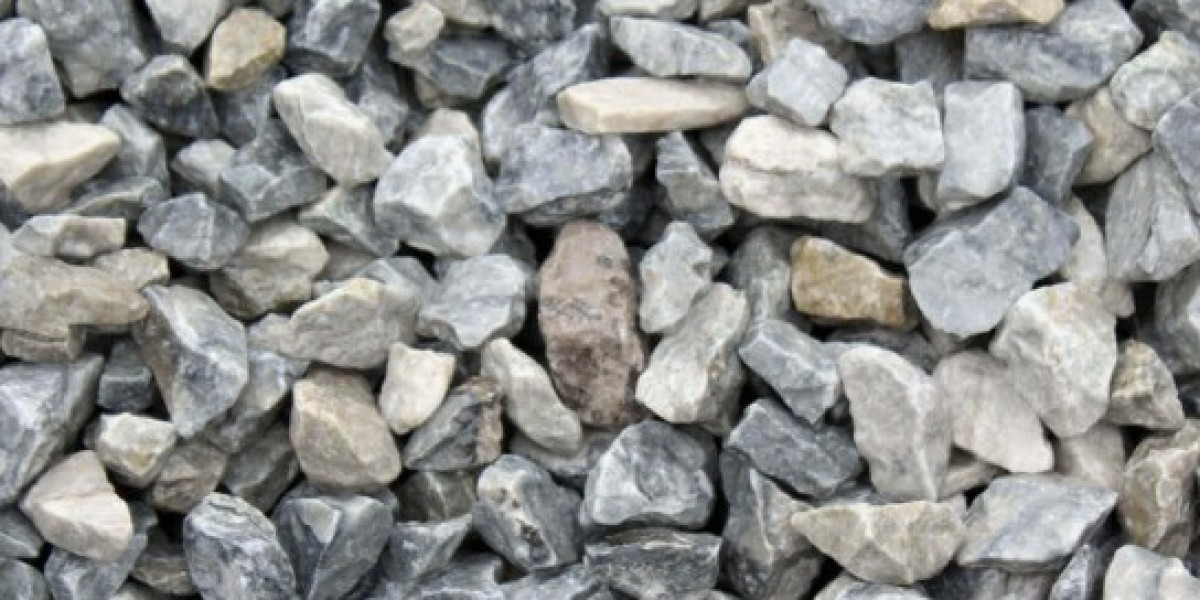
#57 rock, often called #57 stone, is a commonly used crushed stone aggregate. The number refers to a standard size classification used by aggregate suppliers. While exact sizing can vary somewhat by supplier and local specifications, #57 stone generally consists of clean, washed or screened stones that are approximately ¾ inch in size, with some variation in particle dimensions.
Unlike crusher run, #57 stone typically does not contain a large amount of fine rock dust. The individual pieces have space between them, allowing water to move through the material relatively easily.
This makes #57 stone particularly useful for drainage applications. It can also be used around foundations, beneath certain concrete applications, in landscaping, and for decorative or functional gravel surfaces.
Because the stones are relatively uniform in size, #57 rock has a clean, loose appearance. It does not compact as tightly as a material containing stone dust and smaller particles.
Common Uses for #57 Stone
There are many situations where #57 stone can be a practical choice. Some of the most common applications include:
- Drainage systems
- French drains
- Landscaping
- Gravel paths
- Decorative rock beds
- Around drainage pipes
- Backfilling certain areas
- Concrete and construction applications
- Driveway surfaces in appropriate situations
One of the biggest advantages of #57 stone is drainage. The gaps between the larger stones allow water to pass through rather than becoming trapped in a densely compacted layer.
For projects where water movement is important, this characteristic can make #57 stone a better option than a dense aggregate containing fines.
What Is Crusher Run?
Crusher run is another popular aggregate material. It is sometimes called crush-and-run, quarry process, or dense-grade aggregate, depending on the region and supplier.
Crusher run typically contains a mixture of crushed stone particles ranging from larger pieces down to very small particles and stone dust. Because of this range of sizes, the material can be compacted tightly.
The larger stones provide structural support while the smaller particles fill the spaces between them. When properly placed and compacted, crusher run can create a firm, stable base.
This makes it especially useful beneath driveways, patios, walkways, retaining walls, and other construction projects where a strong foundation is needed.
Crusher Run vs. #57 Stone
When comparing crusher run vs #57 stone, the biggest difference is the material's particle size distribution and the presence of fines.
#57 stone is generally a clean, relatively uniform aggregate. Crusher run contains multiple sizes of crushed material, including fines.
This difference affects how each material behaves.
#57 stone:
- Relatively uniform stone size
- Usually contains little fine material
- Provides excellent drainage
- Loose and open structure
- Does not compact as tightly
- Commonly used for drainage and certain landscaping applications
Crusher run:
- Contains a mixture of stone sizes
- Includes smaller particles and stone dust
- Compacts very well
- Creates a dense, stable surface
- Commonly used as a base material
- Often suitable for driveway construction and foundation layers
Neither material is automatically better than the other. The appropriate choice depends on what you want the aggregate to accomplish.
Which Is Better for a Driveway?
Choosing between #57 stone and crusher run for a driveway depends on the driveway design, soil conditions, drainage needs, traffic, and desired appearance.
Crusher run is often preferred as a base because it compacts into a dense and stable layer. The combination of different particle sizes allows the material to lock together, helping create a firm foundation.
#57 stone can also be used for gravel driveways, but its larger, uniform particles do not lock together in the same way. The stones can move more easily under vehicle traffic.
For some driveway designs, contractors may use different aggregate layers. A compacted base material can provide structural support, while a cleaner stone may be placed as a surface layer.
Proper grading and compaction are important regardless of the aggregate selected.
Drainage: #57 Stone Has an Advantage
If drainage is the primary concern, #57 stone is often an attractive choice.
Because the individual stones leave open spaces, rainwater can move through the aggregate. This makes #57 stone useful for drainage trenches, French drains, and areas where standing water needs to be minimized.
Crusher run behaves differently because its smaller particles fill many of the spaces between the larger stones. This creates a more compact surface but reduces the amount of open space available for water to flow through.
Therefore, a project designed primarily for drainage may call for clean stone, while a project requiring a compact structural base may benefit from crusher run.
Crusher Run for a Strong Base
One of the major benefits of crusher run is its ability to compact.
When crusher run is installed at the proper depth and compacted correctly, the different particle sizes work together to create a dense layer. This can provide a stable foundation for driveways, walkways, patios, sheds, and other applications.
The fines help fill voids between larger stones, while the larger particles contribute to the overall structure.
However, installation matters. Simply dumping crusher run into an area without preparing the ground, establishing proper drainage, spreading the material evenly, and compacting it may produce disappointing results.
Can #57 Stone and Crusher Run Be Used Together?
In some projects, the answer is yes.
Because the materials have different properties, they can serve different purposes within the same project. For example, a dense aggregate such as crusher run may be used as a base, while #57 stone may be used in an area where improved drainage is needed.
The exact material arrangement should depend on the project's design and local soil and drainage conditions.
It is also important to purchase the correct aggregate size for the intended application. Aggregate terminology can vary by region and supplier, so confirming the product specifications before ordering is always a good idea.
How Much Material Do You Need?
Before ordering #57 stone or crusher run, calculate the project's length, width, and desired depth. Aggregate is commonly sold by the ton or cubic yard.
The required quantity depends on the material's density and the depth of the installation. A supplier or contractor can help convert your project's dimensions into an estimated amount of aggregate.
It is generally better to calculate carefully rather than ordering significantly more material than necessary. However, small variations in grade and compaction can affect the final amount required.
Choosing the Right Aggregate
The best choice ultimately depends on the purpose of the project.
If you need open drainage, clean stone, or a relatively uniform appearance, #57 rock may be a good choice.
If you need a compactable, dense, stable base, crusher run may be more appropriate.
For driveway projects in particular, consider traffic levels, soil conditions, drainage, slope, and whether the material will be used as a base or as the finished surface.
Final Thoughts
Knowing what is #57 rock makes it easier to understand why this aggregate is frequently used for drainage, landscaping, and construction projects. Its relatively uniform stone size creates open spaces that allow water to move through the material.
When comparing crusher run vs. #57 stone, the key distinction is that crusher run contains a broader range of particle sizes and fines, allowing it to compact into a dense and stable layer. #57 stone is generally cleaner and more open, making it useful where drainage is important.
Neither material is the universal choice for every project. The right aggregate depends on the job's specific requirements, from drainage and appearance to stability and load-bearing capacity. By understanding these differences before ordering, property owners can choose an aggregate that better matches the project's needs and helps create a durable result.