
Local businesses often face a frustrating marketing problem: the people most likely to buy from them may live only a few streets away, yet reaching those households consistently can prove difficult. Digital ads compete for attention every second, social feeds move quickly, and local search traffic can fluctuate from one week to the next.
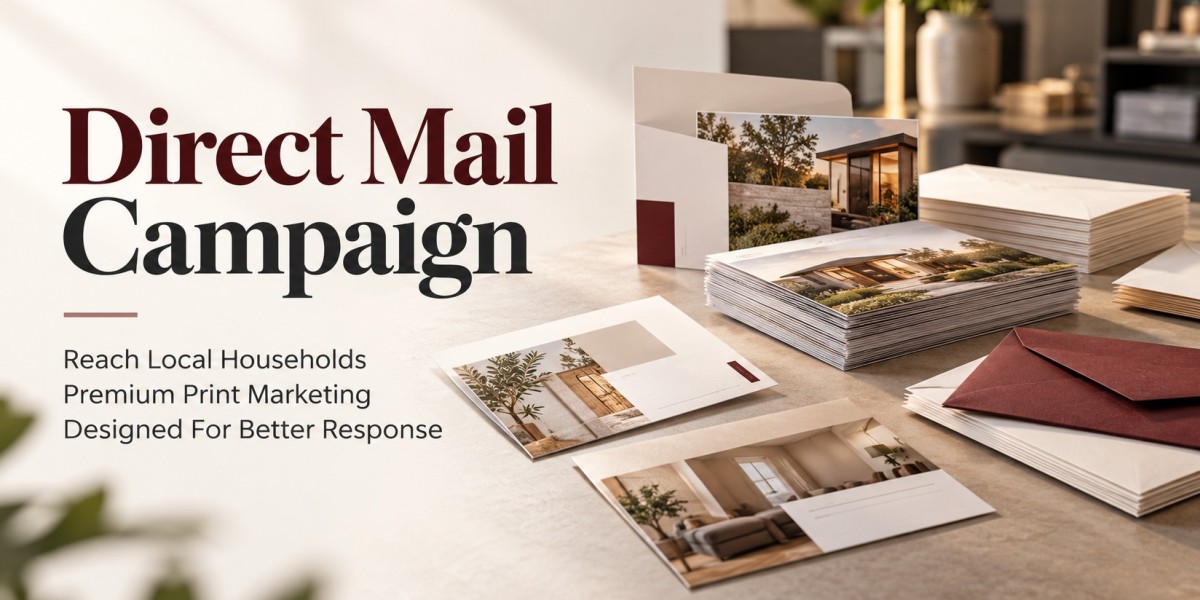
We have worked with businesses that did not need a nationwide audience. They needed homeowners within a service radius, families near a new location, or customers in selected ZIP codes. A well-planned Direct Mail Campaign gives businesses a practical way to put an offer directly into those households instead of hoping local customers discover it online.
The value does not come from simply printing postcards and mailing them. Strong results usually start with the right audience, a useful offer, a clear message, good timing, and a mailing format that makes sense for the business.
How a Direct Mail Campaign Connects Businesses With Local Customers
Direct mail works especially well for local marketing because geography can guide almost every decision. A restaurant may want households within a few miles. A roofing company may focus on neighborhoods with older homes. A dental office may want families surrounding a newly opened practice.
That level of geographic control keeps the campaign focused. Instead of paying to reach people across an entire city, businesses can concentrate their budget on neighborhoods where a customer can realistically visit, call, book, or request a quote.
Neighborhood Targeting Keeps Marketing Relevant
One mistake we often see involves treating an entire city as one audience. Different neighborhoods rarely behave the same way. Housing type, household income, family size, distance from the business, and buying habits can all affect response.
A lawn care company, for example, gains little from mailing heavily to apartment buildings. A premium remodeling contractor may want established residential neighborhoods instead of student housing areas. Careful targeting improves relevance before the first postcard ever reaches the press.
Businesses can narrow mailing areas using ZIP codes, carrier routes, demographic criteria, customer lists, or other appropriate mailing data. The goal should always stay simple: put the message in front of people who have a realistic reason to respond.
Physical Mail Creates a Different Customer Experience
A printed mailer asks for attention differently from an online ad. Customers physically pick it up, scan the headline, review the offer, and decide whether to keep it.
That interaction can matter for local services where customers may not need the company today but could need it soon. Someone may place a plumber's postcard on a refrigerator, keep a dentist's new-patient offer, or save a landscaping mailer until spring.
Direct mail does not eliminate digital marketing. In our experience, it often works better when businesses use both channels together.
Local Direct Mail Helps Businesses Control Their Marketing Reach
Local advertising can become expensive when businesses pay for visibility outside their actual service area. Direct mail gives marketers more control over where each piece goes.
A business serving a six-mile radius does not necessarily need exposure twenty miles away. The ability to define a practical mailing area can make budget planning much easier.
Carrier Routes Work Well for Broad Local Coverage
Businesses that serve most households within a neighborhood often benefit from route-based mailing strategies. Restaurants, gyms, cleaning companies, home service providers, retail stores, and local events commonly fit this model.
Instead of building an individual mailing list, the business can cover selected postal routes around its location. This approach makes sense when almost every household within the chosen area could become a customer.
However, broad coverage should still involve planning. We normally look at distance, neighborhood characteristics, customer concentration, and service capacity before recommending how far a campaign should reach.
Targeted Mailing Lists Support More Specific Offers
Some campaigns need greater precision. A business may want to reach homeowners rather than renters, previous customers instead of prospects, or households that fit a particular demographic profile.
A targeted list allows the message to reflect the audience more closely. That often improves the quality of the campaign because the offer no longer needs to speak to everyone.
For example, a home improvement company can write specifically for homeowners. A family dental practice can shape its messaging around household needs. Relevance usually matters more than mailing the largest possible quantity.
Strong Direct Mail Starts With a Clear Customer Offer
Businesses sometimes spend too much time worrying about design before deciding why someone should respond. Attractive printing can help, but design cannot rescue a weak offer.
Before developing a mail piece, we usually ask a basic question: what should the recipient do after reading it?
The answer may involve requesting an estimate, making a reservation, visiting a store, scheduling an appointment, scanning a QR code, or using a limited-time promotion.
Give Customers One Main Reason to Respond
A postcard with six competing offers can create more confusion than interest. Most local mail pieces work better when one primary message leads the campaign.
A roofing contractor might offer a free inspection. A restaurant might introduce a neighborhood dining offer. A salon might promote a first-visit service package.
The customer should understand the benefit quickly. If someone needs to study the mailer to figure out why it matters, the message probably needs another round of editing.
Make the Next Step Easy
Every campaign needs a clear response path. Depending on the business, that could include a phone number, short website address, QR code, appointment page, coupon, or in-store redemption.
We prefer response options that require as little effort as possible. A complicated process can reduce interest even when the original offer works.
Businesses should also make sure the destination matches the mail piece. If a postcard advertises a specific service, sending the customer to a generic homepage adds unnecessary friction.
Direct Mail Design Should Help Customers Understand the Message Quickly
A local mailer does not need dozens of design elements. In fact, crowded pieces often make the main message harder to find.
Strong direct mail design usually follows a simple visual order: headline, benefit, supporting information, offer, and response method. The reader should know where to look next without thinking about it.
Headlines Should Focus on the Customer
Businesses often lead with their company name because they feel proud of their brand. That instinct makes sense, but the recipient usually cares first about the problem the business can solve.
Compare a large company name with a headline such as “Need Your Roof Checked Before Winter?” The second option immediately gives the homeowner a reason to continue reading.
The business name still matters, but it should support the message rather than compete with it.
Readability Matters More Than Decorative Design
Direct mail needs to work at arm's length, not only on a designer's monitor. Tiny text, weak contrast, oversized paragraphs, and too many typefaces can hurt an otherwise good campaign.
We also consider the physical size of the piece. A postcard gives businesses limited space, so every element needs a purpose. Larger mail formats provide more room, but extra space should not become an excuse for adding unnecessary copy.
Good design helps the customer understand the message faster.
Timing Can Change the Performance of a Local Mailing
The same mailing can perform differently depending on when customers receive it. Seasonality, weather, holidays, local events, and normal purchasing cycles all influence response.
A lawn care offer makes more sense before the growing season than near its end. Tax preparation companies need visibility before filing deadlines. HVAC companies can plan campaigns around seasonal maintenance periods instead of waiting until demand peaks.
Match Mailing Dates to Buying Intent
We encourage businesses to work backward from the date when customers are most likely to need the service.
If homeowners typically start planning outdoor projects in early spring, the mail should arrive before competitors flood the market. If a restaurant wants Mother's Day reservations, mailing after customers have already made plans will limit the campaign's value.
The print date, mailing date, and expected in-home window all matter.
Repetition Often Matters More Than One Large Drop
One mailing can generate results, but local recognition often develops through repeated exposure. Customers may notice a business on the first postcard, remember it on the second, and respond after the third.
That does not mean businesses should repeatedly send the exact same piece. The message can evolve based on season, customer stage, or offer.
We often find that a planned series provides more useful information than putting the entire budget into one oversized mailing and never following up.
Direct Mail Can Support Repeat Business, Not Just New Customer Acquisition
Many businesses think of direct mail only as a prospecting channel. Existing customers can also become one of the most valuable audiences.
They already know the business, which removes part of the trust barrier. A relevant reminder can encourage another purchase, appointment, visit, or service booking.
Past Customers Need a Different Message
A former customer should not receive the same introduction as someone who has never heard of the company. The relationship already exists.
Businesses can use purchase history, service timing, or previous interactions to shape follow-up mail. A dental practice may send reminders. A retailer might introduce a complementary product category. A home service company could reach customers when routine maintenance becomes relevant.
Our guide on encouraging repeat sales explains how businesses can think beyond a single transaction and build follow-up into their mailing strategy.
Customer Retention Can Lower Marketing Pressure
Constantly replacing customers creates expensive marketing pressure. Repeat customers can help stabilize revenue and make acquisition spending more productive.
Direct mail gives businesses another way to maintain that relationship without relying entirely on email inboxes or social media visibility.
The key lies in sending something useful rather than mailing simply because a customer address exists in the database.
Tracking Makes Direct Mail More Useful
Businesses should never judge a campaign only by whether they personally liked the design. Results need measurable signals.
Tracking also helps marketers separate assumptions from actual customer behavior. Sometimes the audience responds differently than expected, and those lessons can improve the next mailing.
Use Campaign-Specific Response Methods
A dedicated landing page, QR code, coupon code, phone extension, or promotional code can help identify responses connected to a particular mailing.
Businesses should choose tracking methods that match how their customers normally communicate. A contractor whose customers prefer phone calls should not force every recipient through a complicated online form.
Simple tracking usually produces cleaner data.
Look Beyond Immediate Sales
Response rate matters, but it does not tell the entire story. Businesses should also consider lead quality, appointment value, average transaction size, repeat purchases, and customer lifetime value.
A campaign that generates fewer responses can still outperform another mailing if those responses turn into higher-value customers.
For local businesses, asking new callers or customers how they heard about the company can also provide useful context that digital dashboards sometimes miss.
Common Direct Mail Mistakes That Reduce Local Response
Most disappointing campaigns do not fail because direct mail itself lacks value. More often, several small planning problems weaken the final result.
We see similar issues across many industries, especially when businesses rush from idea to printing without reviewing the campaign from the customer's perspective.
Mailing Too Broadly
More addresses do not automatically mean better marketing. Businesses can waste money when they mail outside their practical service area or target households unlikely to need the offer.
Start with customer geography. Existing sales data often reveals where strong customers already live.
Adding Too Much Information
Owners know their businesses deeply, so they often want to explain every service. Customers rarely need that much information from the first mail piece.
A mailer should create enough interest to produce the next action. The website, phone conversation, appointment, or sales process can provide the additional detail.
Using Weak Calls to Action
“Visit us today” may sound pleasant, but it gives the customer little urgency or direction.
A better call to action explains what the customer should do and, where appropriate, why doing it now makes sense. Specificity reduces hesitation.
Ignoring Follow-Up
Businesses sometimes expect one mailing to carry the entire marketing effort. That expectation can lead to poor conclusions about performance.
Direct mail often works best as part of a customer journey that includes follow-up emails, retargeting, sales calls, additional mailings, or local search visibility.
Combining Direct Mail With Digital Marketing Strengthens Local Visibility
Customers rarely interact with a business through only one channel. Someone might receive a postcard on Tuesday, search for the company on Thursday, read reviews on Friday, and make a call the following week.
That journey makes coordination important.
Keep Branding Consistent Across Channels
The business name, visual identity, offer, and core message should remain familiar when a customer moves from the mail piece to the website.
Major differences can create uncertainty. Customers should feel that they reached the same business they saw in their mailbox.
Connect Print to Useful Digital Destinations
QR codes and short URLs can connect physical mail with online actions, but they need a reason to exist. A QR code should lead to something useful, such as an appointment page, quotation form, menu, property listing, or campaign-specific offer.
Sending every scan to the homepage usually wastes the convenience that the code provides.
How Businesses Can Plan a Better Local Direct Mail Campaign
The strongest campaigns usually come from disciplined planning rather than complicated marketing tactics.
Before printing, we recommend reviewing the campaign from the perspective of someone who knows nothing about the company.
Define the Audience First
Write down exactly who should receive the mailing. Include location, customer type, service relevance, and any practical targeting criteria.
If the answer sounds like “everyone in the city,” the audience probably needs more refinement.
Establish One Campaign Objective
Choose the main result the campaign should generate. That might mean calls, bookings, store visits, quote requests, purchases, event attendance, or another measurable action.
Trying to accomplish several unrelated goals on one mail piece usually weakens each of them.
Build the Message Around the Customer
Explain the problem, value, or opportunity from the recipient's point of view. Use straightforward language and remove details that do not help the customer decide what to do next.
Then make the response process obvious.
Review Production and Mailing Details Early
Paper choice, postcard dimensions, mailing class, list preparation, postal requirements, printing quantities, and delivery timing can all influence the project.
Addressing those details before the design reaches its final stage helps businesses avoid last-minute changes that increase costs or delay mailing.
FAQs
What Types of Businesses Benefit Most From Local Direct Mail?
Direct mail can work well for restaurants, healthcare practices, home service companies, real estate businesses, salons, gyms, retailers, professional services, and other organizations that depend on customers within a defined geographic area. The strongest fit usually comes when the business can clearly identify where likely customers live.
How Many Times Should a Business Send Direct Mail?
There is no universal mailing frequency. Purchase cycles, budget, seasonality, customer value, and campaign goals all affect the schedule. In many cases, several planned touches give businesses a better chance to build recognition than relying on one isolated mailing.
How Can Businesses Measure Direct Mail Results?
Businesses can use QR codes, dedicated landing pages, promotional codes, trackable phone numbers, coupons, or customer-source questions. We also recommend measuring lead quality and sales value rather than looking only at the number of responses.
Does Direct Mail Still Work Alongside Digital Marketing?
Yes. The two channels can support each other because customers often move between offline and online touchpoints before making a decision. A customer may receive a mailer, search for the company online, check reviews, and then contact the business. Consistent messaging across those steps can create a stronger local marketing experience.
Conclusion
A successful local direct mail campaign does more than place advertising in mailboxes. It connects the right geographic audience with a timely message, a relevant offer, and an easy next step.
We have seen the strongest campaigns focus on fundamentals: practical targeting, clean design, customer-focused copy, smart timing, measurable response methods, and consistent follow-up. Businesses do not need to make the process unnecessarily complicated. They need to make each decision with the customer and campaign objective in mind.
At MailProsUSA, we approach direct mail as a coordinated marketing process rather than a print job alone. Businesses considering a local campaign can start by defining who they want to reach, what action they want customers to take, and how they plan to measure the response. From there, the right mailing strategy becomes much easier to build.