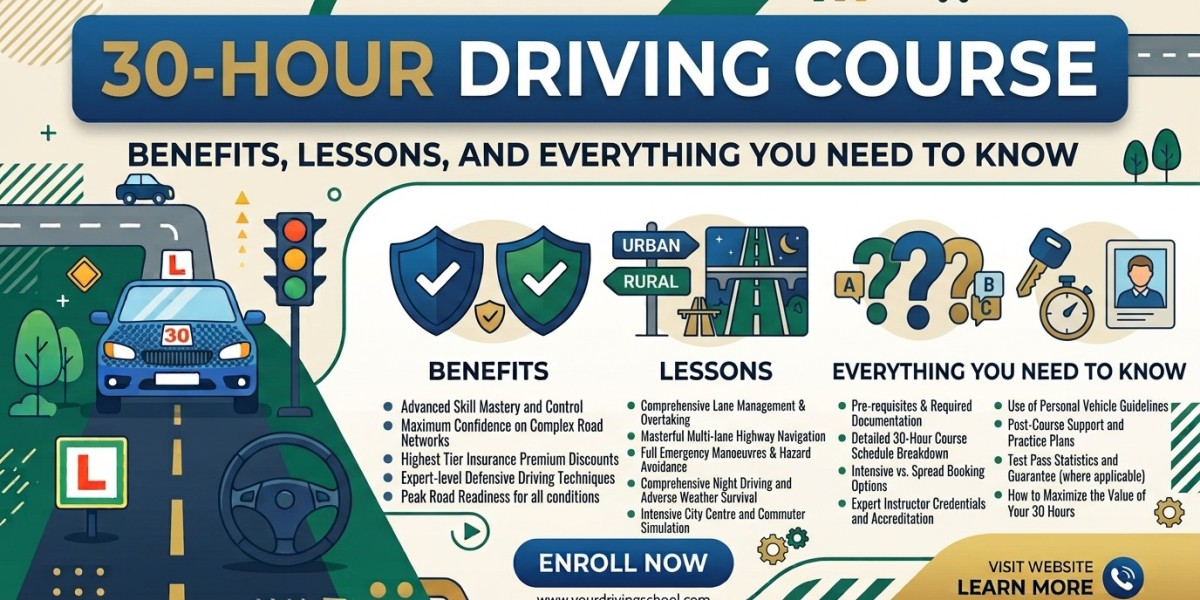

30 Hour Driving Course: Benefits, Lessons, and Everything You Need to Know
Introduction to a 30 Hour Driving Course
Learning to drive is an important milestone that requires patience, practice, and a strong understanding of road safety. A 30 hour driving course can be an excellent choice for learners who want structured driving instruction, consistent practical experience, and the confidence to handle different road situations. Whether you are a complete beginner, preparing for a practical driving test, or returning to driving after a long break, a well-planned course can help you develop essential skills at a suitable pace.
Compared with shorter driving packages, a thirty-hour course provides more time to practise important driving techniques, correct recurring mistakes, and become familiar with different traffic conditions. Learners can work with a qualified instructor to improve vehicle control, road positioning, observation, parking, and hazard awareness.
The additional lesson time also allows instructors to identify individual weaknesses and create a learning plan based on the learner's progress. Rather than rushing through essential skills, learners can practise repeatedly and gradually move towards more independent driving.
Depending on the driving school's arrangements, the thirty hours may be divided into regular lessons over several weeks or organised into a more intensive schedule. The most suitable option depends on your availability, experience, and learning preferences.
Although a 30 hour driving course offers substantial opportunities for improvement, completing the programme does not automatically guarantee a driving test pass. Consistent practice, safe decision-making, and the ability to drive independently remain essential.
What Is a 30 Hour Driving Course?
A 30 hour driving course is a structured programme that provides thirty hours of practical driving instruction with a qualified instructor. It is designed to help learners develop their driving skills progressively, from basic vehicle control to more complex road situations.
For beginners, the course can introduce the fundamentals of driving, including steering, braking, moving off, stopping, changing gears, and understanding road signs. As learners gain experience, they can progress to junctions, roundabouts, parking manoeuvres, and independent driving.
More experienced learners may use the course to prepare for a practical driving test, improve confidence, or address specific weaknesses identified during previous lessons.
The structure of the course varies between driving schools. Some providers offer individual lessons spread across several weeks, while others provide intensive packages over a shorter period. Before booking, it is important to understand the lesson schedule, total cost, vehicle options, and any additional services included.
A good thirty-hour course should provide structured instruction, regular feedback, and opportunities to review progress throughout the learning process.
Who Should Consider a 30 Hour Driving Course?
Complete Beginners
A thirty-hour course can provide beginners with a structured introduction to driving. New learners often need time to become comfortable with vehicle controls while learning to observe traffic, recognise road signs, and respond appropriately to different situations.
An instructor can introduce basic skills gradually, allowing learners to develop coordination and confidence before progressing to more challenging roads.
The course can establish a strong foundation in vehicle control, road positioning, and safe driving habits. However, some beginners may need additional lessons beyond thirty hours before they are ready to drive independently or take a practical test.
Learners Preparing for a Driving Test
Learners who already have some driving experience can use a thirty-hour course to improve their practical test preparation. The instructor can assess their current abilities and identify areas that require further attention.
These areas may include approaching junctions, navigating roundabouts, maintaining appropriate speed, improving observation, or completing reversing manoeuvres accurately.
Mock driving tests can help learners understand how they perform under realistic test conditions. Feedback from these assessments allows them to correct mistakes and improve consistency before their actual examination.
Nervous and Anxious Drivers
Driving anxiety can make it difficult to concentrate, judge traffic gaps, or respond confidently to unfamiliar situations. A longer course provides additional time for learners to become comfortable behind the wheel.
An instructor can begin with quieter roads and gradually introduce more demanding traffic conditions as confidence improves. Repeated practice can help nervous learners develop better control and decision-making skills.
The objective is to build confidence alongside safe driving habits, rather than encouraging learners to attempt situations beyond their current ability.
Drivers Returning After a Long Break
People who have not driven for months or years may benefit from refresher training. Previous experience can be helpful, but a long break may affect confidence and familiarity with everyday driving situations.
A thirty-hour course can provide time to review essential skills, practise different road conditions, and identify any weaknesses that need attention. The instructor can adapt the sessions to suit the learner's existing experience and personal goals.
What Will You Learn During a 30 Hour Driving Course?
Vehicle Controls and Basic Driving Skills
The course typically begins with an assessment of the learner's familiarity with the vehicle. Beginners may learn about the steering wheel, accelerator, brake, clutch, gears, mirrors, indicators, and dashboard controls.
They can also practise adjusting their seating position and mirrors, preparing the vehicle before driving, and understanding basic safety checks.
Practical exercises may include moving off smoothly, stopping safely, steering accurately, and maintaining control at different speeds. Manual learners can spend additional time developing clutch control, changing gears, and performing hill starts.
These fundamental skills help learners concentrate more effectively on road conditions and other road users.
Junctions and Roundabouts
Junctions and roundabouts require careful observation, planning, and sound judgement. Drivers must assess traffic, recognise road markings, choose suitable positions, and identify safe opportunities to proceed.
During a thirty-hour course, learners can practise different junction layouts and roundabouts under an instructor's supervision. They can work on checking mirrors, signalling correctly, adjusting speed, and responding to other road users.
Repeated practice can help learners become more comfortable with unfamiliar layouts and make safer decisions in changing traffic conditions.
Parking and Reversing Manoeuvres
Parking is an important driving skill that requires observation, steering accuracy, and awareness of the vehicle's surroundings. Learners may practise parallel parking, reversing into a parking bay, and pulling up on the right and reversing where appropriate.
The instructor can explain how to check blind spots, monitor pedestrians, control the vehicle at low speeds, and correct positioning when necessary.
With more practice time, learners can develop an understanding of how the vehicle moves during each manoeuvre instead of relying entirely on memorised steps. This can help them adapt to different parking spaces and road conditions.
Road Positioning and Speed Management
Maintaining the correct road position helps drivers navigate bends, narrow streets, parked vehicles, and complex junctions safely. Learners can practise selecting suitable positions and adjusting their approach according to road layouts.
Speed management is equally important. Drivers must consider visibility, traffic, weather, road conditions, and applicable speed limits when choosing a safe speed.
An instructor can identify habits such as approaching junctions too quickly, braking unnecessarily, or following other vehicles too closely. Correcting these habits improves safety and helps learners develop more consistent driving techniques.
Hazard Awareness and Independent Driving
Hazard awareness involves recognising potential dangers early and responding before a situation becomes unsafe. Learners need to watch for pedestrians, cyclists, parked vehicles, changing traffic conditions, and unexpected movements by other road users.
A thirty-hour course provides opportunities to practise these skills in different environments, including residential streets and busier roads.
More experienced learners can also practise independent driving by following traffic signs or navigation instructions. This helps them make safe decisions without depending on constant directions from their instructor.
Benefits of Choosing a 30 Hour Driving Course
Structured Learning and Progress Tracking
One of the main advantages of a thirty-hour course is the opportunity to follow a structured learning plan. The instructor can assess your starting ability, establish goals, and adjust the programme as your skills improve.
Regular feedback helps learners understand their strengths and identify areas that still require attention.
More Time to Practise Challenging Skills
Driving skills develop through repetition and feedback. A longer course allows learners to revisit difficult situations, practise corrections, and become more consistent.
This can be particularly valuable for learners who struggle with roundabouts, parking, junctions, or observation.
Greater Confidence Behind the Wheel
Confidence often improves when learners understand how to respond to different road situations. Regular practice with a qualified instructor can help reduce uncertainty and improve decision-making.
However, confidence must always be supported by appropriate caution, safe driving habits, and an awareness of potential hazards.
Flexible Learning Options
Many driving schools offer different schedules for longer courses. Learners may complete the thirty hours across several weeks or choose a more intensive arrangement, depending on availability.
Spreading lessons over time can provide opportunities to reflect on feedback between sessions. An intensive schedule may suit learners who want to practise frequently, although fatigue and concentration should always be considered.
Potentially Better Value for Money
Some driving schools offer discounted rates for multiple-hour packages. A thirty-hour course may therefore provide better value than booking individual lessons separately.
Before making a decision, compare the total price, instructor qualifications, lesson structure, vehicle availability, and cancellation policy.
Is a 30 Hour Driving Course Enough to Pass a Driving Test?
A thirty-hour driving course can help many learners make substantial progress, but whether it is enough depends on their existing ability and experience. Some learners may be ready for a practical test after completing the course, while others will require additional lessons.
In the UK, test readiness depends on the ability to drive safely and independently rather than simply completing a fixed number of hours. Learners must demonstrate appropriate observation, vehicle control, road positioning, hazard awareness, and decision-making.
A qualified instructor can assess progress and recommend a mock test when appropriate. If the learner continues to make serious mistakes or requires frequent intervention, additional practice may be necessary.
No course can guarantee a driving test pass. The most important goal is to become a safe and capable driver who can handle different road situations confidently.
How to Prepare for Your 30 Hour Driving Course
Before starting, discuss your experience and goals with your instructor. Explain whether you are learning from scratch, preparing for a practical test, or returning to driving after a long break.
Arrive rested and wear comfortable footwear that allows you to operate the pedals safely. Driving requires concentration, observation, and quick decision-making, so avoid beginning lessons when you are excessively tired.
During each session, listen carefully to feedback and ask questions when instructions are unclear. Focus on understanding why a particular technique is important rather than simply memorising the instructor's directions.
After each lesson, review your progress and identify the areas that need further practice. This helps make the remaining sessions more productive and allows you to build on previous learning.
How to Choose the Right Driving School
Choosing a suitable driving school can make a significant difference to your learning experience. Look for an appropriately qualified instructor who communicates clearly, remains patient, and adapts lessons to your ability.
Before booking, confirm the total course cost, lesson schedule, vehicle type, cancellation policy, and whether the package includes mock tests or progress assessments.
Reviews from previous learners can also provide useful information about the instructor's teaching style and reliability. A good driving school should focus on practical skills, road safety, and helping learners develop the confidence to make independent decisions.
Conclusion
A 30 hour driving course can be an effective way to develop driving skills through structured instruction and consistent practice. It provides time to work on vehicle control, junctions, roundabouts, parking, road positioning, and hazard awareness while receiving personalised feedback.
The course can benefit beginners, nervous drivers, experienced learners preparing for a test, and people returning to driving after a long break. However, the progress achieved depends on individual experience, confidence, and learning requirements.
For the best results, choose a qualified instructor, follow a clear learning plan, and use feedback to improve after every session. Developing safe driving habits and sound judgement is more important than completing a specific number of lesson hours.
Frequently Asked Questions
How much does a 30 hour driving course cost?
The cost depends on the driving school, instructor, location, and whether the course is offered as an intensive package. Some providers offer discounts for booking multiple hours. Contact the driving school to confirm its current pricing and any additional charges.
Can a beginner take a 30 hour driving course?
Yes, beginners can enrol in a thirty-hour course to learn vehicle controls, road positioning, observation, and essential manoeuvres. However, some learners will need additional instruction before becoming ready for a practical driving test.
Can I pass my driving test after thirty hours of lessons?
Some learners may be ready after thirty hours, particularly if they already have driving experience. However, passing is not guaranteed and depends on your ability to drive safely, consistently, and independently.
Can I complete a 30 hour driving course in one week?
This depends on the driving school's scheduling options. Some providers offer intensive programmes over several days, while others recommend spreading the hours across a longer period to support learning and concentration.
Is a 30 hour driving course suitable for nervous drivers?
Yes, a structured course can help nervous drivers develop confidence through gradual practice. An instructor can begin with quieter roads and introduce more challenging situations as the learner becomes comfortable.
Does a 30 hour driving course include a mock driving test?
Some driving schools include mock tests, while others offer them separately. Check the package details before booking if you want an assessment under realistic test conditions.
Can I choose between manual and automatic driving lessons?
Many driving schools offer manual and automatic lessons, depending on vehicle and instructor availability. Choose the type that suits your learning needs and intended licence.
Is a 30 hour driving course better than individual lessons?
A thirty-hour package can provide structured learning and may offer better value than booking individual hours. However, the best option depends on your budget, experience, schedule, and preferred learning pace.
Will a 30 hour driving course improve my parking skills?
Yes, the instructor can dedicate time to parking and reversing manoeuvres. Repeated practice can improve observation, steering accuracy, vehicle positioning, and confidence in different parking situations.
What should I bring to a 30 hour driving course?
Bring any documents requested by the driving school and wear comfortable footwear that allows you to operate the pedals safely. Discuss your experience and learning goals with your instructor before your first session.
How do I know whether I need more driving lessons?
You may need additional lessons if you struggle with observation, vehicle control, parking, junctions, hazard awareness, or independent decision-making. Your instructor can assess your progress and recommend further practice where necessary.
Does completing a 30 hour driving course guarantee a driving test pass?
No. Completing the course does not guarantee a pass. Your result depends on your ability to follow road rules, observe hazards, control the vehicle, and make safe decisions throughout the practical test.