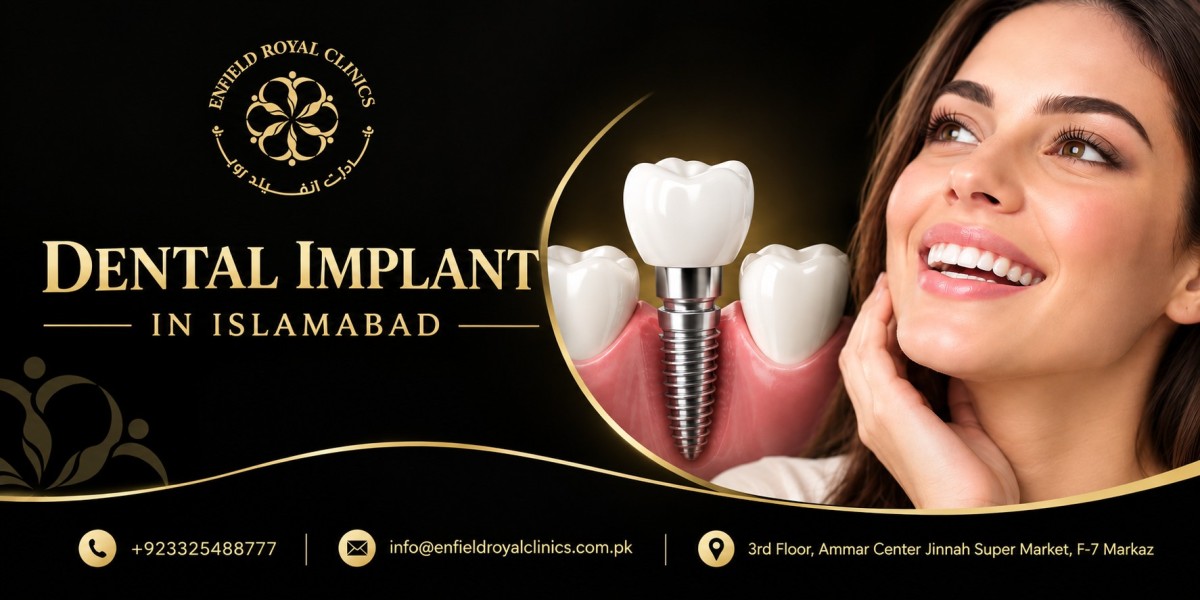

Missing teeth can affect chewing, speech, and the overall appearance of a smile. Dental implants provide a reliable option for replacing missing teeth by using an artificial root placed inside the jawbone. Once healing is complete, the implant can support a custom-made crown that looks and functions much like a natural tooth.
For individuals considering a dental implant in Islamabad, understanding how the implant is placed in the jaw can make the treatment process feel more familiar. The procedure involves careful planning, precise placement, and a healing period that allows the implant to bond with the bone. The exact approach depends on the patient's oral health, bone structure, and the number of teeth being replaced.
What Is a Dental Implant and How Does It Work?
A dental implant is a small, screw-shaped post commonly made from titanium. It is designed to replace the root of a missing tooth and provide support for an artificial replacement.
A complete implant restoration generally has three main components:
Implant post: The part placed inside the jawbone that acts as an artificial tooth root.
Abutment: A connector that joins the implant post to the replacement tooth.
Dental crown: The visible part designed to resemble a natural tooth in shape, size, and colour.
After placement, the implant gradually bonds with the surrounding bone through a natural healing process called osseointegration. This connection helps create a stable foundation for the final restoration.
Dental implants can replace a single missing tooth, support a bridge when several teeth are missing, or help stabilise certain types of dentures. Unlike a conventional tooth-supported bridge, a single implant generally does not require neighbouring healthy teeth to be reshaped for support.
For patients exploring a dental implant in Islamabad, an initial dental assessment helps determine whether this treatment is suitable and which type of restoration may provide the best function.
How Is the Jaw Prepared Before Implant Placement?
Preparation is an important part of dental implant treatment because the implant needs a suitable position and enough supporting bone to remain stable. Before the procedure, the dental professional examines the mouth and reviews the patient's medical and dental history.
Dental X-rays or three-dimensional imaging may be used to assess the jawbone, measure available bone, and identify nearby structures such as nerves and sinuses. These images help guide the placement plan and reduce the risk of complications.
The gums must also be evaluated. If gum disease, tooth decay, or an infection is present, treatment may be needed before the implant is placed. Maintaining healthy gums is important because the tissues surrounding the implant help protect its supporting bone.
Some patients have lost bone volume after a tooth has been missing for a long time. In such cases, a bone graft may be recommended to build up the area before or during implant treatment. Whether this additional procedure is necessary depends on the location and amount of available bone.
The dentist also considers factors that may affect healing, including smoking, uncontrolled diabetes, certain medications, and other medical conditions. These factors do not always prevent implant placement, but they may require extra precautions or a different treatment plan.
What Happens During the Dental Implant Placement Procedure?
Dental implant placement is generally performed using local anaesthesia to keep the procedure comfortable. The precise steps depend on the patient's anatomy and the planned restoration, but the process commonly follows several stages.
1. Preparing the treatment area
The dental professional cleans and prepares the area where the implant will be placed. Local anaesthesia numbs the area so the patient should not feel sharp pain during the procedure, although some pressure or movement may be noticeable.
2. Accessing the jawbone
A small opening is made in the gum to expose the bone at the planned implant site. In some situations, a different surgical technique may be appropriate based on the patient's needs.
3. Creating the implant site
The dentist carefully prepares a space in the jawbone using specialised instruments. The size, depth, and angle of this space are planned according to the implant and the surrounding anatomy.
4. Inserting the implant
The implant post is placed into the prepared site. Its position and initial stability are checked to help ensure that it can heal properly. The gum may then be closed with stitches, depending on the technique used.
5. Protecting the implant during healing
A healing cap or temporary component may be used, or the implant may be covered by the gum while healing takes place. The approach depends on the implant's stability, the condition of the bone, and the treatment plan.
Most patients can return home after the procedure. They receive instructions about cleaning the mouth, managing discomfort, eating suitable foods, and attending follow-up appointments.
How Long Does a Dental Implant Take to Bond with the Jawbone?
Implant placement is only one stage of the overall process. After surgery, the implant needs time to bond with the surrounding bone. This process, known as osseointegration, helps establish the stability required to support the replacement tooth.
Healing may take several months, although the exact period varies between patients. Factors such as bone quality, implant location, general health, and whether a bone graft was performed can influence the timeline.
During this period, the dental professional monitors healing and checks for signs of complications. Some patients may receive a temporary tooth or restoration to maintain appearance and function, while others may need to avoid putting significant pressure on the implant until it is ready.
In selected cases, an implant and temporary tooth may be placed on the same day. However, immediate placement or loading is not suitable for everyone. The decision depends on the condition of the bone, the stability of the implant, the location of the tooth, and other clinical factors.
Patients considering a dental implant in Islamabad should understand that the safest timeline is determined by clinical findings rather than a fixed schedule. Allowing adequate healing can help support a stable, long-lasting restoration.
What Happens After the Implant Has Healed?
Once the implant has integrated sufficiently with the jawbone, the next step is to attach the final replacement tooth or other planned restoration.
If the implant was covered by the gum during healing, a minor procedure may be required to expose it and attach a healing component. The gum tissue is then allowed to settle around the implant as needed.
An abutment is fitted to connect the implant with the crown. The crown is custom-made to match the surrounding teeth and is designed to restore the shape and chewing surface of the missing tooth.
Before completing the restoration, the dental professional checks the fit, appearance, and bite. Adjustments may be necessary to ensure that the new tooth meets the opposing teeth correctly and does not receive excessive pressure.
After the final restoration is fitted, patients can gradually return to normal chewing as advised. A properly planned implant can help improve eating comfort, speech, and smile appearance while providing a stable alternative to some removable tooth replacement options.
However, the crown and surrounding tissues still require regular care. The crown may wear or need replacement over time, even when the implant remains stable.
How Can Patients Care for a Dental Implant After Placement?
Good aftercare helps protect the surgical area during recovery and supports the long-term health of the implant. Some swelling, mild bleeding, bruising, or soreness can occur after surgery. These effects usually improve gradually, but patients should follow the instructions provided for their specific procedure.
Important aftercare practices include:
Eating soft foods during the initial healing period.
Keeping the mouth clean while avoiding disturbance to the surgical site.
Taking prescribed medication according to the instructions.
Avoiding smoking because it can interfere with healing and increase the risk of complications.
Attending follow-up appointments to monitor the implant and surrounding tissues.
Brushing twice daily and cleaning between teeth once the area can tolerate normal oral hygiene.
Patients should contact a dental professional if they experience worsening pain, increasing swelling, fever, persistent bleeding, discharge, or movement of the implant or temporary restoration.
Long-term care remains important after the crown is attached. Plaque can accumulate around an implant, and inflammation may damage the surrounding gums and bone. Regular dental checkups help identify problems early and maintain the health of the restoration.
Frequently Asked Questions
1. Is dental implant placement painful?
Local anaesthesia is usually used during implant placement to control pain. Patients may feel pressure during the procedure, and some soreness or swelling can occur afterward. These symptoms often improve over several days, although recovery varies depending on the complexity of the treatment.
2. How long does it take to complete a dental implant?
The overall process may take several months because the implant needs time to bond with the jawbone before the final restoration is attached. Bone grafting or other additional procedures can extend the timeline. Some selected cases allow earlier restoration when clinical conditions are suitable.
3. Can a dental implant be placed if there is not enough jawbone?
In some cases, a bone graft can increase the available support for an implant. The need for grafting depends on the amount and location of the missing bone. Dental imaging and a clinical examination help determine whether grafting or another treatment option is appropriate.
4. How long can a dental implant last?
A dental implant can function for many years, sometimes for decades. Its lifespan depends on proper placement, bone and gum health, oral hygiene, bite forces, lifestyle habits, and regular dental monitoring. The crown may require repair or replacement over time.
Conclusion
Dental implant placement involves careful examination, preparation of the jawbone, insertion of the implant post, and a healing period that allows the implant to bond with the bone. Once healing is complete, a custom-made crown or other restoration can provide a stable replacement for missing teeth.
Anyone considering a dental implant in Islamabad should seek a professional assessment to understand their bone condition, treatment timeline, possible risks, and aftercare needs. With suitable planning and consistent oral hygiene, dental implants can help restore chewing function and improve the appearance of a smile.