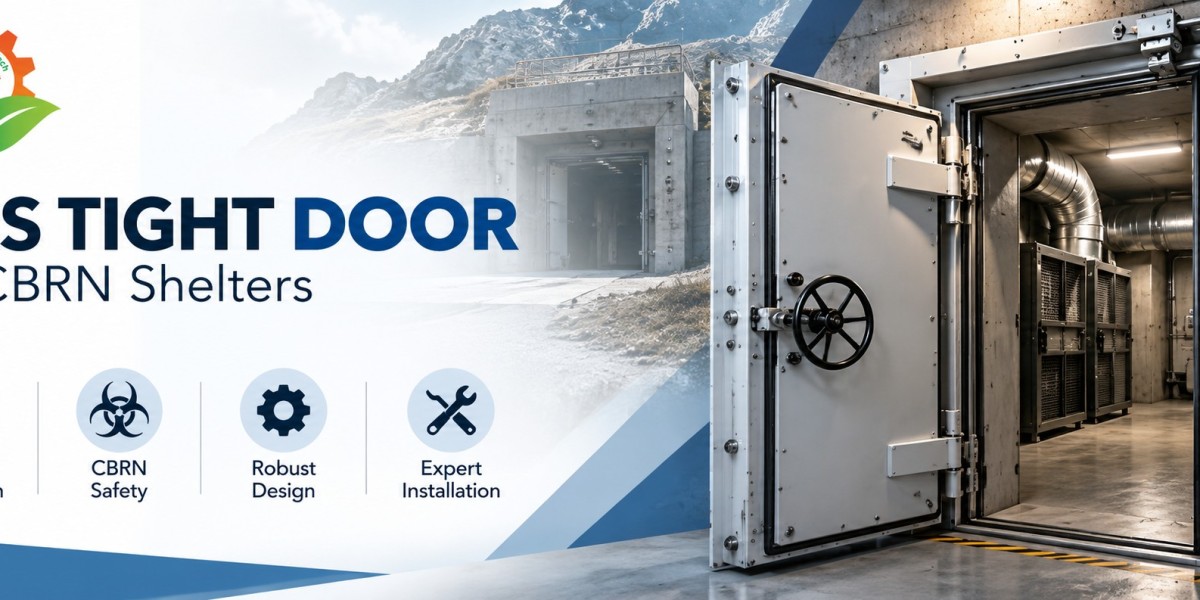

Although the ventilation and CBRN filtration systems met every specification, the compromised seal prevented the shelter from maintaining the required internal pressure. Replacing it with a certified gas tight door restored airtight integrity and ensured the facility complied with operational safety requirements. This example demonstrates why the performance of a gas tight door is fundamental to protecting personnel and critical infrastructure.
A gas tight door is a precision-engineered safety barrier designed to prevent hazardous gases, radioactive particles, biological contaminants, and toxic chemicals from entering or escaping controlled environments. These doors are essential in defence facilities, CBRN shelters, pharmaceutical laboratories, chemical plants, nuclear installations, and other high-risk environments where airtight containment directly affects operational safety. Sigma Power Tech develops engineered gas tight door solutions that combine structural strength, certified airtight performance, and long-term reliability for demanding industrial and defence applications.
Engineered Gas Tight Door Solutions
A gas tight door is far more sophisticated than a conventional industrial steel door.
Its performance depends on precision engineering, reinforced construction, and reliable sealing technology that maintains airtight integrity under specified pressure conditions. Every component is designed to perform consistently throughout years of operation in challenging environments.
As one of the experienced Gas tight door manufacturers in India, Sigma Power Tech focuses on customized engineering, manufacturing precision, testing, installation, and lifecycle support for mission-critical infrastructure.
Engineering Behind a Reliable Gas Tight Door
High-performance gas tight doors incorporate multiple engineered systems working together.
Typical construction includes:
Reinforced steel door leaf
Heavy-duty structural frame
Continuous compression gasket seals
Multi-point locking mechanisms
Pressure-rated hinges
Corrosion-resistant protective coatings
Replaceable sealing components
An optimized Gas tight door design distributes sealing pressure uniformly around the entire perimeter of the door. This ensures consistent airtight performance while minimizing gasket wear and reducing maintenance requirements over time.
Pressure Retention and Leakage Performance
One of the primary functions of a gas tight door is maintaining pressure-controlled environments.
Positive-pressure facilities prevent contaminated external air from entering occupied spaces, while negative-pressure facilities safely contain hazardous substances within controlled areas.
A Gas tight door for CBRN shelters must undergo leakage-rate testing and pressure verification to confirm that it meets specified performance requirements under operational conditions.
Equally important is proper frame anchoring and wall integration. Even a certified door can lose effectiveness if installation does not maintain structural alignment and sealing continuity.
Integration with Critical Protection Systems
Modern gas tight doors operate as part of an integrated protection strategy.
They should work seamlessly with:
Blast-resistant structures
Fire-rated compartmentation
CBRN filtration systems
HVAC pressure control
Emergency ventilation systems
Electronic access control
Security monitoring systems
The Sigma Power Tech gas tight door is engineered to integrate with these safety systems while maintaining dependable airtight performance throughout the operational life of the facility.
Key Features of Sigma Power Tech Gas Tight Door Solutions
High-quality gas tight door systems should provide:
Certified airtight sealing performance
Reinforced structural strength
Corrosion-resistant construction
Reliable pressure differential capability
Compatibility with blast and fire protection systems
Security-grade locking mechanisms
Heavy-duty operational durability
Low maintenance requirements
Compliance with recognized certification standards
These features help maintain safe operating environments while reducing long-term maintenance costs.
Applications Across Critical Industries
Gas tight doors are installed in facilities where containment cannot be compromised.
Typical applications include:
CBRN shelters and civil defence bunkers
Military command centers
Biological containment laboratories
Pharmaceutical manufacturing facilities
Chemical research laboratories
Chemical and petrochemical plants
Nuclear facilities
Underground infrastructure
Hazardous material storage units
An Airtight door for hazardous facilities should always be selected according to certified gas-tight performance requirements rather than general industrial door specifications.
Cost and Investment Factors
The Gas tight door price depends on project-specific engineering requirements rather than standard dimensions alone.
Key cost considerations include:
Required sealing and leakage-rate classification
Door size and opening configuration
Material grade and plate thickness
Reinforced frame engineering
Factory testing and certification
Integration with filtration and pressure systems
Automation and electronic locking
Installation complexity
Site-specific engineering assessments
Long-term maintenance planning
Although advanced systems involve higher initial investment, they typically provide greater operational reliability and lower lifecycle costs.
Buyer's Guide
Selecting the right engineering partner is as important as choosing the door itself.
Before procurement, evaluate suppliers based on:
Proven experience with defence and industrial infrastructure
Engineering and testing capabilities
Compliance with IS/BIS requirements and internationally recognized airtightness and CBRN standards
Customization capability
Precision manufacturing processes
Comprehensive technical documentation
Professional installation expertise
Preventive maintenance support
Demonstrated project performance
As a Sigma Power Tech manufacturer and service provider, the company offers complete project support from engineering design and manufacturing to installation, testing, commissioning, and long-term maintenance.
Common Mistakes to Avoid
Several procurement mistakes can reduce the effectiveness of gas tight door installations.
Avoid:
Selecting products solely based on purchase price
Ignoring project-specific pressure and leakage requirements
Improper frame anchoring and wall integration
Underestimating corrosion or fire exposure
Failing to verify certification and testing documentation
Neglecting gasket inspection and maintenance planning
Overlooking compatibility with filtration and CBRN systems
Proper planning significantly improves operational safety and service life.
Long-Term Operational Value
Routine inspection and preventive maintenance preserve the performance of every gas tight door.
Periodic gasket inspection, hardware adjustment, corrosion protection, lubrication, and scheduled leakage testing help maintain airtight integrity throughout the product lifecycle. Well-maintained doors continue supporting pressure-controlled environments while minimizing unexpected maintenance costs and operational downtime.
Conclusion
A gas tight door is a critical component of modern defence, nuclear, pharmaceutical, chemical, and CBRN infrastructure. Its effectiveness depends on precision engineering, certified airtight sealing, robust structural construction, and proper integration with blast, fire, and filtration systems. Sigma Power Tech delivers engineered gas tight door solutions designed to meet demanding operational requirements through customized design, precision manufacturing, professional installation, and long-term maintenance support. Rather than focusing solely on the Gas tight door price, organizations should prioritize certified engineering, appropriate sealing classifications, proven testing, and lifecycle reliability. Investing in a professionally engineered gas tight door ensures dependable containment, regulatory compliance, and long-term protection for critical facilities where airtight integrity is essential.