
Managing customer relationships is one of the most important aspects of running a successful automotive business. Car dealerships handle numerous inquiries, sales opportunities, test drive appointments, follow-ups, and after-sales services every day. Managing these activities manually can lead to missed opportunities, poor communication, and lost sales. This is where Automotive CRM Software becomes valuable. It helps dealerships organize customer information, track sales activities, automate follow-ups, and improve the overall customer experience. Whether a dealership sells new or used vehicles, the right CRM solution can simplify daily operations and help sales teams build stronger customer relationships.
What Is Automotive CRM Software?
Automotive CRM Software is a customer relationship management system specifically designed for car dealerships and automotive businesses. It allows dealerships to manage customer data, monitor leads, track sales pipelines, schedule appointments, and maintain communication throughout the vehicle purchasing journey.
Unlike a general CRM platform, automotive-focused software can support dealership-specific activities, such as vehicle inquiries, test drive scheduling, trade-in discussions, financing follow-ups, and service reminders.
By keeping customer information and sales activities in one centralized system, dealerships can better understand customer needs and manage opportunities more efficiently.
How Does Automotive CRM Software Work?
Automotive CRM software collects and organizes customer information from different communication channels, including website forms, phone calls, email inquiries, social media, and showroom visits.
When a potential customer contacts a dealership, the CRM records their details and creates a lead profile. Sales representatives can then assign the lead, record conversations, schedule follow-ups, and monitor the customer's progress through the sales pipeline.
For example, if someone submits an online inquiry about a particular SUV, the CRM can help a sales representative respond, arrange a test drive, share relevant vehicle information, and follow up after the visit.
This structured process helps dealerships manage inquiries consistently and reduces the chances of losing potential customers.
Key Features of Automotive CRM Software
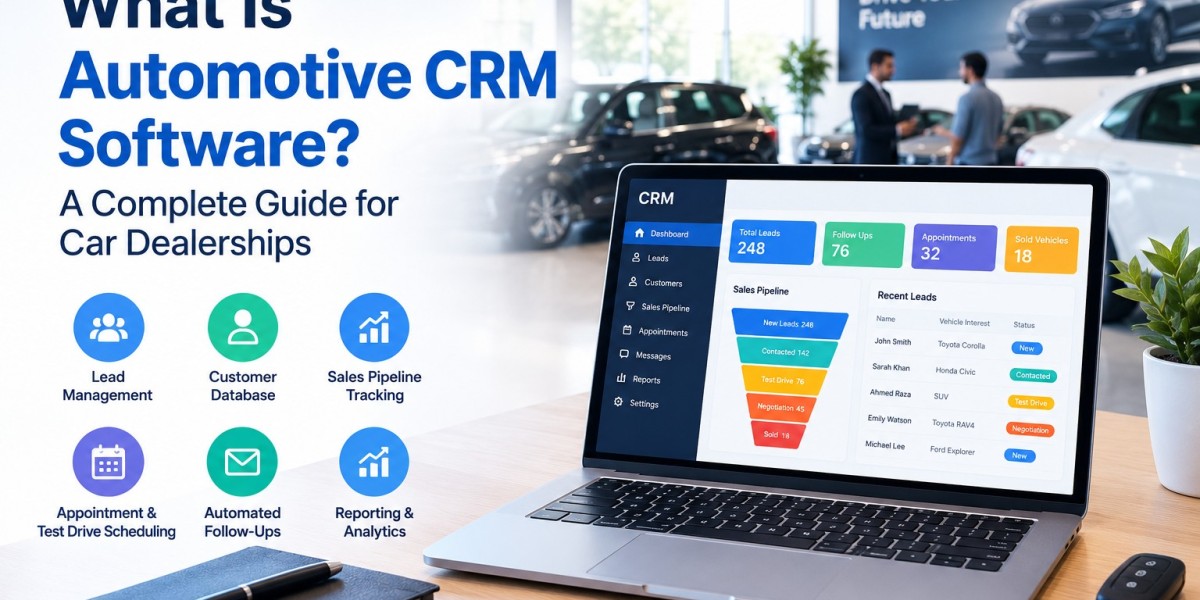
1. Lead Management
Lead management helps dealerships collect, organize, assign, and track potential customers. Sales teams can identify where leads originate and monitor their progress from the first inquiry to a completed sale.
Effective lead management also helps managers identify uncontacted prospects and ensure that inquiries receive timely attention.
2. Customer Database Management
A centralized customer database stores important information, including contact details, vehicle preferences, previous inquiries, purchase history, and communication records.
This information allows sales representatives to provide more personalized service and understand each customer's requirements without searching through multiple systems.
3. Sales Pipeline Tracking
Sales pipeline management provides visibility into every stage of the sales process. Dealerships can track prospects who have just made an inquiry, customers who have booked test drives, buyers discussing financing, and customers approaching a purchase decision.
Managers can use this information to identify delays, monitor team performance, and improve sales planning.
4. Automated Follow-Ups
Following up with prospects is essential in automotive sales. However, busy sales teams may forget to contact customers at the right time.
CRM automation can schedule reminders and, where supported, send follow-up emails or messages. These workflows help dealerships maintain communication with prospects and reduce missed follow-up opportunities.
5. Appointment and Test Drive Scheduling
Automotive CRM systems can help sales teams manage showroom appointments, vehicle demonstrations, and test drives. Representatives can record appointment details and follow up with customers before or after scheduled visits.
Better scheduling helps teams stay organized and deliver a smoother customer experience.
6. Reporting and Analytics
Reporting tools help dealership managers evaluate sales performance, lead conversion rates, response times, and lead sources.
These insights can reveal which marketing channels generate valuable prospects and where improvements may be needed in the sales process.
7. Customer Retention Management
Customer relationships continue after a vehicle purchase. Dealerships can use CRM records to schedule maintenance reminders, communicate service offers, and maintain contact with existing customers.
Consistent communication can encourage repeat business, service visits, and customer referrals.
Benefits of Automotive CRM Software for Car Dealerships
Improved Lead Conversion
A structured follow-up process helps sales representatives respond to inquiries and maintain communication with potential buyers. By tracking each opportunity, dealerships can reduce the risk of leads being overlooked.
Better Customer Experience
Customers often compare multiple vehicles and dealerships before making a purchase. Access to previous conversations and customer preferences helps representatives provide relevant information and a more personalized experience.
Increased Sales Team Productivity
Automating repetitive tasks and organizing customer information reduces administrative work. Sales representatives can spend more time speaking with prospects, arranging test drives, and supporting customers through the buying process.
More Effective Marketing Decisions
CRM reports can help dealerships understand which campaigns, advertising channels, and lead sources contribute to sales opportunities. This information supports more informed marketing decisions.
Stronger Customer Relationships
Maintaining organized records of customer interactions makes it easier to provide timely assistance and relevant updates. Over time, this can support customer satisfaction and long-term relationships.
Automotive CRM Software vs. Traditional CRM
Traditional CRM systems are designed to support customer management across various industries. They commonly include contact management, sales tracking, and communication tools.
Automotive CRM software focuses on the specific needs of dealerships. Depending on the platform, it may include vehicle-related lead tracking, test drive scheduling, showroom activity management, dealership reporting, and integration with automotive sales systems.
The best choice depends on the business. A small automotive company with straightforward sales activities may find a general CRM sufficient, while a dealership with multiple sales representatives, branches, and vehicle inventory workflows may benefit from an automotive-specific platform.
How to Choose the Right Automotive CRM Software
Selecting the right system requires understanding your dealership's workflow, customer volume, and business goals.
Consider these important factors before making a decision:
Ease of use: Choose a system that sales representatives and managers can use without unnecessary complexity.
Lead management capabilities: Check whether it can capture, assign, and track inquiries from your main marketing channels.
Automation options: Review the available follow-up reminders, communication tools, and workflow automation features.
Reporting and analytics: Look for reports that help measure lead response times, sales performance, and conversion rates.
Integration capabilities: Confirm compatibility with your website, advertising platforms, inventory systems, and other dealership tools.
Scalability: Consider whether the software can support your business as your team and customer base grow.
Pricing and support: Compare subscription costs, implementation requirements, training, and customer support.
Before committing to a solution, request a demonstration and test how well it supports your team's actual sales process.
Common Challenges When Implementing Automotive CRM Software
Although CRM software can improve dealership operations, successful implementation requires proper planning.
One common challenge is incomplete customer data. If records are outdated or duplicated, sales representatives may struggle to use the system effectively. Cleaning existing data before migration can help prevent this issue.
Another challenge is limited employee adoption. Sales teams may resist a new system if it adds unnecessary steps or they do not understand its benefits. Training, clear processes, and management support can improve adoption.
Dealerships should also establish clear procedures for entering leads, assigning responsibilities, recording interactions, and protecting customer information. Reviewing CRM performance regularly helps identify problems and opportunities for improvement.
The Future of Automotive CRM Software
Automotive CRM technology continues to evolve as dealerships adopt more digital tools. Artificial intelligence, predictive analytics, conversational tools, and automated communication can help businesses prioritize leads and respond more efficiently.
Depending on the platform, AI-powered features may assist with lead scoring, customer segmentation, response suggestions, and sales forecasting. Integrations with digital retailing platforms can also help connect online vehicle research with dealership sales activities.
However, technology alone does not guarantee better results. Dealerships still need accurate data, well-defined processes, and trained employees to make the most of these capabilities.
Conclusion
Automotive CRM Software helps car dealerships organize customer information, manage sales opportunities, automate follow-ups, and improve communication throughout the vehicle buying journey. By bringing lead management, sales tracking, appointment scheduling, and reporting into one system, dealerships can work more efficiently and deliver a more consistent customer experience.
When choosing a CRM solution, businesses should evaluate their specific requirements, integration needs, budget, and long-term goals. With the right platform and implementation strategy, automotive businesses can build stronger customer relationships and create a more organized, measurable sales process.
Frequently Asked Questions (FAQs)
1. What is Automotive CRM Software?
Automotive CRM Software is a customer relationship management system designed for car dealerships and automotive businesses. It helps manage customer information, track sales leads, automate follow-ups, schedule test drives, and improve customer relationships.
2. How Does Automotive CRM Software Help Car Dealerships?
Automotive CRM Software helps car dealerships organize leads, monitor sales activities, improve response times, and maintain consistent communication with potential buyers. It also provides reporting tools to help managers evaluate sales performance and identify opportunities for improvement.
3. What Are the Main Features of Automotive CRM Software?
Common features include lead management, customer database management, sales pipeline tracking, automated follow-ups, appointment scheduling, reporting and analytics, and customer retention management. Some platforms also offer integrations with inventory management and dealership systems.
4. Can Automotive CRM Software Increase Car Sales?
Yes, Automotive CRM Software can support sales growth by helping dealerships respond to inquiries promptly, track potential buyers, and follow up consistently. However, actual results depend on the quality of leads, sales processes, customer service, and how effectively the software is used.
5. Is Automotive CRM Software Suitable for Small Dealerships?
Yes, many CRM solutions are suitable for small dealerships. They can help smaller teams organize customer records, manage inquiries, and automate routine tasks. Businesses should choose software that fits their budget, team size, and operational requirements.
6. What Is the Difference Between Automotive CRM and General CRM Software?
General CRM software supports customer management across different industries, while Automotive CRM Software is designed for dealership workflows. Depending on the platform, automotive-specific features may include test drive scheduling, vehicle inquiry tracking, showroom lead management, and automotive sales reporting.
7. Does Automotive CRM Software Support Automated Follow-Ups?
Yes, many automotive CRM platforms provide follow-up reminders and automated communication workflows. These features help sales representatives contact prospects at appropriate times, follow up after test drives, and maintain communication with potential buyers.
8. How Much Does Automotive CRM Software Cost?
The cost depends on the software provider, number of users, available features, integrations, and subscription plan. Some providers offer basic packages for smaller dealerships, while advanced solutions may include additional automation, reporting, and inventory integrations. Requesting a customized quote can help determine the total cost.
9. How Do I Choose the Best Automotive CRM Software?
To choose the right solution, evaluate its lead management features, ease of use, automation capabilities, reporting tools, integration options, customer support, and pricing. A product demonstration or trial can help you determine whether the system fits your dealership's workflow.
10. Can Automotive CRM Software Improve Customer Retention?
Yes, it can support customer retention by helping dealerships maintain purchase records, schedule service reminders, and communicate relevant offers. Consistent follow-ups and personalized customer service can encourage repeat purchases, maintenance visits, and referrals.