
Choosing the right technology is an important decision for real estate companies managing large or growing property portfolios. Enterprise businesses often handle multiple buildings, hundreds of tenants, complex lease agreements, financial transactions, maintenance operations, and owner reporting requirements. As operations expand, disconnected applications can create inconsistent records, administrative delays, and limited visibility across departments. Understanding how to choose Enterprise Property Management Software helps businesses identify a platform that supports their operational requirements and long-term goals. The right solution should connect property administration, accounting, tenant management, and performance reporting without creating unnecessary complexity. For developers, landlords, asset managers, and property management companies, a carefully selected enterprise platform can improve efficiency, strengthen financial oversight, and support sustainable portfolio growth.
What Is Enterprise Property Management Software?
Enterprise Property Management Software is a centralized digital system designed for real estate organizations managing large, diverse, or complex property portfolios. Unlike basic rental applications, enterprise platforms generally connect operational, financial, and administrative processes across multiple departments.
A modern enterprise real estate management system can help businesses organize property records, tenant information, tenancy contracts, rental collections, maintenance activities, expenses, owner accounts, and management reports.
The primary advantage is integration. Instead of maintaining separate records for each department, authorized employees can work with connected information within one management environment.
Why Choosing the Right Enterprise Platform Matters
Enterprise real estate operations involve a significant volume of information and recurring activities. Leasing teams manage tenancy agreements, finance departments oversee transactions, maintenance employees coordinate service requests, and management evaluates property performance.
When software cannot support these responsibilities effectively, employees may continue using spreadsheets or additional applications to complete their work.
Choosing a suitable property operations management platform helps reduce fragmentation and creates more consistent business processes.
The selection process should focus on practical requirements, usability, financial controls, and the software's ability to accommodate future growth.
1. Understand Your Property Portfolio Requirements
The first step is evaluating the size and structure of your portfolio. Consider how many buildings, rental units, property owners, tenants, and employees your business manages.
An organization overseeing residential apartments may have different requirements from one managing commercial towers, retail properties, warehouses, and mixed-use developments.
A suitable multi-property management solution should organize different asset categories while maintaining accurate building, unit, ownership, and occupancy information.
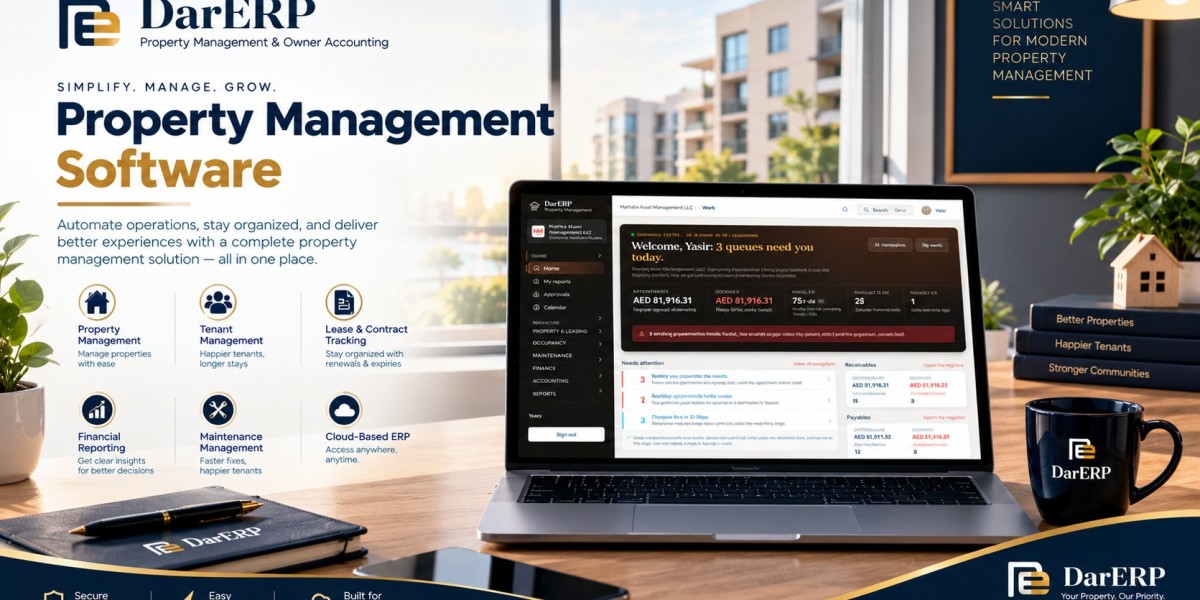
DarERP supports connected property administration, helping real estate businesses maintain structured records across their managed portfolios.
2. Evaluate Lease and Tenant Management Features
Lease administration is one of the most important functions to evaluate. Enterprise businesses may manage hundreds of tenancy agreements with different rental amounts, contract dates, payment schedules, and renewal conditions.
A strong lease lifecycle management system should help teams organize contractual information from tenant onboarding through renewal and move-out.
Tenant records should remain connected with lease details, deposits, payment histories, documents, and maintenance activities.
This improves access to information and supports better coordination between leasing, finance, and property operations.
3. Check Rental Collection and Receivables Management
Rental income plays a major role in property financial performance. Finance teams need accurate information about expected payments, collected amounts, overdue balances, and upcoming installments.
An enterprise platform should support structured rental schedules and connect financial information with tenant accounts.
For UAE real estate businesses, post-dated cheque tracking may also be an important requirement.
A centralized rental receivables management system can help reduce manual payment monitoring while providing clearer visibility into collection performance.
4. Prioritize Integrated Property Accounting
Accounting integration is one of the main differences between enterprise property software and basic rental management tools.
Large real estate businesses often manage rental income, deposits, supplier invoices, maintenance costs, owner balances, management fees, and property expenses.
A suitable property accounting ERP should help associate financial transactions with individual assets, tenants, owners, or companies.
DarERP Property Management Software supports connected property and financial management workflows, helping organizations maintain structured operational and accounting information.
Before selecting software, businesses should evaluate general ledger functions, financial reconciliation, accounts receivable, accounts payable, and property-level financial reporting.
5. Review Maintenance and Work Order Capabilities
Maintenance coordination becomes more complicated as property portfolios expand. Service requests may involve several buildings, different contractors, and multiple approval levels.
A reliable facility maintenance management system should help teams register issues, assign responsibilities, monitor work orders, and maintain service histories.
Businesses should also consider whether maintenance expenses can be associated with specific properties.
This makes it easier to understand repair costs, identify recurring issues, and plan future maintenance activities.
6. Assess Owner Accounting and Multi-Company Support
Enterprise property companies frequently manage assets belonging to multiple landlords, investors, or legal entities.
Each owner may require separate financial statements, income records, expense allocations, and account balances.
An integrated owner accounting solution can help organize these records while maintaining a consolidated portfolio overview.
For businesses operating through multiple companies, appropriate entity-level accounting controls and reporting capabilities are also important.
These requirements should be evaluated carefully during software demonstrations.
7. Check Reporting and Business Intelligence Tools
Management teams need reliable information to evaluate the financial and operational performance of their properties.
Useful reports include occupancy rates, outstanding receivables, lease expirations, rental collections, maintenance expenses, and operating costs.
A modern real estate portfolio analytics dashboard should present information clearly and allow management to review performance at property or portfolio level.
DarERP Property Management Software UAE supports connected operational and financial reporting, helping real estate organizations maintain structured information for management reviews.
8. Evaluate Security, Permissions, and Internal Controls
Enterprise property software stores important financial records, tenancy documents, ownership information, and employee activity.
A suitable platform should provide appropriate user permissions, authentication, backup procedures, and activity tracking.
Role-based access helps businesses control which employees can view, edit, approve, or manage specific information.
These controls are particularly important when leasing, accounting, maintenance, and senior management departments share the same system.
Key Features to Compare Before Selecting Software
A practical comparison should focus on how well the platform supports essential business activities.
Two important categories include:
Operational capabilities: Multi-property administration, tenant management, lease tracking, maintenance requests, document organization, vendor coordination, and occupancy monitoring.
Financial and enterprise capabilities: Rental receivables, accounting integration, owner statements, multi-company support, approval workflows, user permissions, reporting, and portfolio analytics.
Businesses should evaluate integration between these features rather than relying only on promotional descriptions.
9. Consider Ease of Use and Employee Training
Advanced functionality is valuable only when employees can use it effectively.
A suitable enterprise platform should make routine activities straightforward, including tenant registration, lease creation, rental payment recording, maintenance coordination, and financial reporting.
Companies should also evaluate training resources, implementation support, and the learning curve for different departments.
A complicated interface can reduce employee adoption and limit the benefits of software implementation.
10. Review Scalability and Integration Requirements
Enterprise software should support business growth without requiring frequent replacement.
As portfolios expand, organizations may add buildings, users, owners, transactions, and additional business entities.
A scalable property management platform should accommodate these changes while maintaining reliable performance.
Integration requirements should also be considered, particularly when companies use existing accounting applications, payment services, or reporting tools.
11. Request a Practical Product Demonstration
Before making a final decision, request a demonstration based on real operational scenarios.
Ask the provider to show how the platform manages a new tenancy, records rent, handles an overdue payment, processes a maintenance request, and prepares an owner statement.
This helps determine whether the software supports actual business workflows rather than simply offering attractive dashboards.
A practical demonstration can also reveal limitations before implementation begins.
12. Compare Implementation Costs and Long-Term Value
Software pricing should be evaluated alongside functionality, support, implementation requirements, and future scalability.
Businesses should consider subscription or licensing fees, data migration, employee training, integrations, support costs, and potential customization requirements.
The lowest-priced solution is not necessarily the most suitable choice if it requires additional applications or extensive manual work.
Long-term operational value should remain a priority throughout the selection process.
Final Thoughts
Selecting enterprise property software requires understanding business processes, financial responsibilities, portfolio complexity, and future expansion plans.
Learning how to choose Enterprise Property Management Software helps real estate companies focus on operational suitability rather than simply comparing feature lists.
The right platform should connect leasing, tenant administration, accounting, maintenance, owner reporting, and business analytics within a reliable environment.
For growing property management organizations, choosing a scalable and user-friendly system can improve financial visibility, reduce administrative complexity, and create a stronger foundation for efficient real estate operations.
Frequently Asked Questions
1. What should businesses look for in Enterprise Property Management Software?
Businesses should evaluate multi-property management, lease administration, tenant records, rental receivables, accounting integration, maintenance workflows, owner reporting, permissions, security, dashboards, and scalability.
2. How is Enterprise Property Management Software different from basic property software?
Basic property software often focuses on tenant records, leases, rental payments, and maintenance. Enterprise platforms generally provide broader integration with accounting, owner management, multi-company operations, financial controls, approval workflows, and portfolio analytics.
3. Is Enterprise Property Management Software suitable for UAE real estate companies?
Yes. Enterprise platforms can be suitable for UAE businesses managing multiple buildings, owners, tenants, and rental transactions. Companies should evaluate support for their specific accounting needs, payment arrangements, tenancy processes, and administrative requirements.