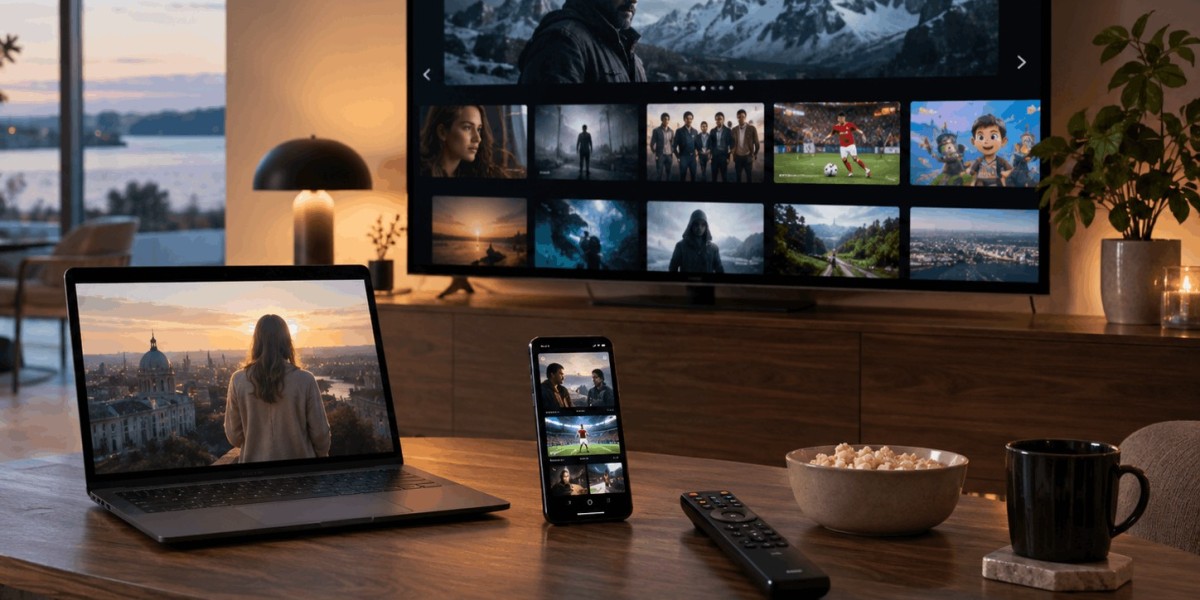

Watching television no longer requires a traditional cable connection or a dedicated satellite receiver. Internet Protocol Television (IPTV) allows viewers to access live channels, movies, sports, and on-demand entertainment through an internet connection.
For beginners, one of the biggest advantages of IPTV is the ability to watch television on different devices. Smart TVs, smartphones, tablets, computers, and streaming boxes can all support internet-based television when compatible applications and services are available.
However, setting up IPTV is not always the same across devices. Each platform has different installation methods, software requirements, and playback capabilities.
Whether you are exploring IPTV Sweden services or simply looking for a flexible way to watch television, understanding device compatibility can help you avoid unnecessary technical problems.
This guide explains how IPTV works across popular devices, what equipment you need, and how to improve your viewing experience.
Understanding IPTV and How It Works
Internet Protocol Television delivers television programming through IP-based networks instead of traditional cable or satellite broadcasting infrastructure.
Unlike conventional television, which receives channels through dedicated broadcasting systems, IPTV uses network connections to deliver video content to compatible devices.
Depending on the provider, IPTV services may include live television, video on demand (VOD), catch-up programming, and electronic program guides (EPG).
Some IPTV platforms operate through managed networks, while others deliver content over standard broadband connections.
The basic requirements usually include a reliable internet connection, a compatible device, an authorized television service, and an application or receiver supported by the provider.
However, not every application works with every television service. Device compatibility, subscription conditions, and content availability should always be checked before installation.
Choosing the Right IPTV Apps for Your Device
Selecting compatible software is one of the first steps toward a reliable IPTV viewing experience. Different devices use different operating systems, which means application availability and installation procedures can vary.
When exploring IPTV apps, beginners should check whether their television provider supports the chosen platform, offers an official application, and explains the required setup process. An IPTV player application may provide a viewing interface, but it does not necessarily include television channels or a content subscription.
Some applications support features such as electronic program guides, subtitles, favorite channels, parental controls, and video-on-demand libraries.
It is also important to distinguish between a streaming application and a content provider. A media player may simply organize and play streams supplied by a separately authorized service.
For security and reliability, download applications from trusted app stores whenever possible. Avoid unofficial software that requests unnecessary permissions or promises unrestricted access to copyrighted channels without clear licensing information.
How to Watch IPTV on a Smart TV
Smart TVs are among the most convenient devices for watching internet-based television because they can run supported streaming applications without requiring separate equipment.
Popular television platforms include Samsung Smart TV, LG Smart TV, Android TV, and Google TV.
To begin, connect your television to the internet using Wi-Fi or an Ethernet cable. Open the television's application store and search for the official application recommended by your IPTV provider.
After installation, sign in using the account details supplied by the service. Some providers use activation codes, while others require a username and password.
Once the account is connected, viewers can browse available channels, access program guides, and adjust playback settings.
Application availability varies between television brands and operating system versions. If your television does not support the required software, an external streaming device may provide an alternative.
Keeping the television's firmware updated can also help prevent compatibility and playback problems.
Watching IPTV on Android Smartphones and Tablets
Android smartphones and tablets offer a flexible way to watch IPTV at home or while traveling.
Most compatible services can be accessed through applications available on Google Play or through the provider's official distribution channels.
After installing the supported application, users generally sign in to their subscription account and select the available programming.
Mobile viewing can be particularly useful for watching news, entertainment, or live sports without using the main household television.
However, streaming over mobile data requires attention to bandwidth consumption.
High-definition and 4K video can use substantial amounts of data, especially during extended viewing sessions.
Connecting to a trusted Wi-Fi network can help reduce mobile data usage and improve playback consistency.
Users should also remember that content availability may change when traveling because of regional licensing restrictions.
Setting Up IPTV on iPhone and iPad
Apple devices can also support internet-based television through compatible applications available on the App Store.
The installation process is usually straightforward. Download the application supported by your television provider, open it, and complete the account authentication process.
Depending on the service, users may be able to access live channels, on-demand programs, subtitles, and playback controls.
Some applications also support AirPlay, allowing compatible content to be displayed on an Apple TV or supported smart television.
However, AirPlay availability depends on the application and content licensing restrictions.
Before subscribing, confirm that the provider supports iOS or iPadOS and that the required application is available in your region.
For better security, avoid installing unverified configuration profiles or providing account credentials to unknown applications.
Using IPTV on Amazon Fire TV and Android TV Boxes
Streaming devices are useful when a television lacks built-in support for the required IPTV application.
Amazon Fire TV devices and Android TV boxes connect to a television through an HDMI port and provide access to compatible streaming software.
After connecting the device, complete its initial setup and establish an internet connection.
Install the official application supported by your television provider, then sign in using your subscription credentials.
External streaming devices may offer better application compatibility and processing performance than older smart televisions.
However, hardware capabilities differ between models. Some devices support 4K resolution, HDR formats, and modern video codecs, while others are limited to lower resolutions.
Before purchasing equipment, check the supported operating system, video formats, network connectivity, and application requirements.
Avoid unknown streaming boxes that advertise unauthorized premium television access as a built-in feature.
Watching IPTV on Windows and Mac Computers
Computers provide another practical option for accessing IPTV content.
Some providers offer browser-based television platforms, while others support dedicated desktop applications.
For browser-based services, users generally open the provider's official website, sign in, and select the desired programming.
Desktop applications may provide additional playback controls, program guides, and viewing preferences.
A computer can also be connected to a television using an HDMI cable, allowing content to appear on a larger screen.
However, external display support and playback restrictions depend on the service and device configuration.
Computers are especially useful for viewers who want to watch television while working or studying, provided the activity does not interfere with network performance.
For security, use updated browsers, trusted applications, and legitimate subscription services.
Internet Speed Requirements for Smooth IPTV Playback
A stable internet connection is essential for reliable IPTV streaming across different devices.
The required bandwidth depends on video resolution, compression technology, and the streaming platform.
The following figures provide approximate starting points:
| Streaming Quality | Suggested Download Speed |
|---|---|
| Standard Definition | 3–5 Mbps |
| HD 720p | 5–8 Mbps |
| Full HD 1080p | 8–12 Mbps |
| Ultra HD 4K | 15–25 Mbps or more |
Actual requirements vary between providers.
Households streaming on several devices simultaneously need enough bandwidth to support their combined usage.
For stationary televisions and streaming boxes, Ethernet connections can provide greater consistency than wireless networks.
When using Wi-Fi, maintain a strong signal and avoid placing the router behind large obstacles.
If buffering occurs frequently, test the connection speed, restart the application, and check whether other devices are consuming substantial bandwidth.
Common IPTV Problems and How to Fix Them
Beginners may occasionally encounter buffering, login errors, missing channels, or application crashes.
Buffering often results from unstable internet connectivity, network congestion, or problems with the streaming provider's infrastructure.
Start by checking the internet connection and restarting the application. If the problem continues, test another authorized streaming service to determine whether the issue affects the entire network.
Login errors may occur because of incorrect credentials, expired subscriptions, or account restrictions.
Missing channels can result from subscription limitations, regional availability, or changes in content licensing.
Application crashes may be resolved by installing updates, clearing temporary application data where supported, or restarting the device.
If problems continue, contact the provider's official support team rather than sharing account credentials with third-party troubleshooting services.
Choosing a Legal and Reliable IPTV Service
Device compatibility is only one part of selecting an IPTV service.
Consumers should also consider content licensing, subscription transparency, customer support, and payment security.
IPTV technology itself is legal, but providers generally need appropriate rights to distribute copyrighted television channels, films, and sports programming.
Services offering unusually large premium channel collections without clear licensing information should be approached cautiously.
For Swedish viewers, it is also worth checking whether the service supports local channels, Swedish subtitles, and regional programming.
Review subscription terms, cancellation policies, and simultaneous viewing limits before making a payment.
A reliable service should explain what customers receive and which devices are officially supported.
Conclusion
Watching IPTV on different devices can be straightforward once you understand the basic requirements and installation process.
Smart TVs provide convenient living room viewing, while smartphones and tablets offer portability. Streaming boxes can improve compatibility with older televisions, and computers provide flexible viewing options.
The most important steps are choosing a compatible application, maintaining a stable internet connection, and using an authorized television provider.
By checking device requirements, streaming quality, subscription conditions, and security practices, beginners can enjoy internet-based television across multiple screens with fewer technical interruptions.