
Understanding the fire alarm system price in Pakistan is important for homeowners, business owners, contractors, and building managers planning to improve fire safety. The cost depends on the type of system, number of detectors, control panel capacity, installation requirements, and the size of the property.
Fire alarm systems are available in conventional, addressable, and wireless configurations. A small home may only need a few smoke detectors, while an office, school, factory, or commercial building may require a complete system with multiple detection devices and alarm zones.
Fire Alarm System Price in Pakistan
The following table provides indicative prices based on available Pakistani supplier listings in 2026. Actual prices may vary depending on the brand, model, stock, and supplier.
| Fire Alarm Equipment | Approximate Price (PKR) |
|---|---|
| Smart Wi-Fi Smoke Detector | Rs. 4,149 |
| Conventional Smoke Detector | Rs. 1,700 |
| Conventional Heat Detector | Rs. 1,800 |
| Conventional 2-Zone Control Panel | Rs. 13,800 |
| Conventional 4-Zone Control Panel | Rs. 15,800 |
| Conventional 8-Zone Control Panel | Rs. 20,299 |
| Manual Call Point | Rs. 1,649–4,799 |
| Fire Sounder / Strobe | Rs. 2,000–4,300 |
| Addressable Smoke Detector | Rs. 5,800 |
| Addressable Fire Alarm Control Panel | Rs. 345,300 |
These are equipment prices, not a complete installed-system quotation. Wiring, cable, conduits, installation, testing, and commissioning may increase the total project cost.
Types of Fire Alarm Systems Available in Pakistan
1. Conventional Fire Alarm Systems
Conventional fire alarm systems divide a building into different zones. When a detector activates, the control panel identifies the affected zone rather than the exact detector.
These systems are commonly considered for:
Small offices
Shops and retail outlets
Residential buildings
Small schools
Clinics and other compact premises
They are generally more affordable than addressable systems and can be suitable where the building layout is relatively simple.
2. Addressable Fire Alarm Systems
Addressable systems assign a unique address to each compatible device. When a detector activates, the control panel can identify the specific device reporting the event.
These systems may be appropriate for:
Large commercial buildings
Hospitals
Hotels
Factories
Shopping centres
Multi-storey properties
Although the initial equipment cost is usually higher, device-level identification can make it easier for security teams to locate an alarm event.
3. Wireless Fire Alarm Systems
Wireless fire alarm systems communicate through wireless connections between compatible devices and the control panel. They can be useful in buildings where installing new cables is difficult.
Before selecting a wireless system, check its communication range, battery life, signal reliability, and compatibility with other equipment.
4. Smart Wi-Fi Smoke Detectors
Smart Wi-Fi smoke detectors are smaller devices designed to detect smoke and send notifications through compatible mobile applications.
They can be useful in homes and small spaces, but a standalone Wi-Fi detector should not automatically be treated as a replacement for a properly designed building-wide fire alarm system.
Main Components of a Fire Alarm System
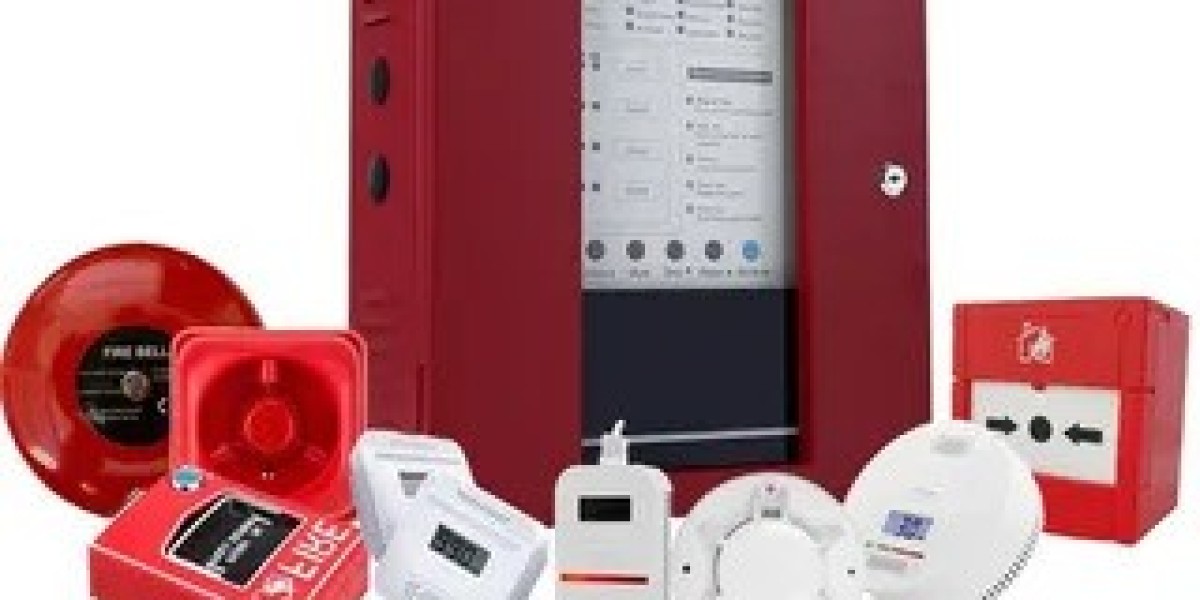
A complete fire alarm system includes several components that work together to detect and communicate potential fire incidents.
Smoke Detectors: Detect smoke particles and trigger an alarm when specified conditions are met.
Heat Detectors: Respond to a fixed temperature threshold or a rapid increase in temperature. They may be suitable for areas where smoke detectors could produce unwanted alarms.
Fire Alarm Control Panel: Receives signals from connected devices and manages the alarm system.
Manual Call Points: Allow occupants to activate the fire alarm manually during an emergency.
Sounders and Sirens: Produce audible warnings to alert people inside the building.
Strobe Lights: Provide visual alerts, which can be particularly useful in noisy environments.
Backup Batteries: Help keep compatible alarm equipment operating during power interruptions.
What Affects the Cost of a Fire Alarm System?
The final price depends on more than the control panel or detector cost. Consider these important factors before requesting a quotation.
Building Size and Layout
A larger building generally requires more detectors, alarm devices, and wiring. Multiple floors may also require additional zones or addressable equipment.
Number of Detectors
The number of smoke detectors, heat detectors, and manual call points directly affects the equipment budget.
System Technology
Conventional systems are generally more economical, while addressable systems offer more detailed device identification and often have higher equipment costs.
Brand and Product Quality
Different manufacturers offer different product specifications, certifications, compatibility options, and warranty terms. Always check the exact model rather than comparing prices by product category alone.
Installation and Wiring
Cable length, ceiling structure, building design, and installation complexity can affect labour costs.
Testing and Maintenance
A properly installed system should be tested and maintained according to the manufacturer's instructions and applicable fire safety requirements.
Example: Estimated Cost of a Small Office System
To understand how equipment costs add up, consider an illustrative four-zone conventional office setup:
| Equipment | Quantity | Estimated Cost |
|---|---|---|
| Four-zone control panel | 1 | Rs. 15,800 |
| Smoke detectors | 10 | Rs. 17,000 |
| Manual call points | 2 | Rs. 3,298 |
| Sounder flashers | 2 | Rs. 4,000 |
| Equipment subtotal | Rs. 40,098 |
This example excludes cable, conduit, installation, and commissioning. The required number and placement of devices should be determined through a proper site assessment rather than copied from this example.
How to Choose the Right Fire Alarm System
Choosing the right system requires an assessment of the building and its fire safety needs.
Assess the property: Identify rooms, corridors, exits, kitchens, storage areas, and other locations requiring detection.
Determine the system type: Compare conventional and addressable options based on the building's size and complexity.
Check equipment compatibility: Ensure that detectors, call points, sounders, and control panels are designed to work together.
Review product specifications: Check relevant certifications, operating requirements, and manufacturer documentation.
Consider future expansion: Choose a panel with sufficient zones or loops for anticipated changes.
Request an installation quotation: Ask for a breakdown covering equipment, wiring, labour, testing, and maintenance.
Why Professional Installation Is Important
A fire alarm system must be correctly designed, installed, and tested to perform reliably. Poor detector placement, incompatible equipment, incorrect wiring, or inadequate coverage can affect system performance.
Professional installers can assess the property, recommend suitable equipment, position detectors appropriately, configure the control panel, and test the complete installation.
Building owners should also establish a regular inspection and maintenance schedule. Staff should know how to respond when an alarm activates, and emergency exits should remain accessible.
Final Thoughts
The fire alarm system price in Pakistan depends on the property's size, required detection coverage, system technology, equipment brand, and installation complexity. Comparing equipment specifications and complete installation quotations can help property owners select a suitable solution without focusing only on the lowest initial price. Businesses and building managers can explore the fire alarm system options offered by Time & Xcess and assess which equipment matches their requirements. For more useful community information and online articles, visit The-Villages.org.