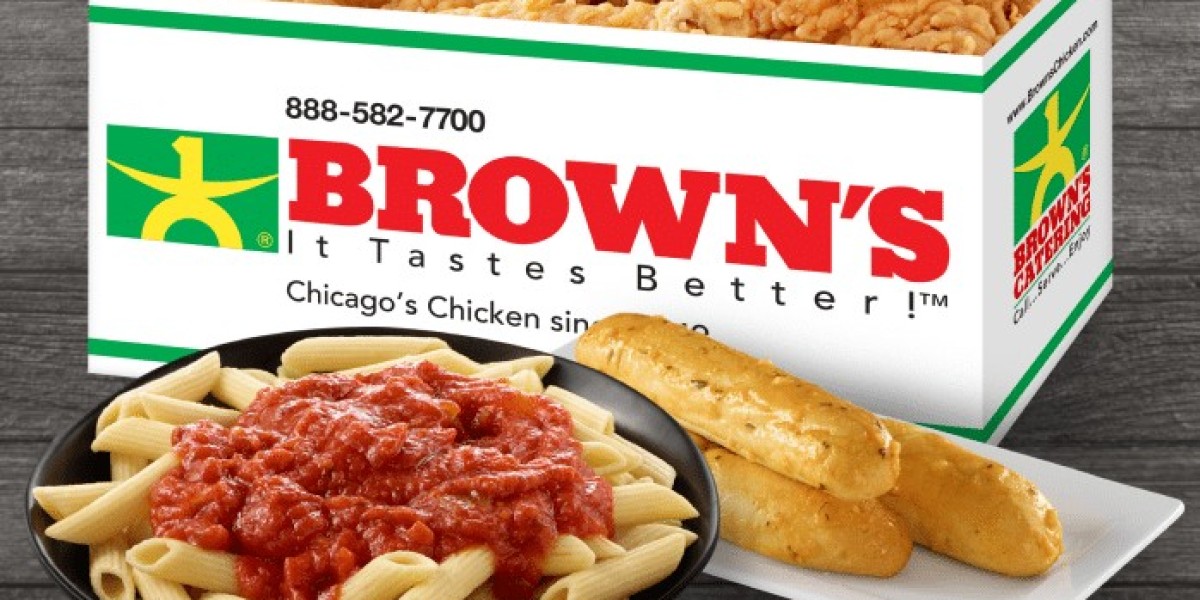

For over 74 years, Brown's Chicken has tempted the taste buds of generations of Chicagoans. From humble beginnings in 1949 when John and Belva Brown opened their first location in a trailer at 80th and Harlem in Bridgeview, the company's pursuit of chicken that truly tastes better continues in a new era. With over 21 stores in the Chicagoland market, Brown's Chicken boasts a style of chicken all their own. The recipe cooked up by John and Belva uses buttermilk batter with cottonseed oil, delivering a delicious golden crunch on the outside with a moist and flavorful inside. That crunch has now outlasted thirteen presidencies, multiple recessions, and every food trend the city has absorbed, which is why it is still called the best fried chicken in chicago.
Our History at Brown's Chicken Illinois
Our History at Brown's Chicken Illinois can be divided into eras, and the interesting part is that only one thing stayed constant across all of them.
In the beginning, the operation was a trailer. No seats, no tables, no drive-thru lane. John and Belva Brown handed boxes through a window to customers who drove home and ate at their own kitchen tables. The crunch had to survive that drive or the business had no future.
In the expansion era, the brand moved across the United States during the 1970s. More kitchens meant more staff, more training, and more opportunities for standards to drift. They did not drift, because the method was fixed rather than improvised.
In the pasta era of the 1980s, the menu widened and the company's full name became Brown's Chicken & Pasta. The chicken itself was untouched.
Then came the contraction. After 2005, leadership narrowed operations exclusively to the Chicago metropolitan area, and according to the company website, 22 restaurants now serve the region. Products have been added and subtracted over the years, but the chicken recipe remains the same, and customers would not have it any other way. The mushrooms have been granted the same protection.
1949: The Problem of the Drive Home
The founding era deserves closer attention because it explains everything downstream. Fried chicken had a well-known weakness in the 1940s. It went soft fast. A coating that cracked in the kitchen turned limp in the box within fifteen minutes.
The Browns solved it with two choices. Buttermilk, because its acidity gently denatures the surface proteins of the chicken, keeping the meat tender and moist through sustained heat while leaving a faint tackiness that lets the seasoned flour cling in a thick, even layer. And cottonseed oil, because its high smoke point means it holds frying temperature when cold chicken enters the fryer. The batter seals within seconds, steam builds inside the shell, and the meat cooks in its own moisture rather than in fat.
The result was chicken that arrived home still cracking. That was the entire competitive advantage, and it was decided in 1949.
The 1970s: Scaling Without Drift
Expansion is where most brands lose their edge. A recipe that works in one kitchen rarely survives fifty without someone shortening a step. Brown's avoided that by treating the method as fixed rather than negotiable. Every kitchen received the same instructions: same soak, same oil, same breading thickness, same fry time. No creative latitude.
The consequence is visible today. A customer in Oak Lawn and a customer in Norridge eat the same chicken because neither kitchen was permitted to improve on the original.
The 1980s to 2000s: Adding Without Diluting
Widening a menu is the second great risk. Every new item competes for fryer space, staff attention, and inventory. Brown's added pasta, which explains the full company name, and later added items like the Sandwich and the Bowls. None of it altered the core recipe.
The Zinger is the clearest example of permitted change done correctly. Zinger wings build the spice directly into the buttermilk coating rather than pouring sauce over the finished product. Sauce introduces surface moisture, and moisture collapses a crust within minutes. Because the heat lives inside the coating, a Zinger wing stays brittle from first bite to last, and your fingers stay clean. A change that respects the rule rather than breaking it.
The 2010s to Today: The Crunch Holds
The modern era tests crunch harder than any previous decade because more food travels further. Delivery, pickup, office catering, and crew meals all impose a delay between fryer and mouth. Cottonseed oil's minimal surface residue is what makes the modern era survivable. No grease stain at the bottom of the box, dry fingers after lifting a piece, and a crust that still fractures twenty to thirty minutes after frying.
Chicken Pieces and Wings
The Chicken Pieces remain the honest test. Breasts, thighs, legs, and wings, all hand-breaded and fried identically. The breast is the hardest cut because white meat carries the least fat and dries fastest, yet the buttermilk brine keeps it plump. The thigh brings deeper savoury richness. The leg is built for eating with your hands. And the Wings are whole and meaty, never the thin, shrivelled flats that pass for wings at chain restaurants.
Tenders, Sandwiches, and Bowls
The Chicken & Jumbo Tenders are cut from whole breast meat and hand-dipped, which is why no two are identical in shape. Those uneven ridges create extra crunchy edges. They are also the tidiest item on the menu, which is why a mobile car detailing technician can eat one between appointments without leaving grease on a customer's steering wheel or door handle.
The Sandwich keeps things plain: a tender or a whole breast on a soft bun with pickles, and no sauce unless requested, so the bread stays dry. The Bowls layer mashed potatoes, sweet corn, shredded cheese, and crispy chicken under warm gravy. The Family Bowls feed roughly six people for $27.99 to $32.99.
Express Catering
Brown's Catering is the area's largest, serving businesses and home events alike. From 20 to 2,000, Brown's Catering turns every occasion into a special event. The Express Party Pack feeds 8 to 10 with 24 pieces of chicken, two family pasta bowls, two family sides, and 10 biscuits or breadsticks. The Chicken Party Pack feeds 10 to 15 with 30 pieces of chicken or tenders, two sides, and 18 slider buns with tableware and serving utensils.
Professional car detailing shops and mobile car detailing crews order these packs because nothing transfers. Cottonseed oil leaves minimal surface grease, so hands stay clean and vehicle interiors stay clean.
The Jingle Across Every Era
"It Tastes Better." Four words that have played on Chicago radios for decades, in every one of those eras.
Conclusion
Eras change. Kitchens expand and contract. Menus grow and shrink. The crunch does not. Buttermilk batter, cottonseed oil, and hand-breading have held since John and Belva Brown opened a trailer in Bridgeview in 1949. From over 21 stores across the Chicagoland market, the pursuit of chicken that truly tastes better has never wavered. Whether you order Chicken Pieces, Zinger wings, tenders, a sandwich, a bowl, or a full Express Catering spread, you are eating something that has already survived the test of time. That is the best fried chicken in chicago.
Frequently Asked Questions
Q: How has Brown's Chicken's crunch survived for 74 years?
By treating the method as fixed rather than improvable. Every kitchen follows the same buttermilk soak, cottonseed oil fry, and hand-breading procedure, so expansion never diluted the result.
Q: Are the Zinger wings coated in sauce?
No. The spice is blended into the buttermilk batter before frying. Nothing is poured on afterwards, so the crust stays crunchy and your hands stay clean.
Q: What changed when the brand contracted to the Chicago market?
The geography narrowed, but the recipe did not. Concentrating on the home market helped protect consistency rather than spreading quality thin across other regions.
Q: How can I tell if the chicken was fried properly?
Check the bottom of the box for grease stains and touch the crust. Properly fried chicken leaves no oil puddle, feels dry, and cracks rather than bends when bitten.
Q: How many people does the Express Party Pack feed?
The Express Party Pack feeds 8 to 10 people with 24 pieces of chicken, two family pasta bowls, two family sides, and 10 biscuits or breadsticks.
Q: Has the chicken recipe changed since 1949?
No. Products have been added and subtracted over the decades, but the chicken recipe remains the same, and the mushrooms remain untouched by design.