
Losing hair can affect more than physical appearance. Many people experience reduced confidence and become uncomfortable with their changing hairline or scalp visibility. Fortunately, modern hair restoration treatments offer several options for managing hair loss, including medication, platelet-rich plasma (PRP) therapy, and surgical hair transplantation.
A hair transplant is one of the most established surgical solutions for restoring hair in areas affected by permanent hair loss. It involves transferring healthy hair follicles from a donor area to regions where hair growth has become limited or completely absent. With appropriate planning and surgical expertise, this procedure can produce natural-looking and long-lasting results.
In recent years, hair transplant technology has advanced significantly. Techniques such as Follicular Unit Extraction (FUE), Follicular Unit Transplantation (FUT), and Direct Hair Implantation (DHI) have made hair restoration more precise and customizable.
This article explores hair transplantation in detail, including its techniques, procedure, benefits, eligibility, recovery, possible side effects, costs, and frequently asked questions.
What Is a Hair Transplant?
A hair transplant is a surgical procedure designed to restore hair growth in areas affected by thinning or baldness. During the treatment, healthy hair follicles are collected from a donor region, usually the back or sides of the scalp, and transferred to the recipient area.
The transplanted follicles are carefully positioned to match the natural direction, angle, and distribution of existing hair. This helps create a balanced hairline and improve the appearance of hair density.
Hair transplantation is commonly performed to address:
Receding hairlines.
Male pattern baldness.
Selected cases of female pattern hair loss.
Thinning around the crown.
Hair loss caused by injuries or scars.
Certain types of permanent hair loss.
Eyebrow hair loss in suitable patients.
One important feature of hair transplantation is that it redistributes existing follicles rather than creating new ones. Therefore, the quality and availability of donor hair play an important role in determining the possible results.
Why Do People Experience Hair Loss?
Understanding the underlying cause of hair loss is essential before selecting a treatment. Different types of hair loss require different management approaches.
1. Genetic Hair Loss
Genetic hair loss, medically known as androgenetic alopecia, is one of the most common reasons people consider hair transplantation.
It occurs due to a combination of genetic factors and sensitivity of hair follicles to hormones such as dihydrotestosterone (DHT). Over time, susceptible follicles become smaller and produce progressively thinner hair.
Men commonly experience a receding hairline and thinning crown, whereas women may notice widening of the central hair part and reduced overall density.
2. Hormonal Changes
Hormonal fluctuations can affect the normal hair growth cycle. Pregnancy, menopause, thyroid disorders, and certain hormonal conditions may contribute to increased hair shedding.
3. Stress and Lifestyle Factors
Physical or emotional stress can sometimes trigger temporary hair shedding. Severe illness, surgery, rapid weight loss, and inadequate nutrition may also affect hair growth.
4. Nutritional Deficiencies
Insufficient levels of certain nutrients, including iron and other essential nutrients, can contribute to hair thinning. Identifying and correcting deficiencies may help improve hair health.
5. Medical Conditions
Autoimmune disorders, scalp infections, inflammatory conditions, and certain medications can cause different forms of hair loss.
Not every type of hair loss requires surgery. A medical assessment is important to identify the cause and determine whether hair transplantation is appropriate.
Different Types of Hair Transplant Procedures
Modern hair restoration offers several surgical techniques. The most suitable approach depends on the patient's hair condition, donor area, desired density, and surgeon's recommendations.
1. FUE Hair Transplant
Follicular Unit Extraction (FUE) is a widely used hair transplant technique in which individual follicular units are removed from the donor area using a specialized extraction instrument.
The extracted follicles are then implanted into the recipient area to restore hair growth.
Unlike traditional strip surgery, FUE does not require removing a continuous strip of scalp tissue. It produces small, scattered extraction scars that are generally less noticeable.
Benefits of FUE:
No long linear donor scar.
Individual follicle extraction.
Suitable for many hair restoration cases.
Generally quicker donor-area healing than FUT.
Allows flexibility in hairline design.
Can provide natural-looking results.
FUE requires precision because excessive extraction can reduce donor hair density. Proper distribution and preservation of donor follicles are essential.
2. FUT Hair Transplant
Follicular Unit Transplantation (FUT), also called strip hair transplantation, involves removing a narrow strip of skin from the donor area.
The strip is carefully separated into individual follicular units under magnification. These grafts are then implanted into the areas experiencing hair loss.
Benefits of FUT:
Can provide a substantial number of grafts in selected cases.
Useful for certain patients requiring extensive restoration.
Preserves donor follicles outside the harvested strip.
Can be appropriate for patients with suitable scalp flexibility.
The main disadvantage is the linear scar left in the donor area. Recovery may also involve more discomfort or tightness compared with FUE.
3. DHI Hair Transplant
Direct Hair Implantation (DHI) is an implantation approach generally based on FUE follicle extraction.
After the follicles are collected, they are placed into a specialized implanter device. The device is used to insert the grafts into the recipient area while controlling their direction, angle, and depth.
Potential benefits of DHI:
Controlled graft implantation.
Precise placement in selected areas.
Useful for detailed hairline restoration.
Allows careful control over hair direction.
Can be suitable for selected patients requiring targeted restoration.
DHI is not necessarily better than conventional FUE. The final outcome depends on the surgeon's experience, graft handling, patient suitability, and overall surgical planning.
Who Is Suitable for a Hair Transplant?
Hair transplantation is generally recommended for people with a suitable hair-loss pattern and sufficient healthy donor follicles.
A person may be a good candidate if they:
Have permanent or relatively stable hair loss.
Have adequate donor hair density.
Are in good general health.
Have realistic expectations about hair coverage.
Understand the limitations of available donor follicles.
Are willing to follow post-operative care instructions.
Is Hair Transplant Suitable for Women?
Yes, women can undergo hair transplantation in selected cases. However, female hair loss often has different patterns and causes compared with male pattern baldness.
Women experiencing localized hairline recession, certain forms of traction alopecia, or stable areas of permanent hair loss may be suitable candidates.
Women with diffuse thinning throughout the scalp may not have an adequate donor area. A detailed examination is therefore necessary before recommending surgery.
Step-by-Step Hair Transplant Procedure
A hair transplant requires careful preparation and surgical planning. Although the exact process varies depending on the technique, most procedures follow similar stages.
Step 1: Initial Consultation
The first stage involves evaluating the patient's hair loss, medical history, scalp condition, and donor area.
The surgeon discusses the patient's expectations and determines whether surgery is appropriate.
Step 2: Hairline Design
A natural-looking hairline is designed according to facial proportions, age, existing hair growth, and anticipated future hair loss.
Step 3: Local Anesthesia
Local anesthesia is administered to the donor and recipient areas to reduce discomfort during the procedure.
Step 4: Hair Follicle Extraction
Depending on the selected technique, individual follicular units are extracted or a donor strip is removed.
Step 5: Graft Preparation
The extracted follicles are examined and organized according to their natural structure. Careful handling helps protect the grafts.
Step 6: Recipient Area Preparation
Small sites are created in the areas requiring restoration. The surgeon considers natural hair direction, angle, spacing, and density.
Step 7: Hair Follicle Implantation
The prepared follicles are inserted into the recipient area. Single-hair grafts are commonly used around the hairline to create a natural appearance, while larger follicular units may be placed behind it.
Step 8: Post-Operative Instructions
After the procedure, the patient receives instructions regarding scalp washing, sleeping position, medication, physical activity, and follow-up appointments.
Major Benefits of Hair Transplantation
Hair transplantation offers several potential benefits for people experiencing permanent hair loss.
Natural-Looking Results
When performed with proper planning, transplanted follicles can be arranged to follow natural hair growth patterns. This helps create a realistic hairline and balanced appearance.
Long-Term Hair Restoration
Transplanted follicles often retain characteristics of their original donor area and can continue growing hair for many years.
Improved Hairline
The procedure can restore a receding hairline and improve coverage in selected thinning areas.
Better Hair Coverage
Hair transplantation can increase coverage in areas where natural hair growth has significantly reduced.
Personalized Treatment
The procedure can be planned according to the patient's hair type, donor density, facial structure, and restoration requirements.
Improved Appearance and Confidence
Many patients feel more satisfied with their appearance after successful hair restoration. However, individual experiences and expectations vary.
Hair Transplant Recovery Timeline
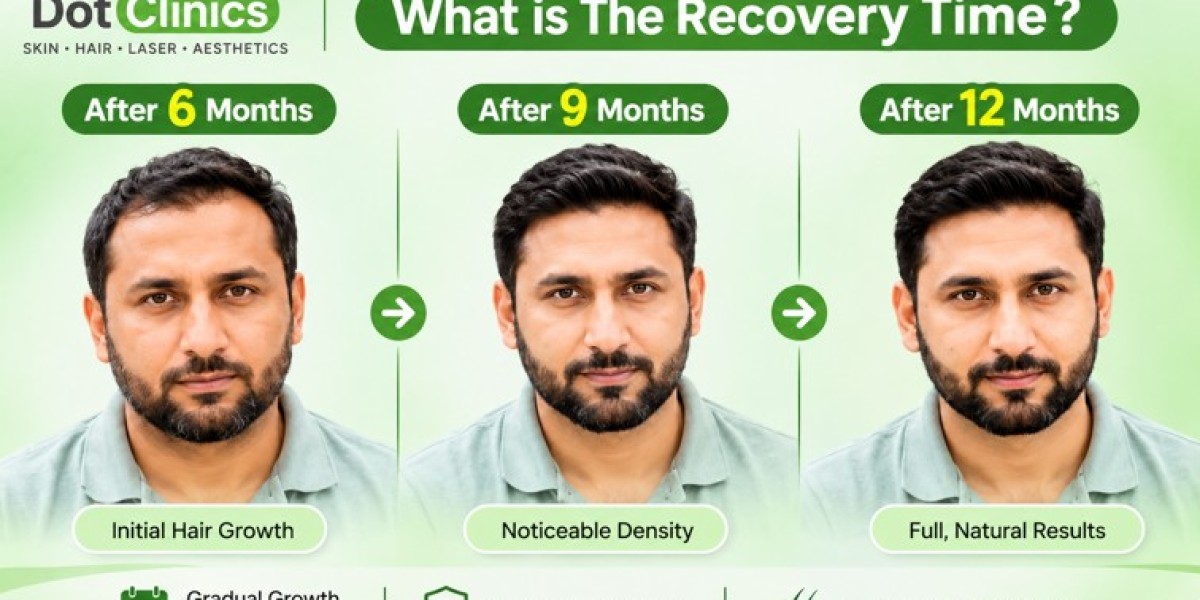
Recovery is an important part of the hair transplantation process. Although the initial healing period is relatively short, visible hair growth takes several months.
Recovery period | What to expect |
|---|---|
First 1–3 days | Mild swelling, redness, and tenderness |
First week | Small scabs form and healing progresses |
2–4 weeks | Transplanted hair shafts commonly shed |
3–4 months | Early new hair growth may appear |
6 months | Noticeable improvement in coverage for many patients |
9–12 months | More developed hair growth and density |
12–18 months | Final or near-final results are commonly assessed |
Understanding Hair Shedding After Surgery
One of the most common concerns after hair transplantation is shedding of the transplanted hair.
This is generally called shock loss or post-transplant shedding. It usually occurs within the first few weeks after surgery.
Although the visible hair shafts may fall out, the transplanted follicles generally remain beneath the skin. New hair growth develops gradually over the following months.
Patients should avoid judging their final results during the initial recovery period.
How Many Hair Grafts Are Required?
The number of grafts needed depends on the affected area, desired coverage, donor hair density, hair thickness, and characteristics of the patient's hair loss.
The following table provides approximate planning ranges:
Treatment area | Estimated grafts |
|---|---|
Minor hairline correction | 500–1,500 |
Receding hairline | 1,500–2,500 |
Frontal scalp | 2,000–3,000 |
Frontal and mid-scalp | 3,000–4,500 |
Extensive baldness | 4,000–6,000+ |
These figures are estimates rather than fixed requirements. A qualified surgeon must evaluate the donor area and recipient scalp before recommending a graft number.
It is also important to understand that one graft may contain multiple individual hair follicles.
How Much Does a Hair Transplant Cost?
Hair transplant prices vary according to several factors, including the procedure technique, clinic location, surgeon's experience, graft requirements, and quality of medical facilities.
Some clinics charge per graft, while others offer complete treatment packages.
Factors Affecting Hair Transplant Prices
Number of grafts: Patients requiring more grafts may have higher overall treatment costs.
Procedure technique: FUE, FUT, and DHI may have different pricing structures.
Surgeon's experience: The qualifications and expertise of the operating surgeon can influence treatment costs.
Clinic facilities: Medical equipment, hygiene standards, staffing, and aftercare services also contribute to pricing.
Follow-up care: Some treatment packages include post-operative appointments and medications, while others charge separately.
Hair Transplant in Pakistan
Pakistan has become a popular destination for aesthetic and hair restoration treatments because of the availability of specialized clinics and comparatively accessible treatment costs.
Major cities such as Lahore, Multan, Islamabad, and Karachi offer hair restoration services.
However, patients should compare clinics based on medical standards, surgeon qualifications, donor management, and genuine patient outcomes rather than choosing solely on price.
Possible Risks and Side Effects
Like any surgical procedure, hair transplantation carries potential risks. Most patients experience manageable side effects, but complications can occasionally occur.
Common temporary effects include:
Redness around transplanted follicles.
Mild swelling.
Scalp tenderness.
Itching.
Small scabs.
Temporary numbness.
Minor bleeding.
Less common complications may include infection, folliculitis, poor graft survival, visible scarring, unnatural hair growth, and donor-area overharvesting.
Selecting a qualified surgeon and following aftercare instructions can help reduce avoidable risks.
Essential Aftercare Tips Following Hair Transplantation
Proper aftercare helps support healing and protects the transplanted area.
Avoid Touching the Transplanted Area
Do not scratch, rub, or unnecessarily touch the newly transplanted follicles during the initial healing period.
Follow Proper Washing Instructions
Your surgeon will explain when and how to wash your scalp. Use only recommended products and avoid aggressive rubbing.
Protect Your Scalp From Sunlight
Avoid excessive direct sunlight while your scalp is healing. Follow your surgeon's advice regarding protective headwear.
Avoid Heavy Exercise
Strenuous exercise and activities that cause excessive sweating may need to be avoided temporarily.
Maintain a Healthy Diet
Eat a balanced diet containing adequate protein, vitamins, minerals, and other essential nutrients to support general health.
Avoid Smoking
Smoking can negatively affect circulation and wound healing. Avoid it during the recovery period.
Attend Follow-Up Visits
Regular follow-up appointments help assess healing, monitor hair growth, and identify possible complications.
Hair Transplant vs. PRP Hair Treatment
Hair transplantation and platelet-rich plasma (PRP) therapy are different treatments designed to address hair-related concerns.
Hair transplantation surgically relocates follicles from a donor area to a recipient area. PRP involves processing a sample of the patient's blood to concentrate platelets and injecting the resulting preparation into selected scalp areas.
Feature | Hair transplant | PRP treatment |
|---|---|---|
Treatment type | Surgical | Non-surgical |
Main purpose | Relocates existing hair follicles | May support hair growth in selected patients |
Suitable for | Selected permanent hair-loss cases | Certain types of thinning hair |
Recovery | Requires surgical healing | Usually minimal downtime |
Sessions | Often one or more surgical sessions | Usually requires multiple sessions |
Results | Gradual transplanted hair growth | Variable improvement in selected patients |
Neither treatment is suitable for every type of hair loss. A specialist can recommend an appropriate treatment based on the patient's condition.
How to Choose the Right Hair Transplant Clinic
Choosing the right clinic is one of the most important decisions when considering hair restoration.
Before undergoing treatment, consider the following factors:
Qualified surgeon: Verify the credentials and experience of the surgeon responsible for the procedure.
Medical assessment: The clinic should evaluate the cause of hair loss and donor-area suitability.
Transparent treatment plan: You should receive a clear explanation of graft numbers, technique, expected results, and limitations.
Sterile facilities: Proper infection-control practices are essential.
Genuine results: Review consistent before-and-after photographs with appropriate follow-up periods.
Aftercare services: The clinic should provide clear recovery instructions and follow-up support.
Realistic promises: Avoid clinics that guarantee perfect density or permanent results for every patient.
A professional consultation should focus on your long-term hair restoration needs rather than simply selling a particular procedure.
Frequently Asked Questions About Hair Transplant
1. Is hair transplantation a permanent solution?
Transplanted follicles often provide long-lasting results. However, surrounding natural hair may continue thinning, and additional treatment may be necessary to maintain an overall balanced appearance.
2. At what age can someone get a hair transplant?
There is no universal ideal age. The decision depends on hair-loss stability, medical history, donor availability, and long-term planning. Younger patients may require particular caution because their hair loss can continue progressing.
3. How long does a hair transplant procedure take?
Most procedures take approximately 4–8 hours, depending on the number of grafts and surgical technique. Extensive procedures may require additional sessions.
4. Does transplanted hair grow naturally?
Yes. Successfully transplanted follicles can produce hair that grows naturally and can generally be cut and styled like other hair.
5. Can a person undergo a second hair transplant?
Yes, additional procedures may be possible if sufficient healthy donor hair remains. However, donor availability and long-term planning must be considered.
6. When can I return to work after a hair transplant?
Many patients return to desk-based work within several days, depending on swelling, discomfort, and the nature of their work. Physically demanding jobs may require a longer break.
7. Can transplanted hair become grey?
Yes. Transplanted hair generally retains the characteristics of the donor hair, including its tendency to turn grey with age.
8. Can I shave my head after a hair transplant?
Eventually, many patients can shave or cut their transplanted hair. However, the timing depends on healing and the surgeon's recommendations.
9. Does a hair transplant leave scars?
Yes. FUE generally leaves small scattered scars, whereas FUT leaves a linear scar. Their visibility depends on the technique, healing, and hairstyle.
10. Can hair transplantation treat complete baldness?
Hair transplantation may provide coverage in selected cases of extensive baldness, but results are limited by donor hair availability. Complete coverage or high density cannot always be achieved.
Conclusion: Is Hair Transplant the Right Choice?
Hair transplantation has become an important option for people experiencing permanent hair loss and looking for a long-term restoration solution. Modern techniques such as FUE, FUT, and DHI allow surgeons to transfer healthy follicles into thinning or bald areas with careful attention to natural hair direction and distribution.
However, successful treatment requires more than selecting a popular technique. Proper diagnosis, donor-area evaluation, experienced surgical care, realistic expectations, and consistent aftercare all play important roles.
Whether you are experiencing a receding hairline, thinning crown, or more extensive hair loss, the first step is to consult a qualified hair restoration specialist. A personalized assessment can help determine whether transplantation or another hair-loss treatment is the most suitable option.
With appropriate planning and professional care, hair restoration can help improve scalp coverage and provide natural-looking results that support long-term satisfaction.