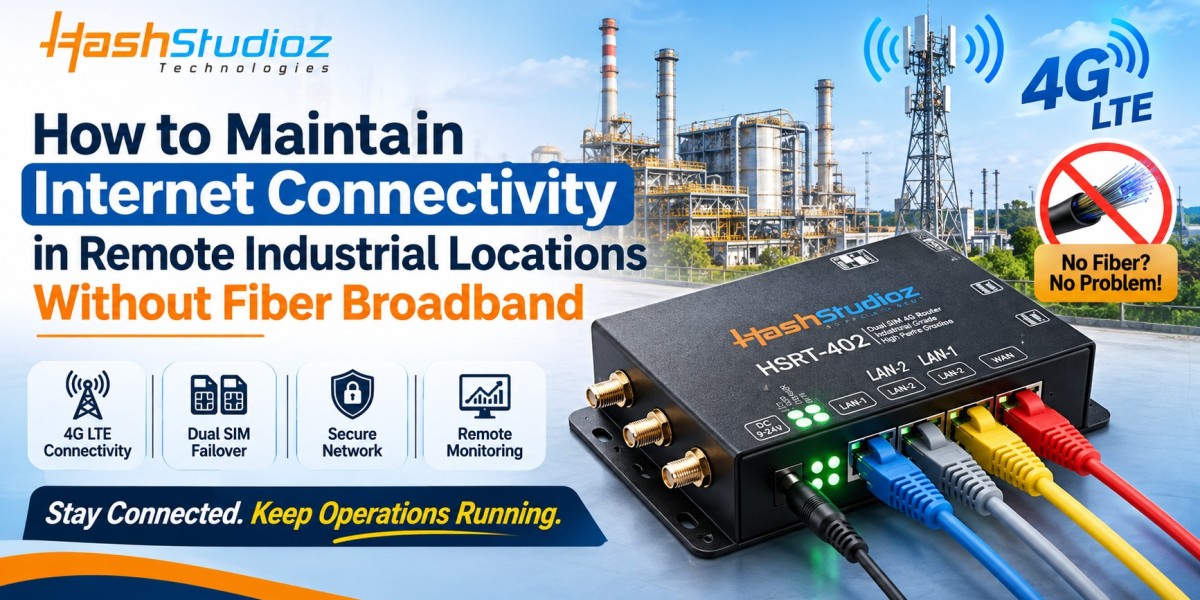

Reliable internet connectivity has become essential for modern industrial operations. From remote manufacturing facilities and agricultural processing units to mining sites, oil and gas installations, and infrastructure projects, businesses depend on stable internet access for monitoring equipment, managing operations, and transferring critical data.
However, maintaining reliable connectivity in remote industrial locations can be challenging. Many facilities operate in areas where fiber broadband is unavailable, expensive to install, or difficult to maintain. Traditional wired internet infrastructure may also be impractical due to geographical limitations, installation costs, and long deployment timelines.
So, how can industries maintain dependable internet connectivity without relying on fiber broadband?
One practical solution is cellular networking powered by a 4G LTE Dual SIM Industrial Router. By using cellular networks from different mobile operators, these routers can provide flexible internet connectivity, automatic network failover, and reliable communication for remote industrial applications.
Why Is Internet Connectivity Important in Remote Industrial Locations?
Industrial facilities increasingly depend on connected systems to improve productivity, reduce downtime, and manage equipment remotely.
Without reliable internet connectivity, businesses may experience communication interruptions, delayed monitoring updates, and difficulties accessing operational information.
Here are some important applications that require dependable internet access.
1. Remote Equipment Monitoring
Industrial operators need to monitor machinery, sensors, controllers, and production equipment to ensure smooth operations.
Internet connectivity allows authorized teams to access equipment information remotely, monitor performance, and identify potential issues before they affect production.
2. Industrial IoT Connectivity
Industrial IoT systems collect information from connected devices and transfer it to centralized platforms for analysis.
Remote industrial facilities need stable connectivity to transmit sensor readings, equipment status, and operational data to monitoring systems.
3. Centralized Operations Management
Businesses operating multiple remote facilities often need a centralized platform to manage their operations.
Internet connectivity helps connect geographically distributed locations with central offices, allowing teams to monitor activities and coordinate operational tasks.
4. Remote Troubleshooting and Maintenance
Connected industrial equipment allows maintenance teams to diagnose certain issues remotely.
With appropriate network access and security controls, engineers can inspect device information, access supported management interfaces, and reduce unnecessary site visits.
Challenges of Maintaining Internet Connectivity Without Fiber Broadband
Remote industrial locations face several connectivity challenges that traditional broadband infrastructure may not easily solve.
1. Limited Network Infrastructure
Many industrial sites are located far from cities and commercial infrastructure. Fiber broadband may not be available because extending cables to these locations requires significant investment and construction work.
2. Unstable Network Availability
Cellular signal strength can vary depending on geographical conditions, distance from mobile towers, weather, and surrounding structures.
A single network connection may not always provide the availability required for industrial applications.
3. High Installation and Maintenance Costs
Installing wired internet infrastructure in remote locations can involve extensive cabling, specialized equipment, and ongoing maintenance.
These expenses can make traditional broadband impractical for temporary facilities or geographically distributed operations.
4. Operational Downtime
When internet connectivity is interrupted, remote monitoring, cloud communication, and connected applications may become unavailable.
For industrial operations that depend on continuous communication, even short interruptions can affect productivity.
5. Difficulty Managing Multiple Locations
Businesses operating several remote facilities may struggle to maintain consistent network connectivity across all locations.
A flexible networking solution is needed to simplify connectivity management and reduce dependence on a single internet provider.
How Can 4G LTE Technology Provide Internet Without Fiber Broadband?
4G LTE technology offers an alternative to traditional wired broadband by delivering internet connectivity through cellular networks.
Instead of depending on physical fiber connections, an industrial router uses a cellular SIM card to connect to a nearby mobile network.
This makes LTE connectivity useful for locations where wired broadband is unavailable or difficult to deploy.
How Does 4G LTE Industrial Connectivity Work?
A 4G LTE industrial router receives internet connectivity through a compatible cellular network and distributes it to connected industrial equipment.
The typical connectivity process includes:
Insert a compatible SIM card into the industrial router.
The router connects to an available 4G LTE cellular network.
It establishes an internet connection through the mobile operator.
Connected devices access the network through Ethernet or supported wireless interfaces.
Industrial applications communicate with remote servers, monitoring platforms, or centralized systems.
Depending on the router's features, it may also support VPN connectivity, firewall protection, remote management, and automatic failover.
This approach allows industrial facilities to establish network connectivity without waiting for fiber broadband installation.
Why Choose a 4G LTE Dual SIM Industrial Router?
A standard 4G LTE router typically uses one SIM card for cellular connectivity. However, industrial operations that require better network availability can benefit from dual SIM functionality.
A 4G LTE Dual SIM Industrial Router supports two SIM cards, potentially from different mobile network operators.
This provides an alternative connectivity option when the primary cellular network becomes unavailable or experiences connectivity issues.
Let's explore its major advantages.
1. Automatic Network Failover
Automatic failover is one of the most valuable features of a dual SIM industrial router.
If the primary SIM connection becomes unavailable, the router can switch to the secondary SIM according to its configured failover conditions.
For example, consider a remote manufacturing facility using a primary SIM from one mobile operator. If that network experiences an outage, the router can switch to the secondary SIM from another operator, provided its network is available.
This helps minimize internet interruptions and maintain communication for supported applications.
2. Reduced Dependence on a Single Network Provider
Mobile network coverage varies between locations and service providers.
A dual SIM solution allows businesses to use two different cellular operators when their coverage and network compatibility support the installation.
This provides additional flexibility when choosing connectivity options for remote industrial sites.
3. Improved Network Availability
Using two SIM cards creates an alternative connection path when the primary network fails.
Although dual SIM functionality does not guarantee uninterrupted internet access, it can improve connectivity resilience when the secondary network remains available.
4. Flexible Deployment
Cellular routers can be deployed in locations where installing fiber cables is difficult.
This makes them suitable for:
Remote industrial plants.
Mining and construction sites.
Agricultural facilities.
Oil and gas installations.
Solar and wind power plants.
Remote equipment monitoring stations.
5. Centralized Remote Management
Industrial routers with suitable remote management capabilities allow administrators to monitor network status and manage supported configurations remotely.
This can simplify network administration across multiple geographically distributed facilities.
Practical Applications of Dual SIM Industrial Routers in Remote Locations
Dual SIM cellular connectivity can support various industrial applications where reliable internet access is important.
1. Remote Manufacturing Facilities
Manufacturing facilities located outside major industrial areas may not have access to fiber broadband.
A dual SIM industrial router can provide cellular internet connectivity for PLCs, industrial computers, monitoring systems, and connected equipment.
Practical example:
A manufacturing company operates a production facility in a rural industrial area where fiber broadband is unavailable.
The company installs a 4G LTE dual SIM router with SIM cards from two mobile operators. The primary connection handles normal internet traffic, while the secondary connection provides an alternative if the primary network becomes unavailable.
This helps the company maintain communication between its remote facility and central operations team.
2. Mining and Construction Sites
Mining operations and construction projects frequently take place in geographically isolated locations.
These environments require internet access for equipment monitoring, workforce coordination, operational reporting, and communication.
A dual SIM industrial router can provide flexible cellular connectivity without requiring permanent wired broadband infrastructure.
3. Solar and Wind Power Plants
Renewable energy installations are often located in remote areas where traditional internet infrastructure is limited.
Connected monitoring equipment needs to transmit operational information to centralized management platforms.
A cellular router can help transfer information from compatible controllers, sensors, and monitoring devices to remote systems.
Dual SIM connectivity provides an additional network option when the primary cellular connection is unavailable.
4. Agricultural and Irrigation Systems
Modern agricultural operations use connected sensors, irrigation controllers, weather monitoring equipment, and automated systems.
A dual SIM industrial router can connect these devices to centralized monitoring platforms through available cellular networks.
Practical example:
A large agricultural facility uses smart irrigation controllers to manage water distribution across different fields.
By installing an industrial LTE router, the facility can transmit sensor readings and irrigation system information to a remote monitoring platform without installing fiber broadband across the property.
5. Oil and Gas Installations
Oil and gas facilities often operate in isolated environments where communication infrastructure is limited.
Internet connectivity is important for remote monitoring, equipment status reporting, and communication between field installations and central control systems.
Industrial cellular routers can provide a practical connectivity option for compatible monitoring and communication applications.
Key Features to Look for in a Dual SIM Industrial Router
Selecting the right router is important for achieving reliable connectivity in remote industrial environments.
Before choosing a device, evaluate the following features.
1. Dual SIM Support
Choose a router that supports two SIM cards and provides the required SIM management and failover functionality.
Check whether it supports automatic switching, configurable failover conditions, and network recovery behavior.
2. 4G LTE Network Compatibility
Verify that the router supports the LTE frequency bands used by mobile operators in the installation region.
Also check network compatibility with the intended SIM providers.
3. Automatic Failover and Recovery
Look for intelligent connectivity monitoring and automatic switching capabilities.
The router should support configurable mechanisms for detecting connection failures and restoring the preferred connection when it becomes available again.
4. Ethernet Connectivity
Ethernet ports allow industrial equipment, computers, PLCs, and other network devices to connect directly to the router.
Check the number and speed of Ethernet ports required by your application.
5. VPN and Network Security
Industrial networks may carry important operational information.
Consider routers that support suitable VPN protocols, firewall functionality, access controls, and secure remote management.
These features can help protect communication between remote facilities and central networks.
6. Industrial-Grade Design
Remote industrial installations may experience temperature variations, vibration, dust, and electrical disturbances.
Evaluate the router's operating temperature, enclosure protection, power requirements, mounting options, and environmental specifications before installation.
7. Remote Monitoring and Management
Remote management capabilities can help administrators monitor connection status, inspect network conditions, and manage router configurations without frequently visiting the installation site.
How to Set Up a Dual SIM Industrial Router in a Remote Location
Deploying a dual SIM industrial router requires proper planning and configuration.
Follow these steps to establish a reliable cellular internet connection.
Step 1: Evaluate Cellular Network Coverage
Before installing the router, check the availability of 4G LTE networks at the remote location.
Compare coverage from different mobile operators and identify which providers offer suitable signal strength.
Step 2: Select Compatible SIM Cards
Choose two SIM cards from operators that provide reliable coverage in the installation area.
Using different providers can improve network diversity, although both networks may still share underlying infrastructure in some locations.
Step 3: Install the Industrial Router
Install the router in a suitable location with adequate ventilation and protection from environmental conditions.
Connect the required cellular antennas and Ethernet devices according to the manufacturer's installation instructions.
Step 4: Configure Cellular Connectivity
Insert both SIM cards and configure the required APN settings, network preferences, and primary and secondary SIM priorities.
Ensure the router is compatible with the frequency bands and network requirements of both operators.
Step 5: Enable Automatic Failover
Configure the router's failover settings so that it can detect primary network connectivity issues and switch to the secondary SIM when required.
If supported, configure recovery behavior so the router can return to the preferred connection after it becomes available.
Step 6: Connect Industrial Equipment
Connect compatible PLCs, industrial computers, sensors, gateways, and other network devices through the available Ethernet or wireless interfaces.
Configure the required network settings for each connected device.
Step 7: Test Network Reliability
Test both SIM connections and verify that automatic switching works as expected.
Check internet availability, remote access, data transmission, and application performance before completing deployment.
Why Cellular Connectivity Is a Practical Alternative to Fiber Broadband
Fiber broadband provides high bandwidth and stable wired connectivity, but it is not always practical for remote industrial installations.
Cellular networking offers a flexible alternative when businesses need connectivity without extensive cable deployment.
Factor | Fiber Broadband | 4G LTE Cellular Connectivity |
Infrastructure | Requires fiber cable availability | Uses cellular network infrastructure |
Installation | May require extensive cable deployment | Generally faster to deploy |
Remote locations | Depends on fiber coverage | Useful where cellular coverage exists |
Scalability | May require additional infrastructure | Can support flexible site deployment |
Network redundancy | Requires additional connection planning | Dual SIM can provide an alternative cellular connection |
Mobility | Fixed installation | Suitable for temporary and remote deployments |
The right solution depends on bandwidth requirements, cellular coverage, network availability, application sensitivity, and deployment costs.
For facilities without fiber access, a properly configured dual SIM LTE router can be a practical way to establish internet connectivity.
The Future of Remote Industrial Connectivity
Industrial operations are becoming increasingly connected through Industrial IoT, remote monitoring, smart manufacturing, and cloud-based management systems.
As these technologies expand, the demand for reliable connectivity in geographically isolated locations will continue to grow.
Cellular networking provides businesses with more flexibility when traditional broadband infrastructure is unavailable.
With features such as dual SIM support, automatic failover, VPN connectivity, and remote management, modern industrial routers can help bridge the connectivity gap between remote equipment and centralized digital platforms.
As cellular technologies continue to evolve, industrial businesses can also evaluate newer connectivity options based on local coverage, application requirements, and available network infrastructure.
Conclusion
Maintaining reliable internet connectivity in remote industrial locations without fiber broadband does not have to be complicated.
4G LTE cellular networking provides a flexible alternative for connecting industrial equipment, monitoring systems, and remote facilities. By using a 4G LTE Dual SIM Industrial Router, businesses can establish cellular internet connectivity while maintaining an alternative network connection through a second SIM card.
From manufacturing plants and mining operations to renewable energy facilities and agricultural installations, dual SIM technology can help improve connectivity resilience and simplify remote network deployment.
The key is to select a router with suitable LTE compatibility, automatic failover, industrial-grade construction, network security, and remote management capabilities. For businesses looking to maintain connectivity beyond traditional broadband coverage, a reliable Dual SIM Industrial Router can be an important part of a smarter and more resilient industrial networking strategy.