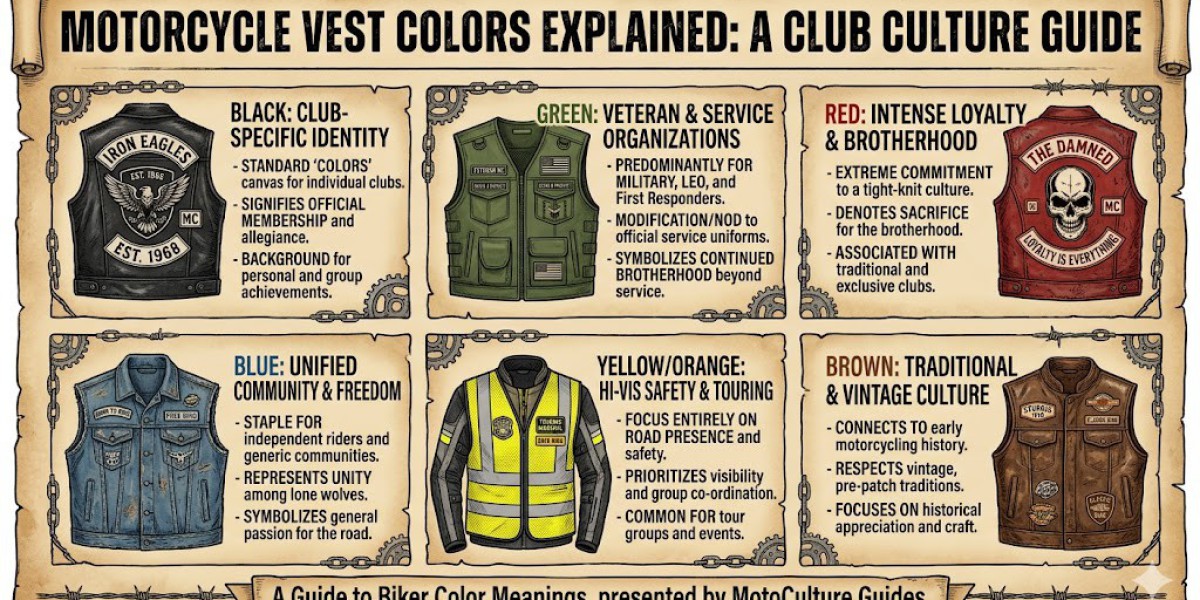

Walk into a biker bar or rally and you'll notice men's leather biker vests and women's motorcycle leather vests in various colors, mostly black, but also red and white, blue, or other combinations. Those colors aren't random fashion choices. In motorcycle club (MC) culture, vest colors carry specific meanings tied to club hierarchy, status, and tradition.
Understanding what these colors represent helps you avoid disrespecting club members and navigate biker culture with awareness, whether you're a club member, an independent rider, or someone just curious about the traditions.
Here's what motorcycle vest colors actually mean and why they matter.
Why Vest Colors Matter in MC Culture
Motorcycle clubs operate with structure, hierarchy, and tradition. The vest, often called "colors" or a "cut", is the most visible symbol of club membership and standing.
Colors identify which club you belong to, your rank within that club, and what you've earned the right to wear. They represent years of commitment, loyalty, and brotherhood or sisterhood. To club members, colors aren't just clothing, they're sacred.
Disrespecting someone's colors, wearing unauthorized patches, or copying club designs can create serious problems. This isn't about being overly sensitive, it's about understanding that these symbols mean something in a culture with its own rules.
Black Motorcycle Vests – The Standard
Black is the most common color for motorcycle club vests, and there's a reason for that.
Traditional and Practical: Black leather doesn't show dirt, oil, or wear as obviously as lighter colors. For riders putting serious miles on their bikes, black is practical.
Universal in MC Culture: The vast majority of motorcycle clubs use black vests as their base. The patches, not the vest color, identify the specific club.
Works for Everyone: Signature leather motorcycle vests for men and women are standard across almost all clubs. Gender doesn't change the color, club affiliation and rank do.
When you see a black vest with a three-piece patch (top rocker with club name, center logo, bottom rocker with territory), you're looking at a traditional motorcycle club member. The vest color is black; the patches tell you everything else.
Red and White Vests – Hells Angels
Red and white are colors specifically associated with the Hells Angels Motorcycle Club, one of the most recognized and established MCs worldwide.
Hells Angels members wear red and white patches on black vests, and the combination of red and white has become synonymous with the club. Other clubs avoid using red and white together out of respect, and to avoid being mistaken for Hells Angels, which could cause serious issues.
What this means for non-club riders: Don't wear red and white patch combinations on your vest unless you're actually a Hells Angels member. It's not about fashion—it's about not misrepresenting yourself as part of a club you don't belong to.
Blue Vests and Other Colors
While less common, some clubs use colors other than black:
Law Enforcement MCs: Some law enforcement motorcycle clubs use blue vests or blue elements to represent their connection to police or military service. Blue symbolizes the "thin blue line."
Military and Veteran MCs: May incorporate military branch colors—army green, navy blue, marine red, into their patches or vest accents.
Support Clubs: Clubs that support a larger MC sometimes use different colors to distinguish themselves from the main club while showing affiliation.
Riding Clubs vs Motorcycle Clubs: Riding clubs (RCs), which are less formal than MCs, sometimes use different vest colors as a deliberate distinction from traditional black MC vests.
Related read: How to Style a Leather Vest
Patch Placement and Color Hierarchy
It's not just the vest color, patch placement and design carry meaning too.
Three-Piece Patch (Back Patch)
The classic three-piece back patch includes:
Top rocker:Club name
Center logo: Club emblem or symbol
Bottom rocker: Territory or chapter location
This design is reserved for traditional motorcycle clubs. Wearing a three-piece patch when you haven't earned it through club membership is a major breach of protocol.
One-Piece Patches
Riding clubs, veteran groups, and independent riders often wear one-piece patches that don't follow the three-piece format. This visually distinguishes them from traditional MCs and avoids confusion.
Support Patches
"Support" patches show respect for a particular MC without claiming membership. These are usually small patches that read "Support [Club Name]" and are worn with the club's permission.
1% Diamond Patch
The 1% patch references the idea that 99% of motorcyclists are law-abiding citizens, and 1% are "outlaws." Clubs that identify as 1%ers wear this diamond-shaped patch. It's not something you wear casually, it indicates affiliation with outlaw motorcycle culture.
What Non-Club Riders Should Know
If you ride independently and wear motorcycle vests for women or men's vests without club affiliation, here's what to understand:
Avoid three-piece patches: Don't wear top and bottom rockers on your back unless you're in an actual MC. This design is reserved for club members.
Be cautious with "MC" designation: If your patch says "MC," you're representing yourself as a motorcycle club. Make sure that's accurate and that you understand the implications.
"RC" is safer for groups: If you ride with a group of friends, "Riding Club" (RC) is a more appropriate designation that doesn't carry the same weight as "MC."
Don't copy established club designs: Avoid patches, colors, or designs that resemble known motorcycle clubs. Even accidental similarities can cause problems.
Respect is mutual: Most club members won't bother independent riders who show respect and don't misrepresent themselves. Problems arise when people wear patches or colors they haven't earned.
Women in Motorcycle Club Culture
Club style women's motorcycle leather vests follow the same color and patch traditions as men's.
Women members wear the same colors: Female MC members wear the same vest colors and patches as male members. There's no separate "women's version" of club colors.
Women's MCs exist: All-women motorcycle clubs follow the same traditions, hierarchies, and color meanings as male or mixed clubs.
Property patches: In some traditional clubs, women who are partners of members (not members themselves) may wear "Property of [Member Name/Club]" patches. This is club-specific and represents relationship status within the club culture, not membership.
Motorcycle vests for women in club culture aren't about fashion, they represent the same commitment, hierarchy, and tradition as men's vests.
Respect and Etiquette
Whether you're a club member, independent rider, or just learning about biker culture, basic respect goes a long way:
Never touch someone's vest without permission. Colors are sacred to club members.
Don't ask to try on someone's vest. It's not a costume.
Avoid wearing patches you haven't earned. This includes club patches, military insignia you didn't serve for, or symbols representing groups you don't belong to.
When in doubt, ask. Most club members will explain their patches if you approach respectfully.
Understand that rules vary by region and club. What's acceptable in one area might not be in another.
Final Thoughts
Motorcycle vest colors and patches aren't just fashion, they're symbols with deep meaning in biker culture. Black dominates because of tradition and practicality. Red and white belong to Hells Angels. Other colors represent specific clubs, affiliations, or groups.
If you're wearing a vest as an independent rider, stick with simple designs that don't mimic MC patches. If you're in a riding club, use RC designation and avoid three-piece patches. And if you're considering joining an MC, understand that earning your colors is a serious commitment that comes with expectations and responsibilities.
Respect the culture. Understand the symbols. And never wear what you haven't earned.