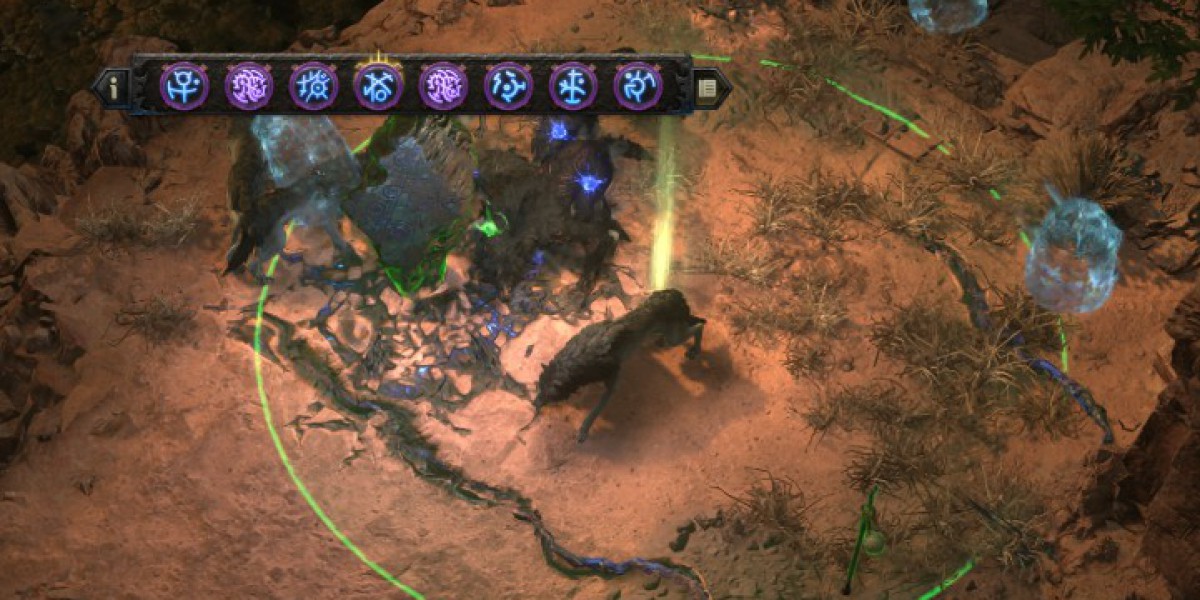

The Expedition system received a major upgrade in Path of Exile 2's Runes of Aldur league, introducing Grand Expeditions and a much deeper Logbook experience. Compared to the smaller Expedition encounters found in regular maps, these new activities cover an entire area and reward careful planning instead of simply rushing from one fight to another. If you're looking for valuable POE 2 Items, Grand Expeditions are one of the most rewarding endgame activities to learn.
Grand Expeditions may seem overwhelming during your first few runs, but once you understand how Logbooks, Rumours, and Rune chains work together, the system becomes surprisingly satisfying. Instead of relying on luck alone, you have plenty of opportunities to shape your own rewards while challenging increasingly dangerous enemies.
Beginning your expedition journey
Before diving into Grand Expeditions, you'll need to reach the Ruins of Kingsmarch in the endgame. Entering this area starts a questline involving Rog, Gwennen, and the restoration of the Triskelion Flame. Although the story itself isn't difficult, finishing it helps introduce many of the mechanics you'll encounter later.
As you continue exploring the Expedition endgame, you'll eventually discover Uncharted Waters. These boat markers serve as entry points for Logbooks. Activating one with a Logbook in your inventory consumes the item and reveals a chain of connected maps. Some are standard maps, while others become Grand Expeditions marked by the Triskelion Flame icon.
Understanding Rumours
Every Uncharted Waters location displays several Rumours before activation. These previews tell you what kinds of encounters and rewards may appear throughout the map chain.
Some Rumours focus on collecting Gold, while others improve experience gains, increase Strongboxes, or introduce unique maps with exclusive rewards. There are also Rumours that guarantee encounters with Expedition bosses such as Olroth, Vorana, Medved, or Uhtred.
Choosing the right Rumour often matters more than simply selecting the highest-level Logbook. If you're targeting a specific reward, taking a moment to inspect the available options is always worthwhile.
Planning your explosive route
One of the biggest differences between normal Expeditions and Grand Expeditions is the number of explosives available. Instead of placing only a handful, you'll often have fifteen or more charges to work with.
The entire minimap is revealed as soon as you enter the area, allowing you to examine every reward before placing your first explosive.
This makes planning extremely important. You'll want to connect valuable Runic Remnants, reward icons, hidden mechanics, and underground areas while avoiding unnecessary dead ends. Anything outside your explosive chain remains buried, so every placement matters.
Maps also contain hidden mechanics marked with X symbols. Triggering these can unlock bonus encounters, hidden bosses, or additional treasure, making them worth including whenever possible.
Fighting through the expedition
Once your explosive chain is complete, a checkpoint appears near the final placement. From there, you can instantly travel to the Detonator and begin the encounter.
As explosions spread across the map, monsters emerge from marked locations and every activated reward turns into a combat encounter. Defeating these enemies unlocks the associated loot.
Grand Expeditions also limit the number of revives based on your map modifiers. Higher difficulty usually means better rewards, but it also increases the risk of failing the encounter before reaching the final packs of monsters.
Making the most of Rune chains
Runic Remnants are the heart of every Grand Expedition.
Each Remnant grants additional rewards while also modifying the monsters it creates. Some increase monster power, while others improve loot quality or introduce special effects after enemies die.
The most interesting feature is Rune Transfer. Certain Runes have a golden border, meaning their effects continue applying to every later Runic Remnant triggered by your explosive chain.
This creates an entirely new layer of strategy. Instead of choosing every Remnant based only on its immediate reward, you can deliberately build a sequence that stacks powerful Rune effects together. By the final encounters, monsters become much stronger but also significantly more rewarding.
Learning when to prioritize Rune Transfers over individual rewards is one of the biggest differences between experienced and newer players.
Extra tools worth using
Logbook Omens provide another way to customize your expedition runs. Some guarantee specific boss encounters, while others reroll the available Rumours before you activate a Logbook.
Players can also unlock Liquid Verisium after investing in the appropriate passive. This resource allows individual Runic Remnants to be rerolled before explosives are placed, making it much easier to improve an otherwise average expedition.
Both mechanics reward preparation rather than speed, fitting perfectly with the overall design philosophy of Grand Expeditions.
Final thoughts
Grand Expeditions successfully expand the classic Expedition mechanic into something that feels much more strategic. Every decision, from selecting a Rumour to placing the final explosive, influences both the challenge and the rewards. Players willing to slow down and plan carefully will usually earn better results than those rushing through the encounter, especially when farming Path of Exile 2 Currency.
For players who enjoy endgame content with meaningful choices, Grand Expeditions are one of the highlights of the current league. Mastering Rune Transfers, Logbooks, and explosive routing takes practice, but each successful run becomes more efficient and profitable as your understanding of the system grows.