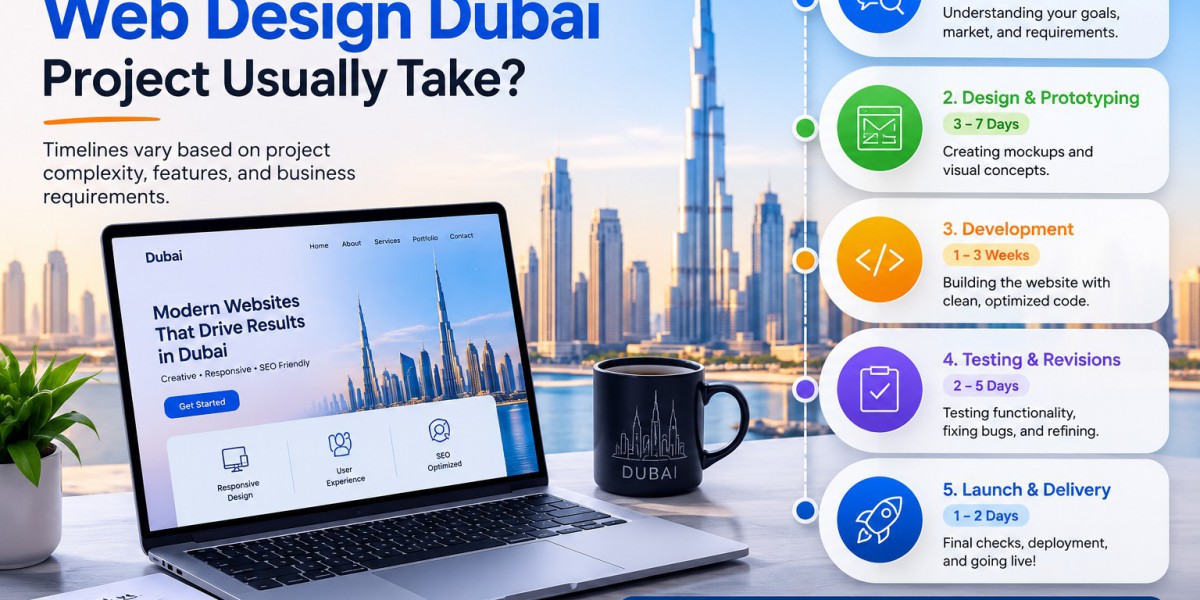

Business owners in the UAE getting ready to launch or redesign your website, one of the first questions you'll ask is: how long is this actually going to take? It's a fair question. You have marketing campaigns to plan, product launches to schedule, and investors or stakeholders who want a timeline they can rely on.
At RedSpider Web & Art Design, we get asked this almost every day. The honest answer is: it depends on the scope, complexity, and goals of your project. But that's not a very useful answer on its own, so in this article we'll break down exactly what affects the timeline of a Web Design Dubai project, what each phase involves, and how you can help your project move faster without sacrificing quality.
Why Timelines Vary So Much in Web Design Dubai Projects
Dubai's business landscape is incredibly diverse — from boutique retail brands and real estate agencies to logistics companies, fintech startups, and luxury hospitality groups. Each of these industries has different website needs, and that directly impacts how long a project takes.
A five-page brochure website for a local consultancy is a very different undertaking than a fully custom e-commerce platform with multi-currency support, Arabic-English bilingual content, and integration with UAE payment gateways. Both fall under "Web Design Dubai," but their timelines can differ by weeks or even months.
Generally speaking, most Web Design Dubai projects fall into one of three categories:
- Simple websites (5–10 pages, template-based or lightly customized): 2–4 weeks
- Mid-sized business websites (custom design, CMS integration, moderate functionality): 4–8 weeks
- Complex platforms (e-commerce, booking systems, custom web apps, multilingual sites): 8–16 weeks or more
Below, we'll walk through the stages that make up these timelines so you know exactly where the time goes.
The Key Stages of a Web Design Project
1. Discovery and Strategy Phase
Every solid website starts with understanding the business behind it. At RedSpider, this phase typically takes 3 to 7 days and involves:
- Understanding your brand, target audience, and competitors
- Defining goals (lead generation, sales, brand awareness, bookings)
- Auditing any existing website or digital assets
- Mapping out the site structure and user journey
This stage is often underestimated, but skipping it usually leads to costly revisions later. A clear strategy upfront saves time across the entire project.
2. Wireframing and UX Planning
Once the strategy is locked in, we move to wireframing — essentially the blueprint of your website. This stage usually takes 5 to 10 days and focuses on:
- Laying out page structures and navigation
- Planning user flows (how visitors move from landing page to conversion)
- Deciding on functionality like forms, chat widgets, or booking systems
Wireframes aren't about colors or fonts yet — they're about function. Getting this right early prevents major redesign work later in the process.
3. Visual Design
This is where your brand comes to life. Depending on complexity, visual design takes 1 to 3 weeks. Our designers work on:
- Custom layouts based on your brand identity
- Typography, color palettes, and imagery
- Mobile-responsive design mockups
- Interactive elements and micro-animations
Clients often want multiple design concepts or revision rounds here, which is completely normal — but it's also the stage most likely to extend a timeline if feedback is delayed. More on that later.
4. Development and Functionality Build
Once designs are approved, our developers bring everything to life in code. This phase typically takes 2 to 6 weeks, depending on:
- Whether you need a custom-coded site or a CMS platform like WordPress, Shopify, or a headless setup
- The number of custom features (booking systems, dashboards, payment integrations)
- Third-party integrations (CRMs, email marketing tools, UAE-specific payment gateways like Telr or PayTabs)
- Multilingual support, particularly Arabic-English bilingual builds, which require additional layout and RTL (right-to-left) formatting work
E-commerce projects tend to sit at the longer end of this range because of product catalog setup, inventory syncing, and checkout flow testing.
5. Content Population
Many businesses underestimate this stage. Adding your actual content — text, images, product listings, testimonials — can take 1 to 2 weeks, especially if content still needs to be written, translated, or professionally photographed.
If you already have polished content ready to go, this stage can be compressed significantly. If not, we can help with copywriting and content strategy, but it's worth factoring this into your overall timeline expectations.
6. Testing and Quality Assurance
Before any website goes live, it needs rigorous testing. This typically takes 3 to 7 days and includes:
- Cross-browser and cross-device testing
- Speed and performance optimization
- Form and functionality testing
- Security checks
- SEO technical audit (meta tags, sitemap, schema markup)
Skipping or rushing this phase is a common mistake that leads to post-launch issues, so we treat it as non-negotiable regardless of project size.
7. Launch and Post-Launch Support
Finally, the site goes live — but the work doesn't stop there. Launch day itself is usually quick (a matter of hours), but we recommend a short post-launch monitoring period of 3 to 5 days to catch any edge-case issues, monitor site speed, and confirm analytics tracking is working correctly.
Factors That Can Speed Up or Slow Down Your Timeline
Factors That Speed Things Up
- Clear brand guidelines (logo, colors, fonts) ready from day one
- Ready-to-use content, including text, images, and product data
- Fast feedback turnaround during design and revision rounds
- A single decision-maker or a small, aligned approval team
- Using a proven CMS like WordPress instead of fully custom code
Factors That Slow Things Down
- Frequent changes to project scope mid-way through development
- Delayed feedback or approval from stakeholders
- Missing or incomplete content at the content population stage
- Complex custom integrations that require extra development and testing time
- Multiple rounds of design revisions without clear direction
If you want your Web Design Dubai project to move efficiently, the biggest lever you control is how quickly you provide feedback, content, and approvals at each stage.
Typical Timeline Examples
To put this into perspective, here's what timelines commonly look like for different types of projects we handle at RedSpider Web & Art Design:
Small business or personal brand website (5–8 pages): Usually wrapped up in 3 to 4 weeks, assuming content and branding materials are ready early.
Corporate or professional services website (10–20 pages, custom design, CMS-based): Typically takes 6 to 8 weeks, factoring in strategy, custom visuals, and integrations like contact forms or CRM connections.
E-commerce website (product catalog, payment gateway, inventory management): Generally takes 10 to 14 weeks, depending on the number of products and complexity of the checkout and shipping logic.
Custom web application or booking platform: These can range from 12 to 20+ weeks, since they often involve custom backend development, user account systems, and extensive testing.
Keep in mind these are general ranges. Every business has unique requirements, and a detailed scoping conversation is the only way to get an accurate estimate for your specific project.
How RedSpider Web & Art Design Keeps Projects On Track
At RedSpider Web & Art Design, we've refined our process specifically for the pace and expectations of the Dubai market. A few things we do differently to keep timelines realistic and predictable:
- Transparent project roadmaps shared with clients from day one, so you always know what stage the project is in
- Structured feedback rounds with clear deadlines, avoiding the endless back-and-forth that stalls many projects
- Dedicated project coordination, so you're not chasing designers and developers separately
- Localized expertise, including experience with Arabic-English bilingual builds, UAE payment gateways, and regional compliance considerations
Our goal isn't just to deliver a website — it's to deliver it on a timeline that supports your business goals, whether that's a product launch, a marketing campaign, or an investor presentation.
Final Thoughts
So, how long does a Web Design Dubai project usually take? For most businesses, somewhere between 3 to 12 weeks, depending on complexity, functionality, and how quickly feedback and content are provided along the way. Simple websites can be live in under a month, while complex e-commerce platforms or custom applications may take a few months to build properly.
The best way to get an accurate, project-specific timeline is to talk to a team that understands both the technical process and the local market. If you're planning a new website or a redesign, RedSpider Web & Art Design is happy to walk you through a realistic timeline based on your exact goals and requirements — no guesswork, just a clear roadmap from strategy to launch.